I love slicing fresh bread. The smell fills my kitchen. But a dull blade ruins the crust. You get a pile of crumbs. This is a common kitchen struggle. I want to help you fix it.
Many home cooks feel confused about knives. You might see two jagged blades. One is long. One is short. You wonder which one to use. I will explain the differences today. Let us start now.
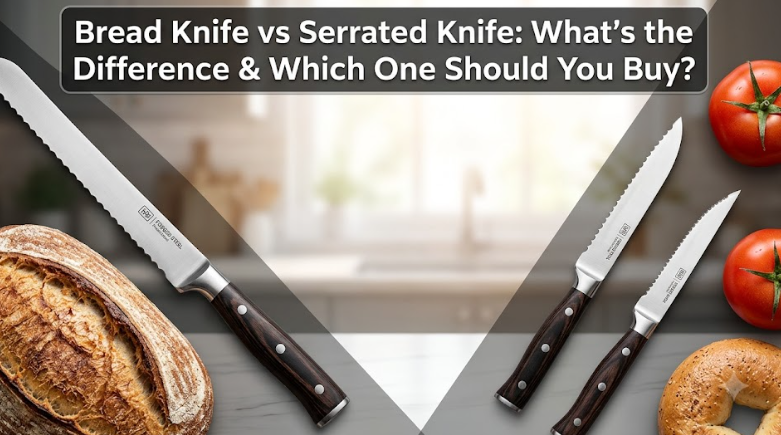
Is a bread knife the same as a serrated knife? The answer is simple. A bread knife is just one type of serrated knife. The term serrated refers to a whole family of kitchen tools.
Choosing the right tool saves your food. It also saves your hands. I will help you choose the best blade. This short guide will make your prep work easy and fast. Let us begin .Click here to BUY AMAZON.
What is a Serrated Knife?
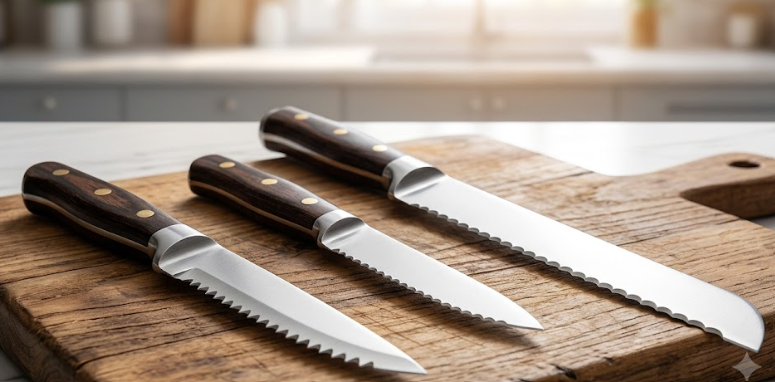
A serrated knife has a saw-toothed blade. This means the edge has sharp points. These points are called teeth. They work like a hand saw. They cut by tearing through very tough surfaces.
The design concentrates your downward force. Each tooth is a tiny point of contact. When you press down, the pressure is very high. This lets the blade bite into hard materials easily.
Serrated knives come in many sizes. Some are long. Some are very small. A steak knife is a good example. A tomato knife is another one. They all share the same sharp, wavy edge.
These knives are great for foods with hard skins. Think of a ripe tomato. A straight blade might slip. It might crush the soft flesh. A serrated edge punctures the skin with ease.
What is a Bread Knife?
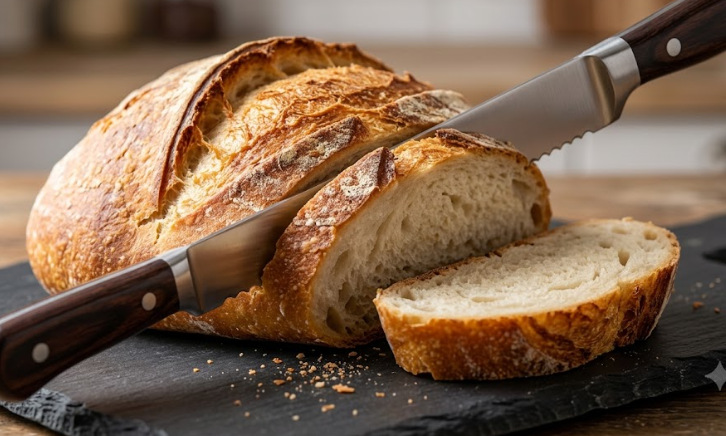
A bread knife is a large serrated knife. It is made for one main job. That job is slicing crusty bread. The blade is long and straight. It usually measures eight to ten total inches.
The long blade lets you make clean cuts. You can slice through a wide loaf in one single stroke. This prevents the bread from tearing. It keeps your slices very neat and even.
Most bread knives have a scalloped edge knife design. The teeth are rounded. They look like gentle waves. This shape is less aggressive. It cuts bread without creating too many messy crumbs.
Some bread knives have sharp, pointed teeth. These act like a saw-toothed blade. They are great for hard sourdough crusts. But they can tear soft bread like brioche. I prefer gentle scalloped edges.
The Role of Blade Length
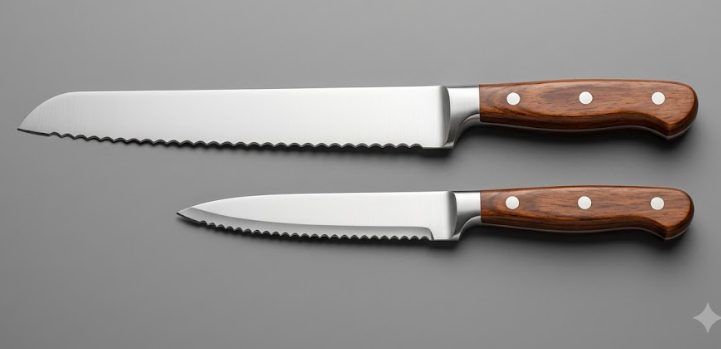
Blade length is very important. A standard chef knife is eight inches long. A bread knife is often longer. It can be nine, ten, or twelve inches. This long length gives you more control.
Why do you need a long blade? Think of a large sourdough boule. A short knife cannot cross the whole loaf. You must saw back and forth many times. This action ruins the bread.
A long blade slices in one smooth motion. You pull the knife toward you. The teeth cut the crust. You push the knife forward. The slice is done. It looks very clean and professional.
Short serrated knives are different. They are usually five to six inches long. They are too short for big loaves. They are better for small tasks. We will look at those tasks next.
Bread Knife vs Serrated Utility Knife
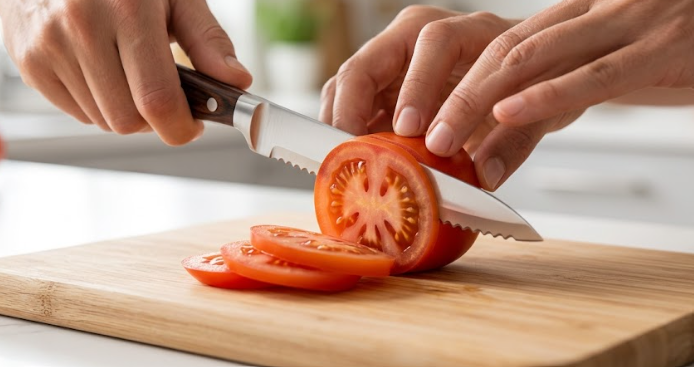
What is the difference between a bread knife and a serrated utility knife? The main differences are size and purpose. A utility knife is small and light. A bread knife is long and heavy.
A serrated utility knife is often called a tomato knife. It is perfect for slicing soft fruits. It excels at cutting bagels and rolls. You can control it with one hand very easily.
But a utility knife fails on large sourdough. It is too short. It will get stuck in the middle. You will have to hack at the bread. This action creates a mess of crumbs.
A bread knife has a stiffer blade. This stiffness prevents the blade from bending. When you cut a thick crust, you need a stiff blade. A floppy blade will bend and then slip.
I recommend using both knives. They serve different needs. A utility knife is great for daily prep. A bread knife is best for baking days. They form a great team in the kitchen.
Why Are Bread Knives Serrated?
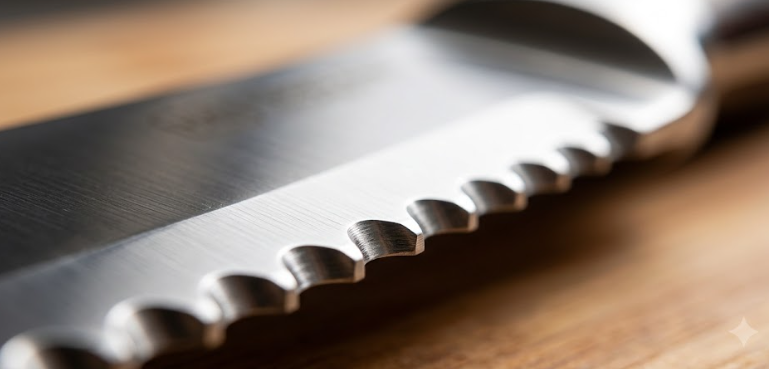
Why are bread knives serrated? Think about a loaf of bread. It has a hard outer crust. It also has a soft, delicate interior. A straight-edge blade cannot cut both parts easily.
A straight blade presses down on the crust. It distributes force across the whole edge. The crust resists this force. The bread compresses. You end up squishing the soft crumb deep inside.
A serrated blade is different. The teeth act like tiny hooks. They grab the hard crust. They fracture the surface. This lets the blade slide into the soft bread without any downward pressure.
You do not need to push down. You only need to saw back and forth. The teeth do all the work. This keeps the shape of your bread perfect. Your slices stay very fluffy.
Can You Use a Serrated Knife for Bread?
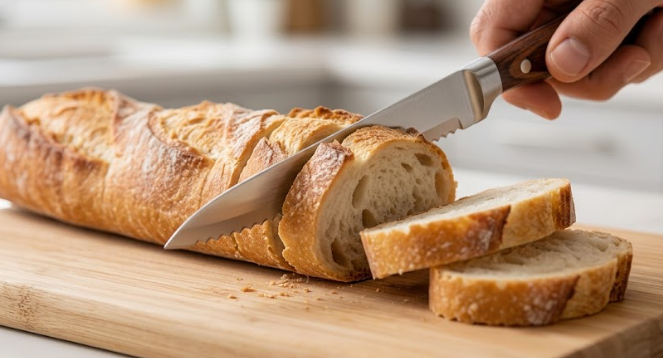
Can you use a serrated knife for bread? Yes, you can. Any serrated blade can cut bread. But the size of the loaf matters. A small knife is hard to use on big loaves.
If you have a baguette, a small serrated utility knife works. It is long enough to cross the bread. The teeth will cut the crust. You will get clean, small slices very easily.
But do not try this on a large sourdough boule. The short blade will sink into the middle. You will lose your grip. The cut will be crooked. You might even hurt yourself easily.
A true bread knife is always best for whole loaves. Its length keeps your hand safe. It keeps the blade flat. You get straight, beautiful slices every single time. It is very useful.
Do You Need a Bread Knife?
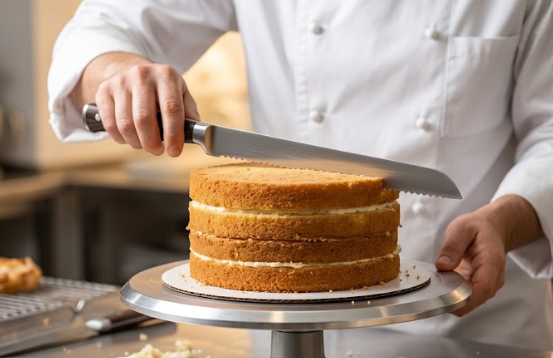
Do you need a bread knife? If you buy pre-sliced bread, maybe not. A standard chef knife can handle your other tasks. But if you love whole loaves, you really need one.
Baking at home is very popular now. Sourdough bakers know this well. A good bread knife is essential. You cannot cut a fresh, crusty loaf without one. It is a vital kitchen tool.
A bread knife also does other jobs. It is great for leveling cakes. It slices soft melons easily. It can cut large winter squash. It is much more versatile than you might think.
If you want to buy a high-quality blade, check this option. It is a great choice for any home cook. You can find it online. Click here to BUY AMAZON today.
How to Choose: Which One Should You Buy?
How do you choose between them? First, look at your daily cooking. Do you slice small fruits often? Do you cut bagels for breakfast? If yes, buy a serrated utility knife first.
Do you bake fresh sourdough? Do you buy whole loaves from the bakery? If yes, a bread knife is a must. It is the only tool that will do the job right always.
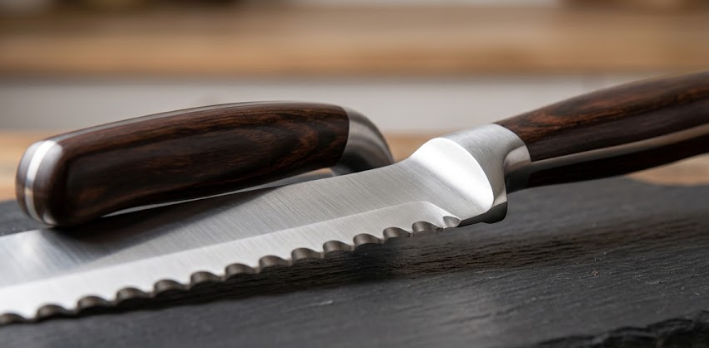
You should also consider an offset bread knife. This design has a bent handle. The handle sits higher than the blade. This keeps your knuckles from hitting the cutting board. It is very comfortable.
Look for good steel when you buy. Hard steel holds its edge longer. Cheap steel dulls in a few months. Since you cannot sharpen these easily, good steel is worth the price paid.
I recommend getting a high-quality bread knife first. It will make your baking experience much better. You can check out this excellent option. Click here to BUY AMAZON.
How to Maintain and Sharpen Serrated Knives
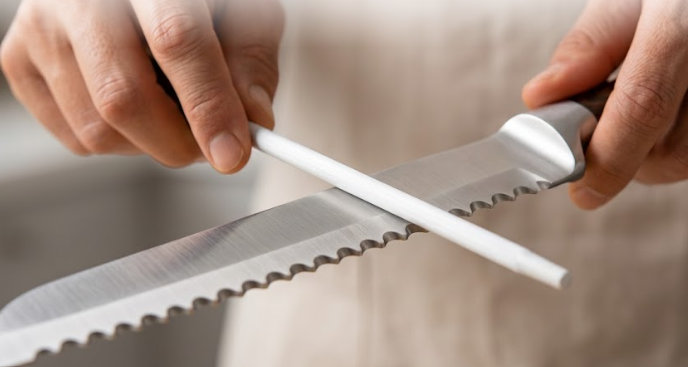
Sharpening serrated knives is a bit tricky. You cannot use a flat whetstone. The stone cannot reach inside the curved scallops. This is why many people think they cannot be sharpened easily.
But you can sharpen them. You need a ceramic honing rod. The rod must fit the size of the scallops. You run the rod through each scallop one by one. It takes some time.
Most people do not sharpen their bread knives. They just buy a new one when it dulls. This is why buying high-quality steel matters. Good steel keeps its teeth sharp for many years.
To keep your knife sharp, hand wash it. Do not put it in the dishwasher. The heat can damage the handle. The harsh soap can dull the sharp teeth. Always dry it immediately after.
Pros and Cons: Bread Knife vs Serrated Utility Knife
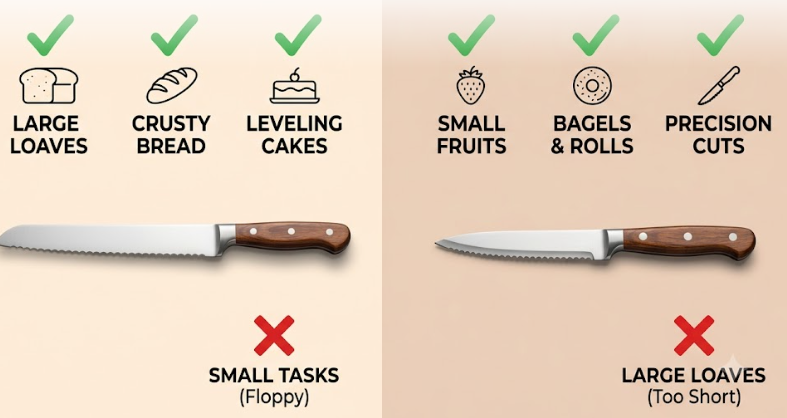
Let us compare these two tools side by side. Each has its own strengths. Each has its own weaknesses. This comparison will help you decide which one fits your kitchen cooking style best.
Below is a clear table of their features. Look at the blade length and best uses. This will make your choice very easy. Both knives are great additions to any home kitchen setup.
| Feature | Bread Knife | Serrated Utility Knife |
|---|---|---|
| Blade Length | 8 to 12 inches | 5 to 6 inches |
| Best Use | Slicing large loaves, crusty bread, leveling cakes | Slicing tomatoes, bagels, small fruits, pastries |
| Blade Stiffness | Very stiff (prevents bending) | Slightly flexible (for detail work) |
| Knuckle Clearance | High (especially offset models) | Low (requires careful grip) |
Final Verdict: Which One Should You Buy?
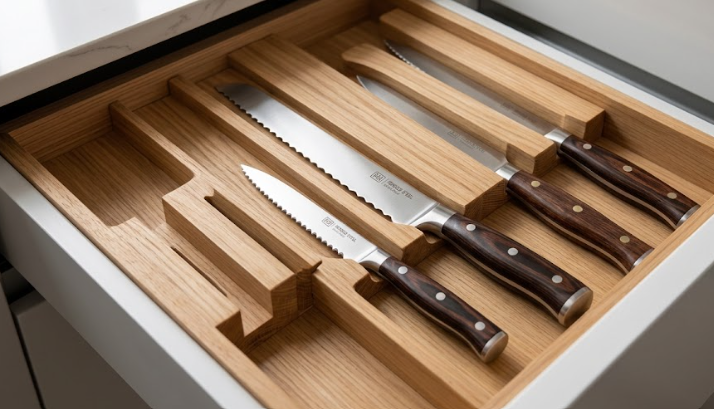
In the end, the choice is yours. Both knives have a place in your kitchen. If you love baking, buy a bread knife first. It will make slicing sourdough a real joy today.
If you rarely bake, buy a serrated utility knife. It is perfect for daily tasks. It slices tomatoes and bagels easily. It is a very handy tool for quick morning meals at home.
Whichever you choose, invest in good quality. A sharp, durable knife makes cooking fun. It keeps you safe. Check out our favorite high-quality knife right now. Click here to BUY AMAZON.
Frequently Asked Questions
Is a bread knife the same as a serrated knife?
No, they are not the same. A bread knife is a specific type of serrated knife. It is long and stiff. The term serrated refers to any knife with a sharp, saw-toothed blade.
Can you use a serrated knife for bread?
Yes, you can use a serrated knife for bread. But size always matters. A small serrated utility knife works for baguettes. It is too short for large sourdough boules. Use a long blade instead.
What is the difference between a bread knife and a serrated utility knife?
The main difference is blade length. A bread knife is eight to ten inches long. A serrated utility knife is five to six inches long. The bread knife is best for large bread loaves.
Why are bread knives serrated?
Bread knives are serrated because the teeth grab the hard outer crust. They fracture the surface without squishing the bread. A straight-edge knife would compress and crush the soft interior crumb very easily.