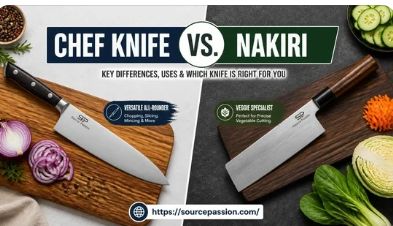
You want a new blade. You stand in your kitchen. Two tools sit on the wood. One is a chef knife. One is a Nakiri. Both look great. But which is best for you?
Cooking is fun when you have good tools. A bad tool makes prep work hard. Your hands get tired. Your cuts are not clean. You need the right tool for the job.
We will look at these two tools. We will show you how they cut. You will see which one fits your daily meals. This guide will help you choose the best one.
We will test their shapes. We will look at how they feel. By the end, you will know which tool to buy. Let us look at each blade now.
What is a Chef Knife?
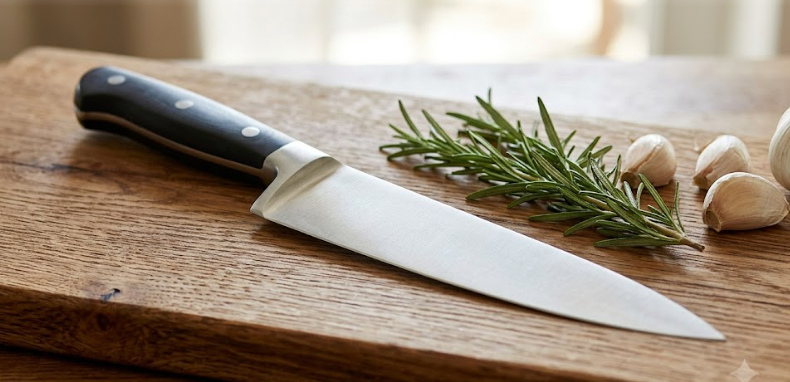
A chef knife is a classic tool. Most cooks own one. It is the main tool in Western kitchens. It can do almost any job. It cuts meat, fish, and greens.
This tool has a long blade. The blade curves up to a sharp tip. This curve lets you rock the blade. It is a heavy tool. It has a lot of power.
Most chef knives are eight inches long. Some are longer. The blade is thick. It can cut through hard food. It can even crack small bones. It is very strong.
You can find this tool on AMAZON. It is a great first buy for any home cook. It will handle most of your daily tasks with ease.
What is a Nakiri Knife?
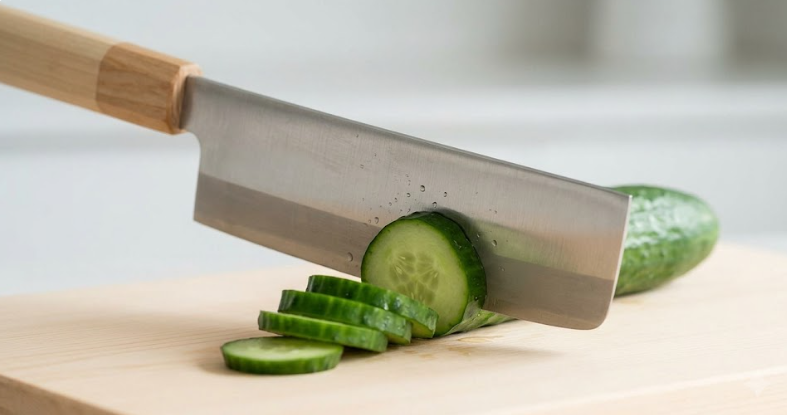
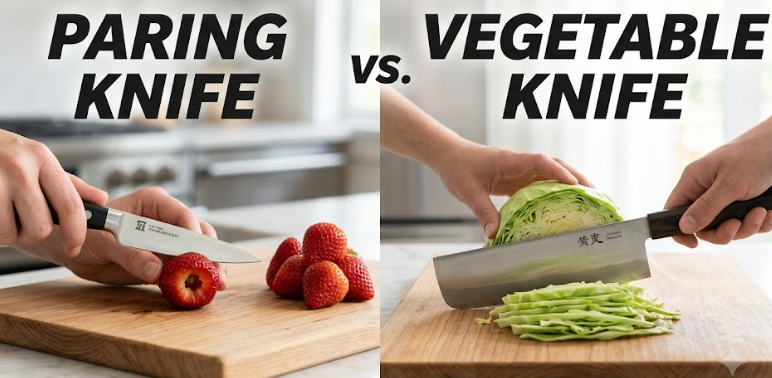
The Nakiri is a Japanese tool. It is made just for plants and greens. It looks like a small cleaver. The blade is flat and rectangular. It has no sharp point.
Why does it have this shape? The flat edge hits the board all at once. This means you do not have to rock it. You just push straight down to cut.
The blade is very thin. It is much thinner than a chef knife. This thin edge cuts clean. Food does not stick to it as much. It is very light.
This tool is perfect for fast slicing. It makes thin cuts with ease. If you cook lots of greens, this is the tool for you. It makes prep work fast.
Blade Design: Straight vs. Curved
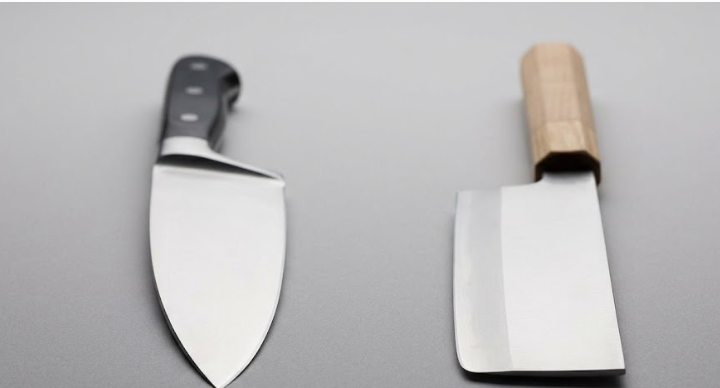
The biggest difference is the blade shape. A chef knife has a curved edge. This curve is called the belly. It lets you roll the blade as you chop.
A Nakiri has a straight edge. There is no curve at all. The whole edge hits the board at one time. This shape prevents half-cut food. It is very neat.
The tip is also different. A chef knife has a sharp point. You can use the point for fine work. You can poke holes or trim fat with it.
The Nakiri has a square front. It has no tip. This design makes it very safe. You will not poke yourself. It also keeps the blade from bending.
The width of the blade is also key. Both blades are quite tall. This height keeps your knuckles safe. They will not hit the board. You can chop fast.
Cutting Techniques: Push Cut vs. Rocking Motion
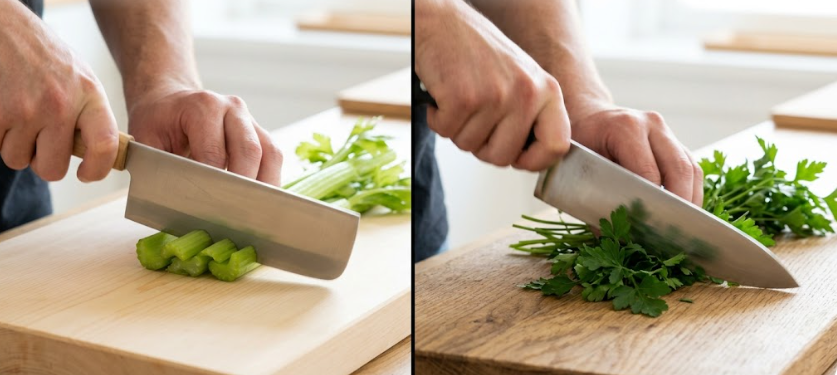
How do you like to cut? Your style matters a lot. A chef knife uses a rocking motion. You keep the tip on the board. You rock the heel up and down.
This rocking motion is great for herbs. It is good for mincing garlic. It feels very smooth. But it can take more time. It can also tire your wrist.
The Nakiri uses a push cut. You push the blade forward and down. You do not rock it. The flat edge cuts through the food in one clean stroke.
This push cut is very fast. It works well on tall vegetables. You can chop onions in seconds. It is a very natural movement for your hand and wrist.
Both styles are very good. You should try both. Some cooks love the rock. Others love the push. Pick the one that feels best to your own hand.
Core Differences: Nakiri vs. Chef’s Knife
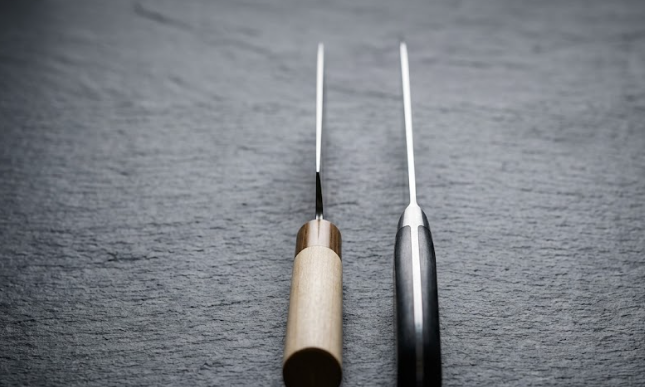
Let us compare their weight and size. A Nakiri is usually shorter. It is about six inches long. It is very light. You can use it for hours easily.
A chef knife is longer and heavier. It is often eight to ten inches long. The extra weight helps you cut. It does the hard work for you.
The thickness of the metal is different too. A chef knife is thick at the top. This makes it very strong. It will not chip when hitting hard things.
A Nakiri is thin from top to bottom. It slices like a sharp razor. But it is more fragile. You must not hit bones or frozen food with it.
The bevel is how the edge is ground. Most Nakiris have a double bevel. This means both sides are sharp. It is very easy for anyone to use.
Knife Specifications Comparison
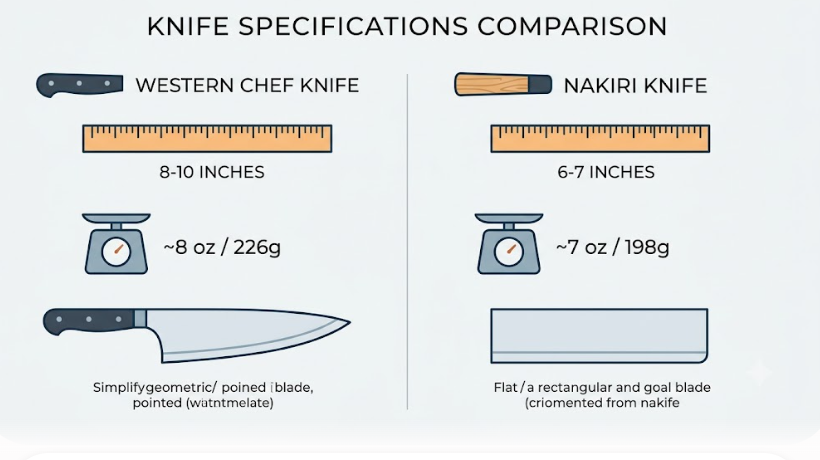
Let us look at the specs of each tool. This table shows how they match up. It will help you see the physical differences at a single glance.
| Feature | Chef Knife | Nakiri Knife |
|---|---|---|
| Average Length | 8 to 10 inches | 6 to 7 inches |
| Blade Shape | Curved edge with sharp tip | Flat edge with square tip |
| Average Weight | 8 ounces (approx. 226g) | 7 ounces (approx. 198g) |
| Best For | Meat, fish, general use | Vegetables, leafy greens |
| Cutting Motion | Rocking and slicing | Up-and-down push cut |
This table shows that the chef knife is larger. The Nakiri is smaller and lighter. Both tools have a clear place in your kitchen. They do different jobs well.
You can find both types of high-quality knives on AMAZON. They come in many price ranges. Choose a trusted brand that fits your budget.
Think about what you cook most. If you eat a lot of meat, get the chef knife. If you eat mostly fresh plants, get the Nakiri first.
Now let us look at other tools. How do they compare to these two? Let us check the famous Santoku next. It is also very popular.
Santoku vs. Nakiri vs. Chef’s Knife
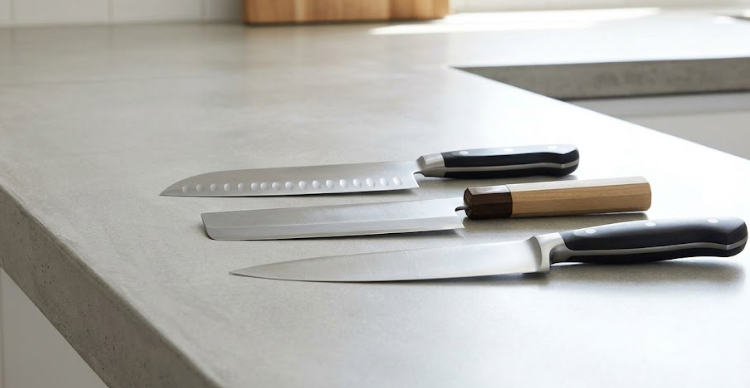
The Santoku is another Japanese tool. It is an all-purpose blade. Its name means three virtues. This means it is very good for slicing, dicing, and mincing.
How does it compare? The Santoku is like a mix of both. It is shorter than a chef knife. It has a very slight curve, unlike the flat Nakiri.
Choose a Santoku if you want one light tool for everything. Choose a Nakiri if you only want to prep green plants. Choose a chef knife for heavy jobs.
Many home cooks own all three. They use them for different tasks. It is nice to have options. But you really only need one to start your work.
Japanese Gyuto vs. Western Chef Knife
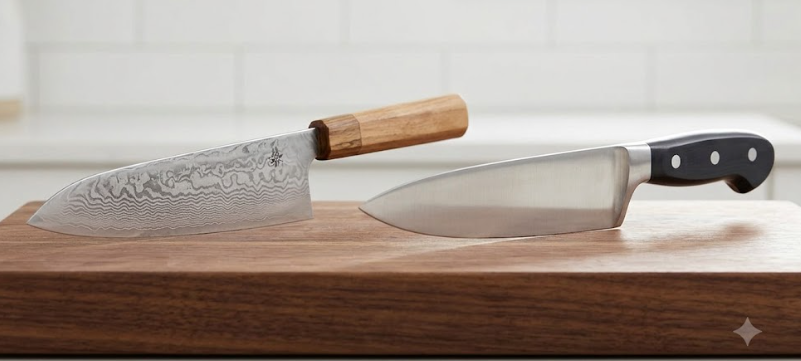
You might hear the word Gyuto. A Gyuto is the Japanese version of a chef knife. It is very similar. But there are still some key differences.
The Gyuto is made of much harder steel. This steel holds a sharp edge longer. The blade is also thinner and lighter than a Western chef knife.
Western knives are made of softer steel. They are heavier and more durable. They can take a hard beating. They are easier to sharpen at home.
If you like a light, razor-sharp blade, get a Gyuto. If you want a heavy, solid workhorse, get a Western chef knife. Both are great tools.
Nakiri vs. Usuba
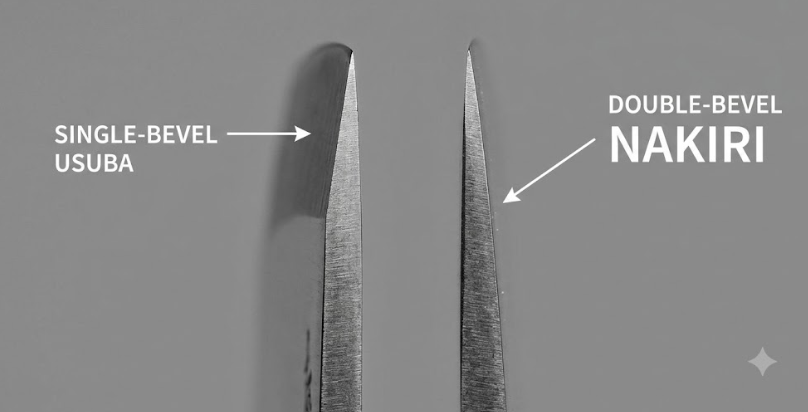
The Usuba looks just like a Nakiri. Both are rectangular vegetable knives. But they are built for very different cooks. The Usuba is for pros.
The Usuba has a single bevel. This means only one side of the blade is sharp. It is very hard to use if you are new to cooking.
It also requires special sharpening skills. A Nakiri has a double bevel. It is sharp on both sides. This makes it very easy for anyone to use.
Buy a Nakiri for your home. It is low-maintenance and friendly. Leave the Usuba to the professional chefs. They need it for ultra-thin cuts.
Nakiri vs. Cleaver
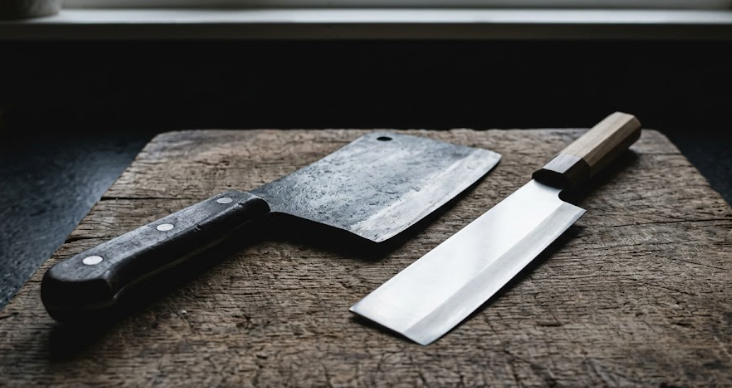
Some people mix up the Nakiri and the cleaver. They look similar because both are rectangular. But they do very different jobs in your kitchen.
A meat cleaver is heavy and thick. It is made to chop through bone and tough meat. The blade is very thick so it will not break.
A Nakiri is thin and light. It is made only for plants. If you try to chop bones with a Nakiri, the blade will chip or ruin completely.
Do not use them the same way. Use the cleaver for heavy meat prep. Use the Nakiri for clean, thin vegetable slices. They are not the same tool.
Can You Cut Meat with a Nakiri Knife?
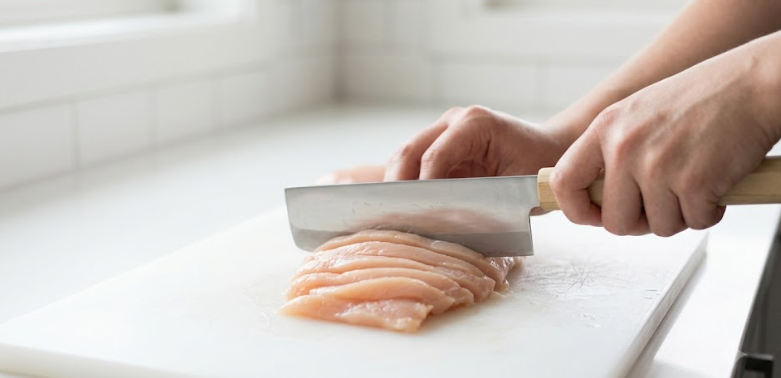
Can you cut meat with a Nakiri? The short answer is yes. But only if the meat has no bones. It works well on soft, boneless meat cuts.
You can slice chicken breast or beef strips. The thin blade cuts through meat easily. But you must be very careful. Do not hit any hard bones.
If you hit a bone, you will damage the blade. The steel is too thin for hard impact. For meat with bones, use a chef knife instead.
So, keep your Nakiri for plants mostly. It can do light meat prep in a pinch. But it is not a full replacement for a chef knife.
Is a Nakiri Knife Worth It?
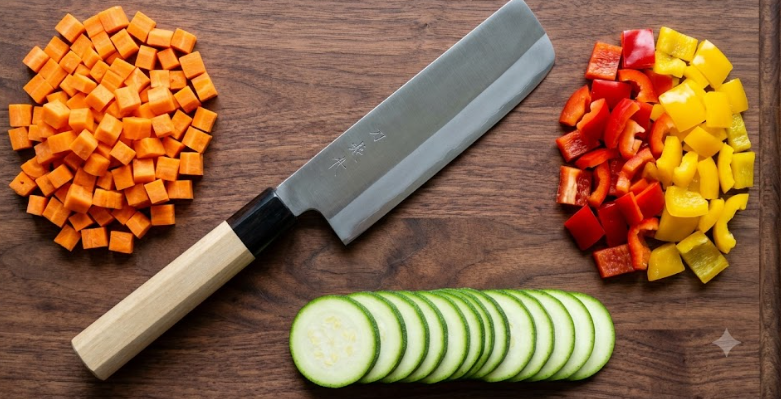
Is a Nakiri knife worth it? Yes, if you prep a lot of plants. It makes chopping fun and fast. You will love how it feels in hand.
If you only cook meat, you do not need it. A chef knife will be enough. But for vegetable lovers, the Nakiri is a great addition to have.
It saves time. It reduces hand pain. It makes your cuts look very neat. It is a joy to use. You will not regret buying one for yourself.
You can find great options on AMAZON today. They are affordable and durable. They will last for many years with simple, regular care.
Conclusion & Final Verdict
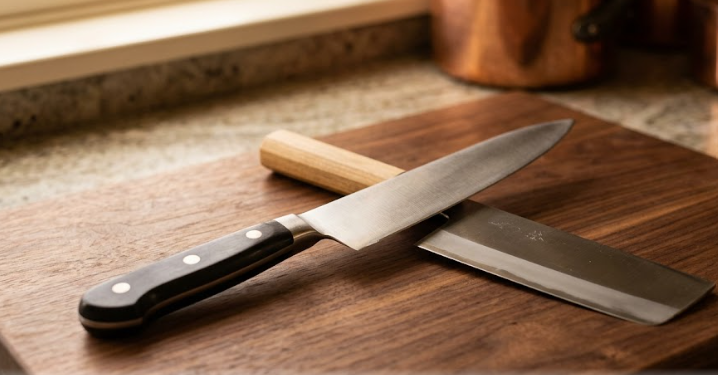
In the end, both knives are excellent. The chef knife is the ultimate all-rounder. It can handle meat, fish, and vegetables. It is strong and heavy.
The Nakiri is a specialist. It is the best tool for chopping greens. It is light, fast, and precise. It makes vegetable prep a breeze to do.
If you can only buy one, get the chef knife. It does more tasks. If you want to expand your set, add the Nakiri. You will love both tools.
Now you know the differences. Choose the knife that fits your cooking style today. Happy cooking and enjoy your time in the kitchen with your new tool!
Frequently Asked Questions
What is a Nakiri knife used for?
A Nakiri knife is used for chopping, slicing, and dicing vegetables. Its flat edge makes it perfect for clean, fast cuts on plants and leafy greens.
Can you cut meat with a Nakiri knife?
Yes, you can cut boneless meat with a Nakiri knife easily. However, you should never use it to cut meat with bones, as the thin blade can chip.
Why does a Nakiri knife have no tip?
A Nakiri knife has no tip because it is designed for vertical chopping. The lack of a sharp point makes the blade safer and prevents the front from bending.
Is a Nakiri knife worth it?
Yes, a Nakiri knife is worth it if you prepare vegetables often. It speeds up your kitchen prep and makes slicing leafy greens much easier and more enjoyable.