I love to cook. I test many kitchen tools. Today, I want to talk about chef knives. Two big styles rule the West. They come from France and Germany. Let us look at both styles now.
You need a good knife. A bad knife makes cooking hard. A good knife makes cooking fun. The French knife and the German knife are very different. Let us find out which one you need.
Many home cooks do not know the difference. They buy any knife they see. But the shape and weight change how you cut. I will help you choose the best tool for your home kitchen.
The Core Difference in Blade Profiles
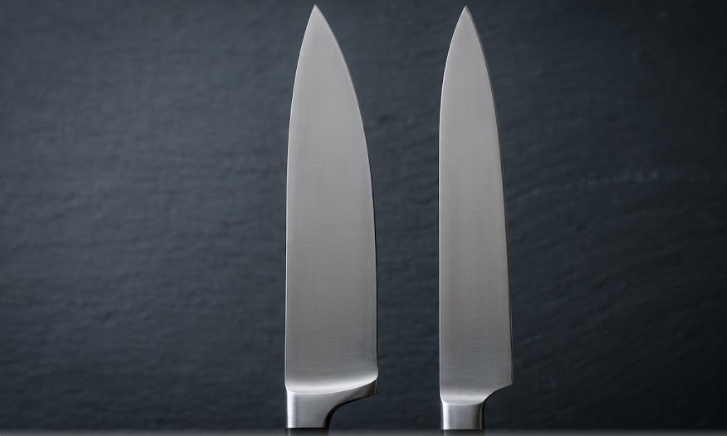
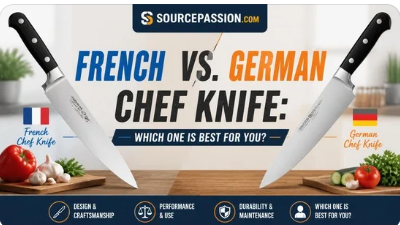
Let us look at German vs French knife profiles. This is the main difference. The German blade has a big curve. The French blade is much straighter. This shape changes how the metal hits your cutting board.
The curved German blade is made for rocking. The straight French blade is made for slicing. Each shape has a goal. You must choose the shape that fits your own hand and your daily cooking style.
I use both styles in my kitchen. The German profile feels very safe. The French profile feels very fast. Your choice will change how you prep your food every single day. Let us look closer.
Sabatier vs Wüsthof: The Battle of Two Legends
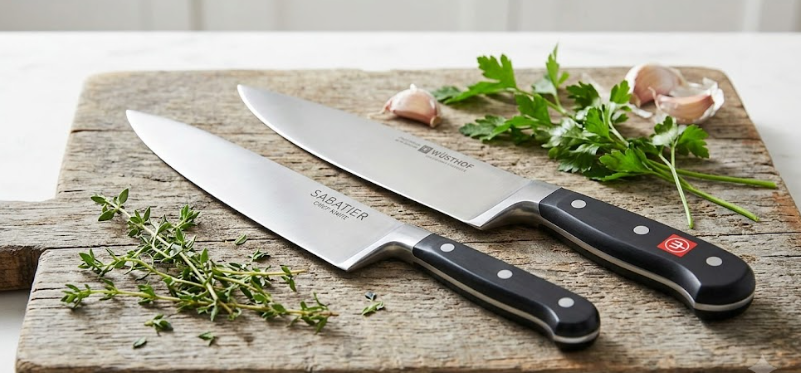
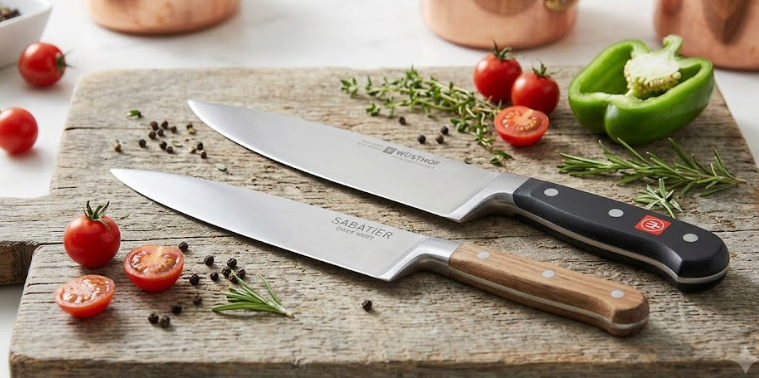
We must talk about brands. Sabatier represents the French style. Wüsthof represents the German style. These two names have made blades for many years. They show the best of each country’s design and history.
Sabatier knives are light and thin. They feel like a small wand in your hand. Wüsthof knives are thick and heavy. They feel like a strong tool. Both brands make great items for your home.
I own a Sabatier and a Wüsthof. I use the Sabatier for herbs. I use the Wüsthof for thick squash. You can find a great German knife on Amazon to start your collection today.
German knives often come from Solingen. French knives often come from Thiers. This is the Solingen vs Sabatier style. Both towns are famous for steel. They have made top blades for hundreds of years.
Blade Belly and Cutting Motion
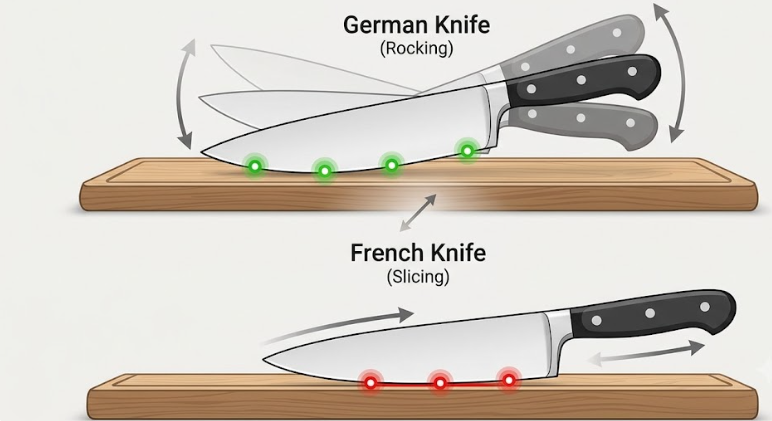
The chef knife blade belly is the curved part of the edge. German knives have a deep belly. This curve lets you use a rocking motion. You rock the blade up and down on the board.
French knives have a flat belly. The edge is straight for most of the length. This shape is for a slicing motion. You pull or push the blade. It does not rock easily.
The rocking motion vs slicing motion debate is old. Rocking is great for minced herbs. Slicing is great for clean cuts of meat. I like slicing because it does not bruise delicate green plants.
If you chop fast, the French style works well. It moves forward and back. If you like to keep the tip on the board, choose German. The curve makes the rocking feel very smooth.
Steel Hardness and the Rockwell Scale
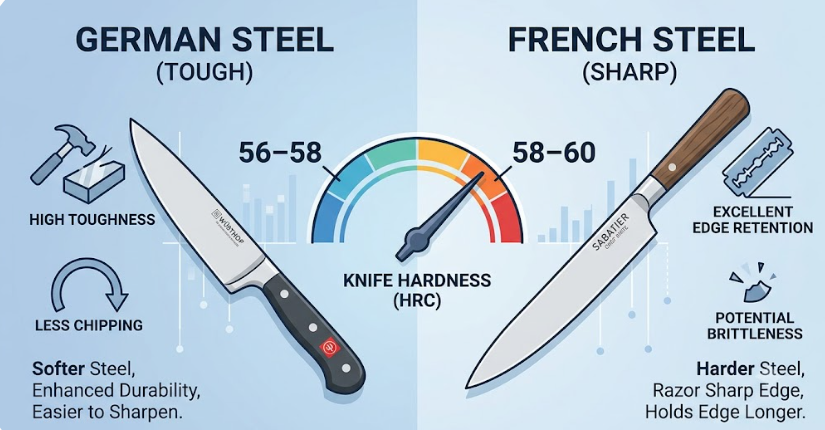
We measure steel hardness with the Rockwell hardness scale HRC. German steel is usually softer. It has an HRC of 56 to 58. French steel can be slightly harder, around 58 to 60 HRC.
Softer German steel is very tough. It does not chip when it hits a bone. But it gets dull faster. You must steel it often. Harder French steel stays sharp longer but can chip.
I prefer tough steel for heavy tasks. I do not want my blade to chip. If you want a knife that lasts through hard bones, German steel is best. It bends instead of breaking.
If you want a super sharp edge, go French. The hard steel holds a thin angle. You can slice thin tomatoes with ease. Just be careful not to hit hard frozen foods with it.
Weight, Balance, and Full Tang Design

Are German knives heavier than French knives? Yes, they are. German knives have thick blades. They also have a heavy bolster. The bolster is the thick metal part between the blade and handle.
French knives are much lighter. The blade is thin. The bolster is often smaller or absent. This makes the knife feel agile. Your hand will not get tired during long prep sessions.
Both styles use full tang kitchen knives. This means the steel runs all the way through the handle. A full tang gives great balance. It makes the knife strong and safe to use.
I like the weight of a German knife for heavy cuts. The weight does the work for you. But for fast chopping, the light French knife is my favorite. It feels like part of my hand.
Bevel Angles and Edge Maintenance
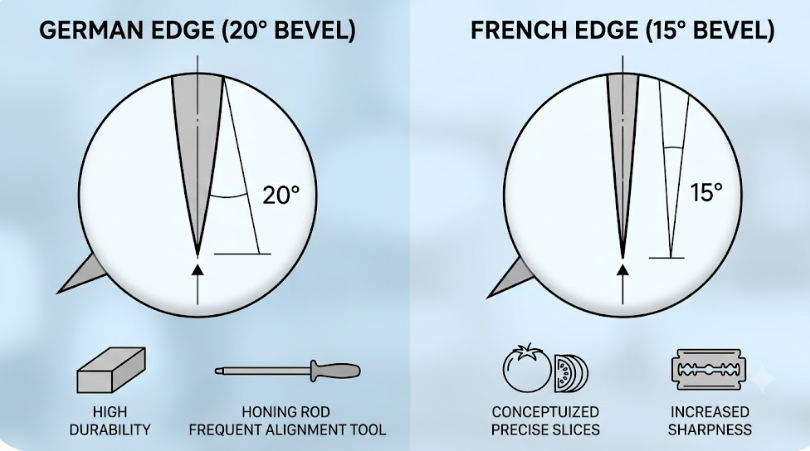
Let us talk about the double bevel edge angle. Most Western knives have a bevel on both sides. German knives are sharpened to about 20 degrees per side. This thick angle is very strong.
French knives often have a sharper angle. They are ground to 15 degrees per side. This thin edge cuts like a razor. But it needs more care. It can dull if you misuse it.
You must sharpen both styles. You can use a honing steel weekly. You should use a whetstone a few times a year. A sharp knife is safe. A dull knife slips and cuts your fingers.
You can buy a great sharpener on Amazon to keep your edges clean. I sharpen my knives every month. It makes a huge difference. Your food will look much better too.
Gyuto vs Western Chef Knife
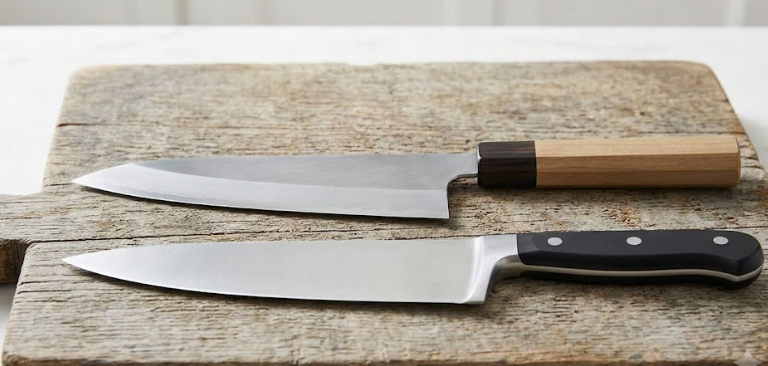
Many cooks compare these to Eastern blades. The Gyuto is the Japanese version of a chef knife. It is very thin and light. It is like a mix of French and German styles.
The Gyuto is flatter like a French knife. But it uses very hard Japanese steel. Western knives are tougher than the Gyuto. They can handle rough tasks that would chip a Japanese blade.
I recommend Western knives for beginners. They are easier to care for. You do not have to worry as much. They can take a beating and still perform well in a busy home kitchen.
Why Do French Knives Have a Straighter Edge?
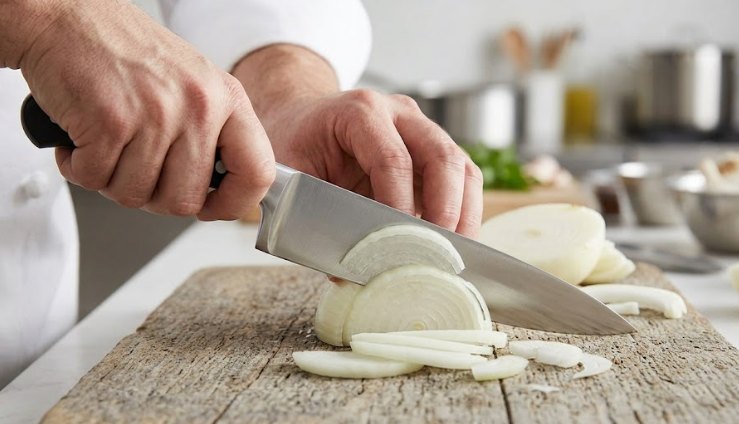
Why do French knives have a straighter edge? The answer lies in French cooking history. French chefs use a technique called push-cutting. They slice forward and down. A straight edge works best for this.
A straight edge means more of the blade touches the board at once. This makes clean cuts. You do not get accordion cuts where food stays connected. It is great for fine cuts.
French cooking relies on precise cuts like julienne. A straight blade makes these cuts easy. The straight edge helps you guide the blade with your knuckles safely. It gives you great control.
Is a French or German Chef Knife Better?
Is a French or German chef knife better? Neither knife is better for everyone. The best knife depends on your style. If you want a tough workhorse, the German knife is your best choice.
If you want a fast and precise tool, the French knife is better. I suggest trying both in your hand. Feel the weight. Move them on a board. Your hand will tell you.
What is the difference between French and German chef knives? It comes down to shape, weight, and steel. Once you know these three things, you can make the right choice for your kitchen.
Understanding the Bolster

The bolster is the thick part of steel between the blade and the handle. It acts as a guard for your fingers. It also adds weight to the center of the knife for better balance.
German knives often have a full bolster. This thick metal runs all the way to the bottom of the heel. It makes the knife very safe. But it makes sharpening the heel very hard.
French knives usually have a half bolster or no bolster at all. This means you can sharpen the entire edge from tip to heel. It makes the knife lighter and easier to maintain over time.
I prefer a half bolster because I like to sharpen my own knives. A full bolster gets in the way of my whetstone. But many people like the safety of a full German bolster.
Handle Designs and Comfort
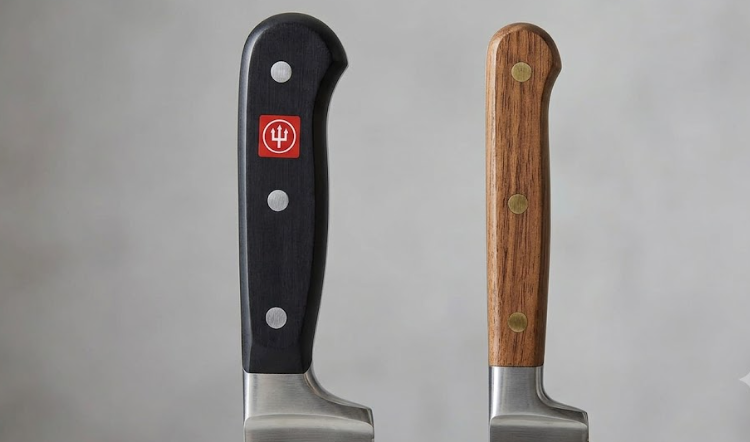
Handles are very important for comfort. German knives often use heavy synthetic handles. They are held together with three strong rivets. These handles are waterproof and last for many decades without wear.
French knives often use slim wooden handles. They feel warm and natural in your hand. But wood needs extra care. You must not let it sit in water or it will crack over time.
The shape of the handle is different too. German handles are thick and curved to fit your grip. French handles are straight and slim. They allow you to change your grip very easily.
I find the French handle better for small hands. It is easy to hold. The German handle is great for large hands. It feels very solid and secure when you hold it tight.
Maintenance and Honing
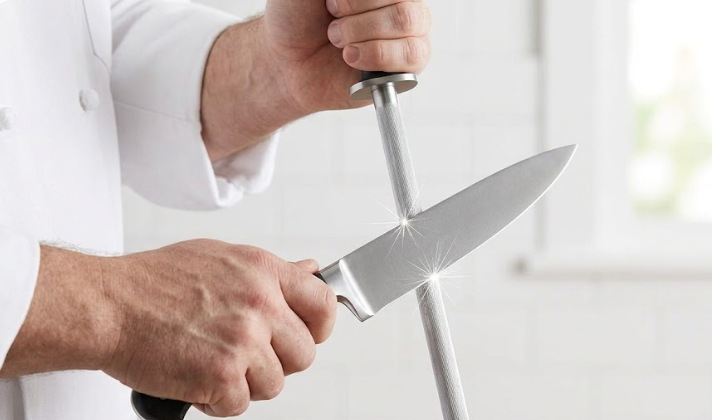
Both knives need daily care to stay in top shape. You must never put them in a dishwasher. The heat and soap will ruin the steel and the handle. Always wash them by hand.
Dry your knife immediately after washing. This prevents rust, even on stainless steel. Store your knives on a magnetic strip. This keeps the edges from rubbing against other metal tools in drawers.
Hone your knife before each use. Honing does not remove metal. It just aligns the microscopic teeth on the edge. A straight edge cuts much better than a bent one. It takes ten seconds.
German steel needs more honing because it is soft. French steel needs less honing but more careful washing. If you treat your knives well, they will last for your entire life and beyond.
The Price and Value Comparison
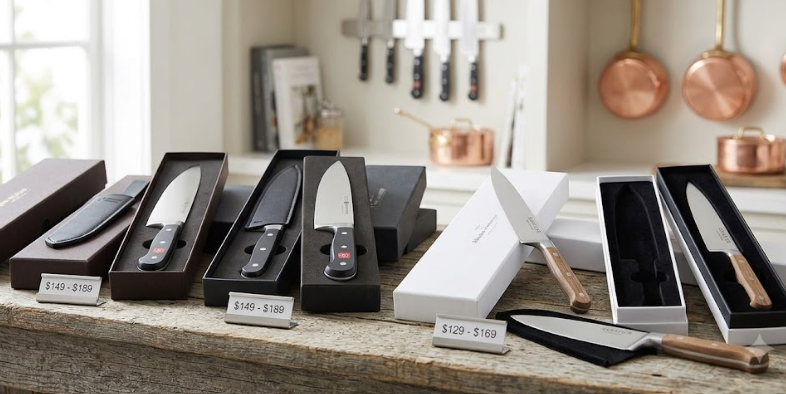
A good chef knife is an investment. High-quality German knives cost between one hundred and two hundred dollars. French knives are in a similar price range. Both offer excellent value for your money.
German knives last longer under rough use. They are hard to break. This makes them a great value. French knives offer great value if you want precision. They make cooking feel like an art.
I suggest spending at least eighty dollars on a chef knife. Cheap knives use poor steel that will not hold an edge. A good knife will save you money over time because you buy it once.
Comparison Table of Western Knives
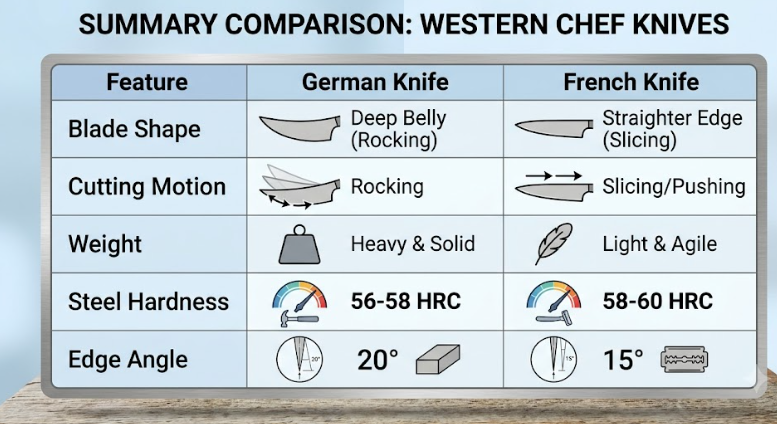
This simple table shows the main features of both styles. Use it to compare them quickly. It will help you see which blade fits your daily cooking needs the best.
| Feature | German Knife | French Knife |
|---|---|---|
| Blade Shape | Curved belly | Straight edge |
| Cutting Motion | Rocking | Slicing/Pushing |
| Steel Hardness | 56-58 HRC | 58-60 HRC |
| Edge Angle | 20 degrees | 15 degrees |
| Weight | Heavy | Light |
As you can see, the differences are clear. Each knife has its own strengths. Choose the one that matches your favorite foods and your style of cutting on the board.
How to Choose Your Best Western Blade
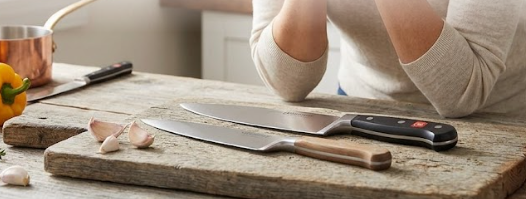
How to choose between German and French chef knives? Think about your habits. Do you rock your knife? Choose German. Do you slice and push? Choose French. It is all about your motion.
Think about the foods you cut. If you cut squash and bones, buy German. If you cut soft herbs and fish, buy French. The right tool makes the job easy and safe.
Think about care. If you do not want to worry, get a German knife. It is tough. If you love to sharpen and care for tools, get a French knife. It rewards your effort.
You can check out top rated options on Amazon right now. Try to hold both styles if you can. The feel in your hand is the most important thing.
Summary of Key Differences
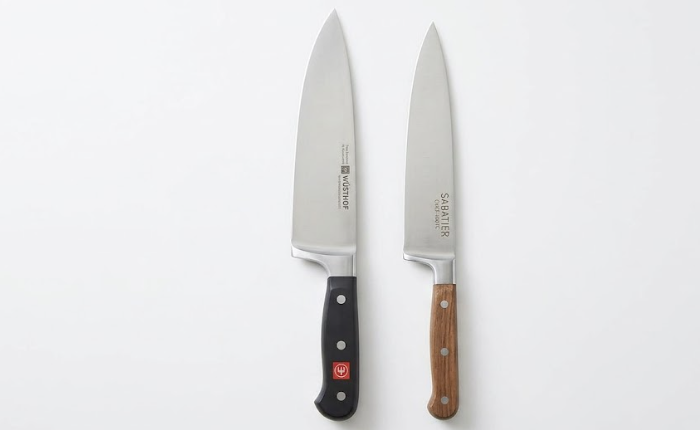
Let us sum up the main points. German knives are heavy and curved. French knives are light and straight. German steel is tough. French steel is sharp. Both are classic tools for cooks.
I keep both in my kitchen. They serve different needs. You do not have to choose just one. But starting with the right one will make your cooking journey much more fun.
Frequently Asked Questions
Is a French or German chef knife better?
Neither is better. German knives are tough and curved for rocking. French knives are light and straight for slicing. You should choose the one that matches your personal cutting style.
Why do French knives have a straighter edge?
French knives have a straighter edge because French cooking uses push-cutting. This technique slices forward and down. A straight edge makes very clean cuts on your wooden board.
Are German knives heavier than French knives?
Yes, German knives are heavier. They have thicker blades and heavy metal bolsters. French knives are thin and light, which makes them feel very agile in your hand as you chop.
How to choose between German and French chef knives?
Think about your cutting style. If you rock your blade, choose German. If you slice and push, choose French. You should also consider the weight you prefer in your hand.