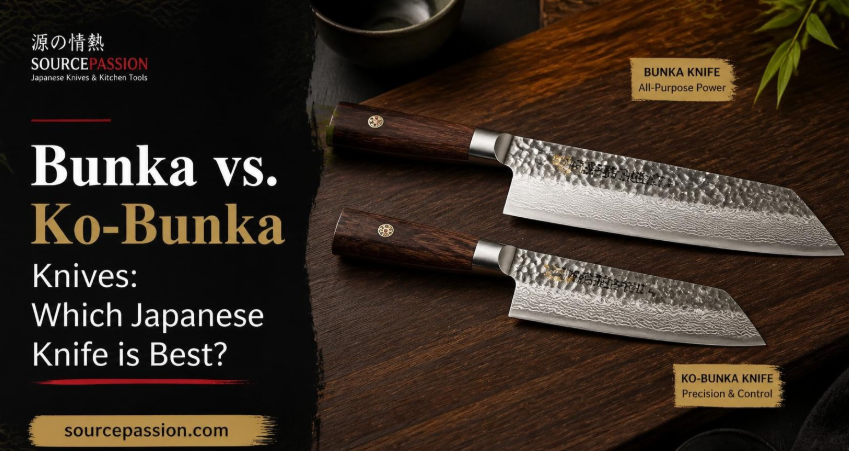
I use Japan knives every day. They are in my kitchen. They are sharp and beautiful. Two shapes stand out for daily prep. These are the Bunka and the smaller Ko-Bunka.
Which blade fits your hand best? Both knives share a cool, sword-like tip. Yet, they serve very different roles. They work differently on your cutting board. I will help you choose.
I have tested both styles for years. I know how they feel. They cut greens and meat well. This guide shows their main differences. Soon, you will find your perfect match.
If you want to buy a great Japanese knife, you can check them out on AMAZON. They have many options for your kitchen. I always look there when I need new blades for cooking.
What is a Bunka Knife?
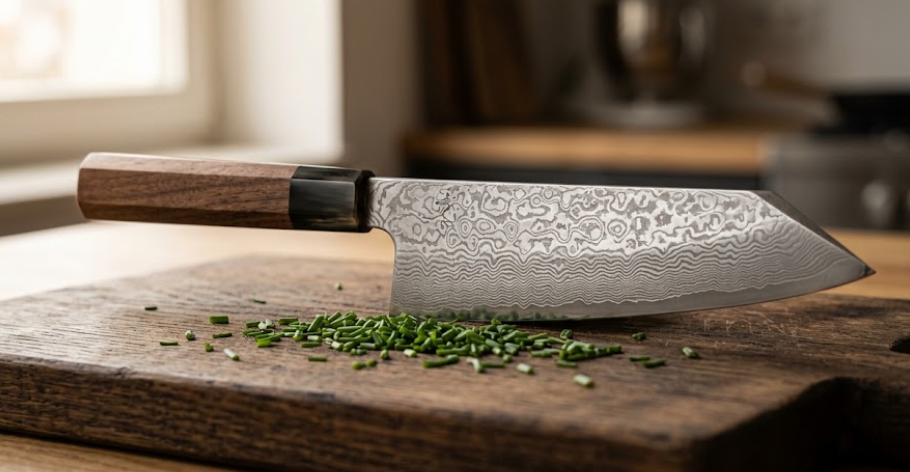
The Bunka is a classic prep knife. It looks like a mix of two other knives. These are the Santoku and the Nakiri. It has a wide blade and flat edge.
The name Bunka means culture in Japanese. It became popular in Japan after the war. Families used it to cook all food. It was a true all-purpose kitchen tool.
A standard Bunka is six to seven inches long. This size is perfect for home cooks. It is long enough to cut meat. It is also small enough to control.
The most famous feature of this knife is its tip. It has a sharp, slanted nose. People call this a reverse tanto tip. It is also called a K-tip.
The K-Tip Profile
The K-tip makes the Bunka look like a sword. This shape is not just for looks. It is very useful. The pointy tip lets you make very fine cuts.
I use the tip to score duck skin. I also use it to slice garlic thin. It can slide under silver skin on meat. It gives great control for detail work.
Bunka Knife Uses
What is a Bunka knife used for? It excels at chopping plants and herbs. The flat edge means the whole blade hits the board. This prevents poor cuts in chives.
It is also great for slicing boneless meat. The wide blade keeps your hand safe. Your fingers will not hit the wood board. It makes daily prep fast and safe.
What is a Ko-Bunka Knife?
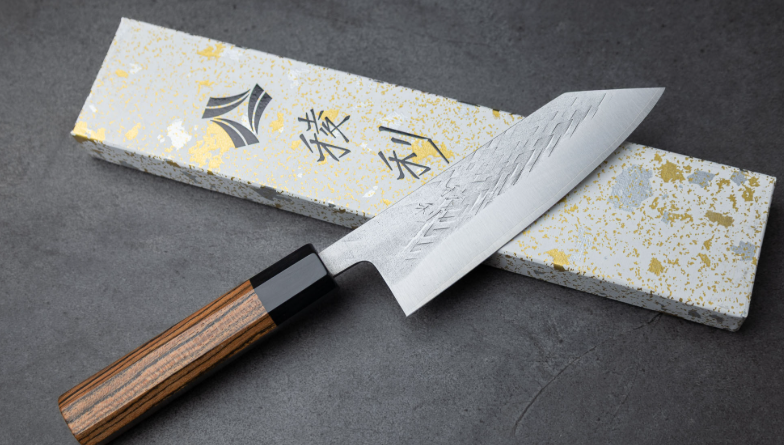
In Japanese, the word ko means baby. So, a Ko-Bunka is a baby Bunka. It is a smaller version of the standard knife. It is light and easy to hold.
This small kitchen knife is very handy. It has the same cool shape as the big Bunka. But the blade is much shorter. It measures four to five inches long.
I love using this baby Bunka knife. It is great for quick tasks. It is perfect when I do not want to clean a big chef knife. It sits right in the middle.
Size and Shape of the Ko-Bunka
The Ko-Bunka has a short but tall blade. This height is its secret weapon. Most small knives are very narrow. But this one gives you space for your fingers.
The blade profile is flat near the back. It has that same sharp reverse tanto tip. This tip is extremely thin. It makes the small knife feel very precise.
Ko-Bunka vs Petty Knife
Many cooks ask about ko-bunka vs petty knives. A petty knife is a standard utility blade. It is narrow and looks like a mini chef knife. It has a curve.
In the ko-bunka vs petty battle, height is key. The petty knife is too short for board work. Your knuckles will bump the board. The Ko-Bunka has a tall heel.
The Ko-Bunka has a flatter edge than a petty. This makes it better for chopping small veg. The petty is better for peeling fruit. It works best in the air.
Key Differences: Bunka vs. Ko-Bunka Knives
| Feature | Standard Bunka | Ko-Bunka |
|---|---|---|
| Blade Length | 160mm to 180mm (6-7 inches) | 120mm to 135mm (4.5-5.3 inches) |
| Blade Height | 45mm to 48mm (Tall) | 35mm to 40mm (Medium-Tall) |
| Best For | Large veg, meat, daily meals | Small veg, garlic, detail work |
| Weight | Medium (Around 130g) | Very Light (Around 80g) |
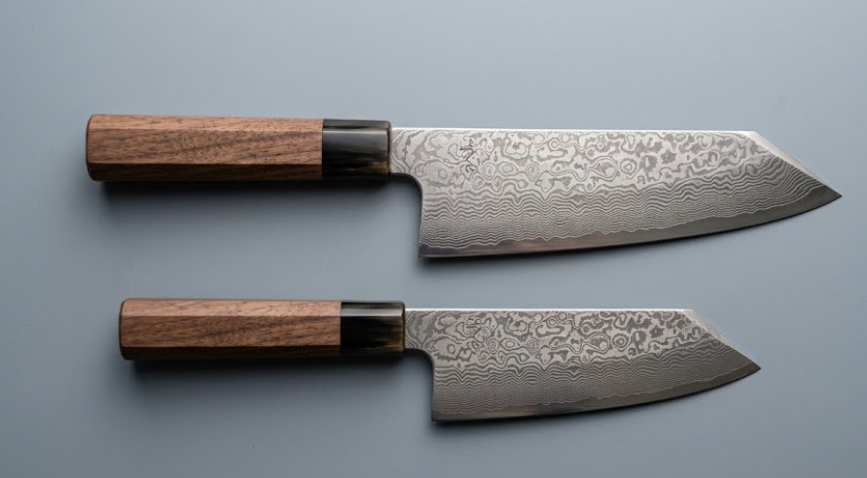
The table shows the main physical differences between these two blades. The standard Bunka is longer and taller. The Ko-Bunka is a compact prep tool. Both have their place.
Size is the main difference when you hold them. The big Bunka handles heavy kitchen tasks. The little baby Bunka is best. It works well for light, quick chopping. It is very fun to use.
Blade Length and Height
A standard Bunka is about 165 millimeters long. This length gives you more cutting edge. You can slice through a whole onion easily. It works for most dinner prep.
A Ko-Bunka is about 120 to 130 millimeters long. It is too short for large cabbage heads. But it is perfect for shallots. The tall height still protects your hand well.
Knife Profile and Tip Use
Both knives feature the kengata knife profile. This means they have a flat belly and pointy tip. But the scale of the tip is different. The Ko-Bunka tip is small.
The small tip allows for extreme detail work. It acts like a sharp pen. The larger Bunka tip is strong. It can cut deeper into dense foods without bending at all.
Performance and Cutting Style Analysis
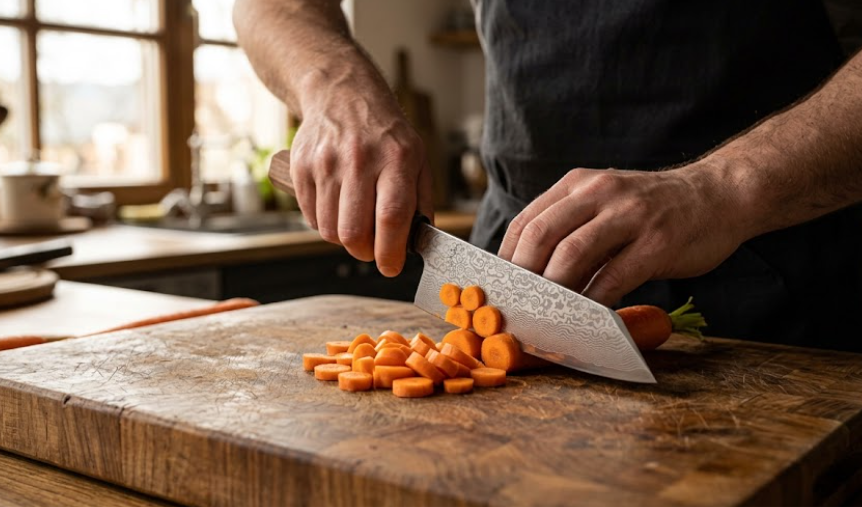
Your cutting style should dictate which knife you choose. Some cooks love long, smooth strokes. Others prefer quick, up-and-down chops. Let us look closely at how they perform.
I find that the big Bunka feels like a chef knife. It has weight to help push through food. It does the hard work for you. It is a true workhorse.
The Ko-Bunka feels like a fast extension of your hand. It is very light. You do not get tired. It is perfect for nimble prep on small boards. It makes chopping feel easy.
Chopping vs. Detail Work
If you chop lots of carrots, buy the standard Bunka. Its flat profile makes clean contact. It will not leave pieces of food stuck together. It saves a lot of time.
If you do detail work, choose the Ko-Bunka. It is a great K-tip utility knife. It excels at peeling, coring, and scoring. It is the true king of small kitchen prep.
Board Clearance and Grip
Board clearance is vital for comfort. If your knife is too short, your knuckles hit the wood. The standard Bunka has high clearance. You can grip it with a pinch.
The Ko-Bunka has less clearance than the big Bunka. But it has much more than a petty knife. You can still use a pinch grip. It is comfortable for small hands.
Bunka vs. Santoku and Gyuto
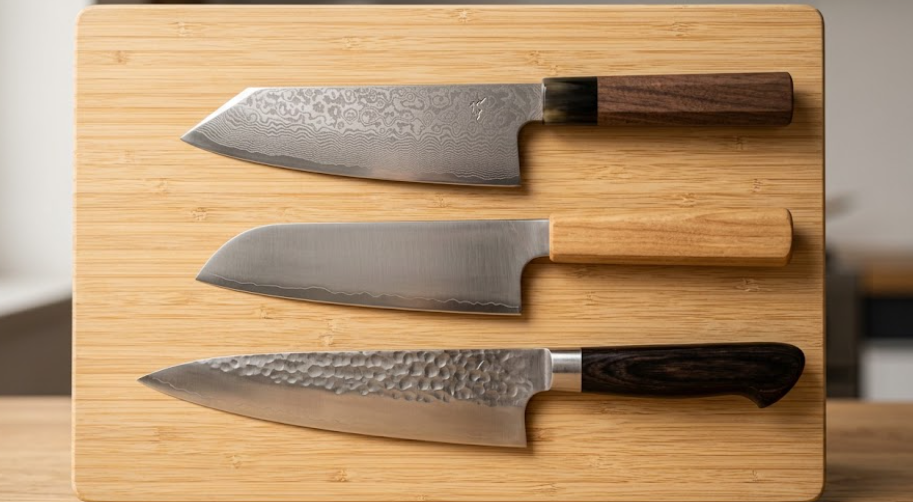
To understand the Bunka, we must compare it to others. Many cooks ask a common question. What is the difference between bunka and santoku? They are very close knife cousins.
The Santoku has a curved nose. It is called a sheepsfoot tip. The Bunka has a sharp, triangular K-tip. The Bunka tip is much better when you need to make very fine cuts.
Now let us look at bunka knife vs gyuto. The Gyuto is a long Western-style chef knife. It has a curved belly for rocking. The Bunka is flatter and shorter.
The Bunka is better for push-cutting. The Gyuto is better for rocking and slicing meat. I prefer the Bunka for daily vegetable prep. This is because of its flat shape.
Find many high-quality options for these knives on AMAZON. They offer great deals on top Japanese brands. I bought my favorite blade there last year. I still love using it every day.
Pros and Cons of Each Knife
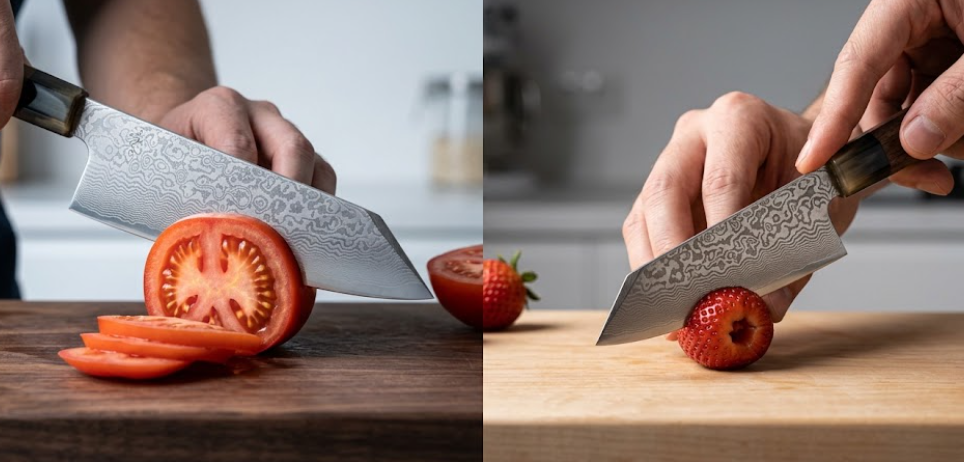
Every tool has strengths and weaknesses. No single knife can do every job in the kitchen. Let us look closely at the pros. We will also look at the cons.
Bunka Pros and Cons
The standard Bunka is highly versatile. It can handle ninety percent of kitchen tasks. The K-tip is great for detail. The wide blade makes scooping chopped food off the board very easy.
It can feel too big for tiny tasks. It is not ideal for peeling apples in your hand. It is also too short. It struggles with very large cuts of meat.
Ko-Bunka Pros and Cons
The Ko-Bunka is incredibly light and nimble. It is the ultimate prep knife for small spaces. The thin tip is perfect for garlic. It is also very easy to clean.
But it lacks weight for hard foods. It struggles with large squash or sweet potatoes. The short blade means you must make more strokes. This is true for big items.
Is a bunka knife good for beginners? Yes, both sizes are great. They are easy to control. But the Ko-Bunka is less scary for people who are new to sharp blades.
Which One Should You Buy?
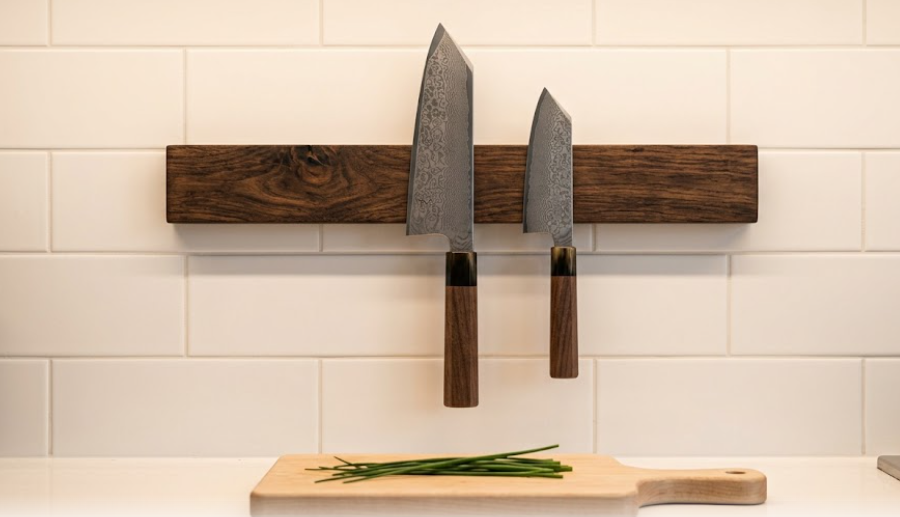
Choosing between these two depends on your kitchen setup. If you only want one main knife, buy the standard Bunka. It is a complete, reliable workhorse. It works for all your meals.
If you already own a large chef knife, get the Ko-Bunka. It is the perfect sidekick. It handles all small, quick kitchen prep tasks. It does this with absolute ease.
I keep both on my magnetic knife strip. I reach for the big Bunka for dinner prep. I grab the little one for quick snacks. It is great for morning fruit.
If you are ready to choose, browse the selection on AMAZON. You will find beautiful Japanese steel. It will fit your budget. Happy cooking in your own beautiful kitchen!
Frequently Asked Questions
What is a ko-bunka knife used for?
A Ko-Bunka is used for small prep tasks. It is great for dicing shallots and mincing garlic. It also slices ginger easily. Its tall blade protects your fingers on the board.
What is the difference between a Bunka and a Santoku?
The main difference is the tip shape. The Bunka has a sharp, angled K-tip. The Santoku has a curved sheepsfoot tip. The Bunka tip is better for doing detail cuts.
Is a Bunka knife good for beginners?
Yes, it is very good. The flat edge makes chopping easy. The shorter length is easy to control. It is much less intimidating than using a long chef knife. It is great for beginners.
Ko-bunka vs petty knife: which is better?
The Ko-Bunka is better for board work because of its tall blade. The petty knife is better for hand-peeling. Choose the Ko-Bunka to chop on a board.