---Advertisement---

Sleepgram vs. Nuzzle Pillow: Which Customizable Pillow Is Better for Side Sleepers?

July 1, 2026 5:24 PM

A pillow can feel wonderfully soft in a store and still leave a side sleeper with a stiff neck the next morning.

Table of Contents

The problem is usually not softness alone. Side sleepers need enough usable loft to fill the space between the mattress, shoulder, neck, and head. The pillow must also resist collapsing after several hours of pressure.

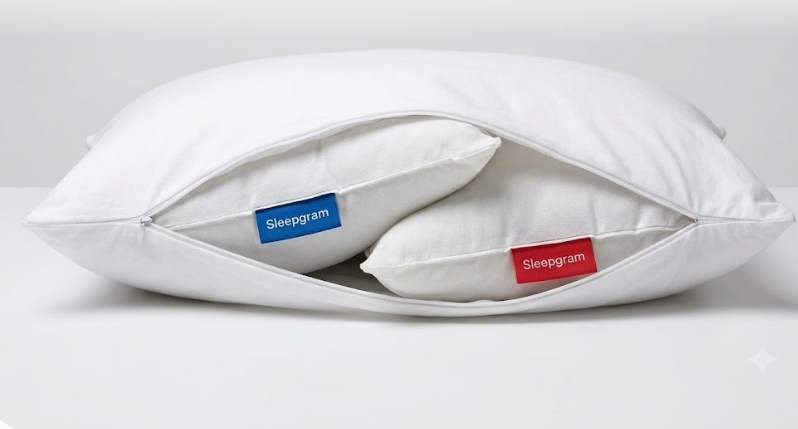
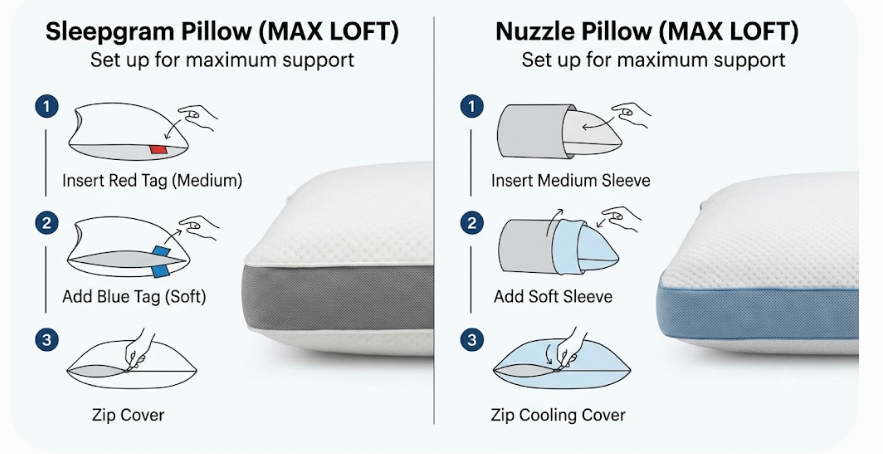
Sleepgram and Nuzzle both try to solve this problem with removable internal layers. Instead of making you scoop handfuls of loose foam from a pillow, each product offers three basic comfort configurations created by using one insert or combining both.

Their overall designs, however, are not identical.

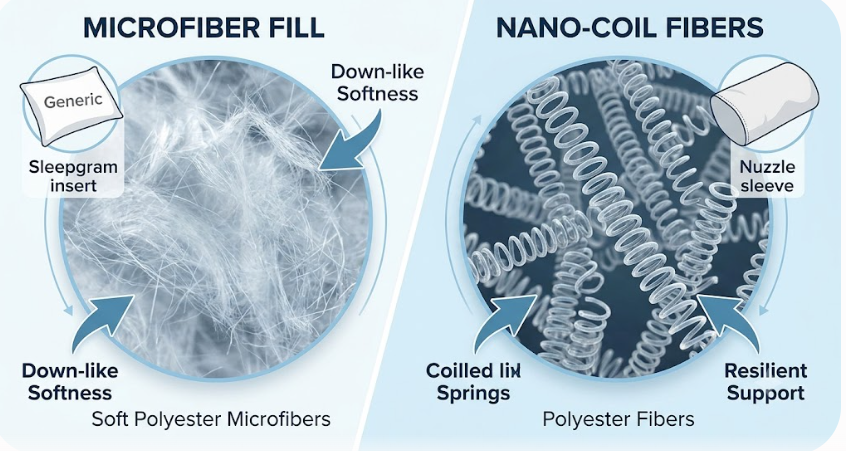
Sleepgram uses two differently sized microfiber-filled inserts inside a cotton-covered, gusseted shell. Nuzzle combines two removable Nanocoil fiber layers with a phase-change cooling cover. Sleepgram emphasizes plushness, washable construction, and edge-to-edge height. Nuzzle puts more attention on cooling, responsive contouring, and clearly defined 3-, 5-, and 7-inch configurations.

This article compares the pillows specifically from a side sleeper’s perspective. Product features and policies are taken from current manufacturer information, while the side-sleeping analysis is based on established loft, alignment, and support principles.

Quick Verdict: Sleepgram Is Better for Most Dedicated Side Sleepers

BUY AMAZON

Sleepgram is the stronger overall choice for most strict side sleepers, especially people with broad shoulders, heavier heads, or medium-firm to firm mattresses.

The fullest Sleepgram configuration combines both internal pillows inside a shell with a 2-inch gusset. That construction gives the pillow a substantial profile and helps it preserve more thickness around the edges. Its Standard/Queen model measures 18 by 26 inches, while the King measures 18 by 33 inches.

Nuzzle is the better choice for hot sleepers and many side-and-back combination sleepers. Its phase-change fabric is designed to regulate surface temperature, while its Nanocoil fiber layers provide 3-, 5-, and 7-inch height options. The manufacturer recommends the configuration containing both layers for side sleepers and larger sleepers.

The final decision depends on what normally goes wrong with your current pillow:

  • Choose Sleepgram when your head sinks too low or you regularly fold your pillow to increase its height.
  • Choose Nuzzle when overheating, ear pressure, or difficulty changing positions causes more trouble than insufficient loft.
  • Choose neither when you need the dense stability of solid latex, molded memory foam, or a shaped cervical pillow.

Overall winner by category

CategoryBetter optionReason
Strict side sleepingSleepgramFuller structure and gusseted edge
Broad shouldersSleepgramMore substantial high-loft configuration
CoolingNuzzlePhase-change outer fabric
Soft pressure reliefNuzzleHighly compressible fiber feel
Edge supportSleepgram2-inch gusset
Combination sleepingNuzzleThree published heights and responsive compression
Easy adjustmentTieBoth use removable internal layers
Standard purchase trialSleepgram100 nights versus Nuzzle’s 90 days
Published warrantySleepgramCurrent Sleepgram page advertises lifetime coverage
Best overall for side sleepersSleepgramBetter balance of loft, support, and purchase protection

Sleepgram’s current product page advertises a 100-night guarantee and lifetime warranty. Nuzzle advertises a 90-day guarantee, although returned products must meet the conditions described in its policy.

What Side Sleepers Actually Need From a Pillow

BUY AMAZON

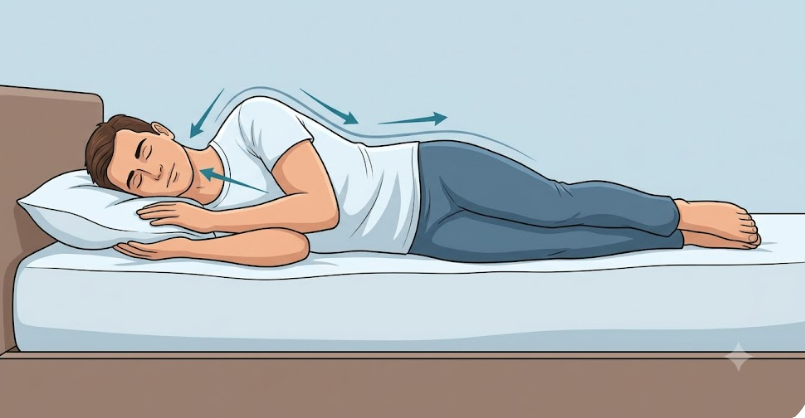
Side sleeping creates a larger vertical gap between the head and mattress than back or stomach sleeping. The pillow must fill that space so the neck does not bend downward toward the bed or upward toward the ceiling.

Current Sleep Foundation guidance says side sleepers usually perform best with a medium-to-high-loft pillow. A thickness of at least 4 inches is a common starting point, although broad-shouldered sleepers may need more than 6 inches. A person who sinks deeply into a soft mattress may need less height.

Loft is only useful when the pillow retains it

A product’s uncompressed height does not tell the full story.

Imagine two pillows that both measure 6 inches when placed on a bed:

  • Pillow A compresses to approximately 3 inches beneath the sleeper’s head.
  • Pillow B compresses to approximately 4.5 inches.

Pillow B provides more usable support even though both products have the same advertised loft.

This is particularly relevant when comparing soft fiber pillows. Both Sleepgram and Nuzzle are designed to feel plush, so the correct configuration should be judged after the head has rested on the pillow for at least 10 to 15 minutes.

Mattress firmness changes the required height

A side sleeper’s shoulder sinks farther into a soft mattress. This reduces the distance the pillow must fill.

A firm mattress does the opposite. The shoulder remains closer to the mattress surface, increasing the gap between the head and bed. This is why the same pillow can feel perfectly supportive on one mattress and strangely flat on another.

Shoulder width and body size matter

People with broader shoulders typically need a taller pillow. Sleep Foundation also notes that head size and body shape affect how deeply a sleeper compresses the fill.

A petite side sleeper may feel over-elevated on a 7-inch pillow. A broad-shouldered sleeper may find the same pillow comfortable once it compresses.

The pillow should balance support and pressure relief

A pillow that is too soft can allow the head to sink, compromising alignment. A pillow that is excessively firm may create pressure around the ear, jaw, neck, and shoulder.

Medium to medium-firm pillows commonly provide the best balance for side sleepers. They offer enough resistance to support the neck while retaining enough cushioning to prevent uncomfortable pressure points.

A practical alignment test

Lie on your side in your normal sleeping position. Ask another person to observe you from behind or take a photograph at mattress level.

Your head should appear like a natural continuation of your spine. Look for these warning signs:

What you see or feelLikely issue
Head tilts toward the mattressPillow is too low or too compressible
Head tilts toward the ceilingPillow is too tall
Ear feels sore or numbSurface may be too firm
You place a hand under the pillowMore loft may be necessary
You push the pillow away during sleepPillow may be too tall or warm
You wake up repeatedly to fluff itFill may not retain enough support
Neck feels strained on the upper sidePillow may be too high
Neck feels stretched on the mattress sidePillow may be too low

These observations can help with pillow adjustment, but persistent pain, tingling, weakness, or frequent headaches should be discussed with a qualified healthcare professional.

Sleepgram Pillow Review: Construction, Feel, and Side-Sleeper Support

The classic Sleepgram is a three-configuration pillow built around two differently sized internal pillows.

You can use the thinner insert, the fuller insert, or both inserts together. The inserts sit inside a zippered outer shell, allowing the sleeper to change the pillow’s height and firmness without handling loose fill.

Sleepgram lists the following construction details:

  • A 100% cotton cover
  • Microfiber fill
  • A zippered outer structure
  • An 18-by-26-inch Standard/Queen size
  • An 18-by-33-inch King size
  • A 2-inch gusset on both sizes
  • Machine-washable construction

What the Sleepgram pillow feels like

Sleepgram has the fluffy, squeezable feeling associated with a traditional down-alternative hotel pillow.

It does not create the slow, body-hugging sensation of solid memory foam. The microfiber responds quickly when you move, and the pillow can be squeezed, hugged, or lightly reshaped around the head.

The internal pillow system gives it more structure than a basic single-chamber polyester pillow. Still, sleepers who want a dense, supportive foam block may find Sleepgram too airy.

Why the gusset matters for side sleepers

A standard knife-edge pillow becomes thinner as it approaches the perimeter. That can be inconvenient for side sleepers who place the neck close to the pillow’s lower edge.

Sleepgram’s 2-inch gusset creates a vertical fabric panel around the pillow. This does not prevent compression, but it helps preserve a fuller profile across more of the sleep surface.

The result is particularly useful for:

  • Side sleepers who rest near the edge of the pillow
  • People who place an arm in front of or beneath the pillow
  • Sleepers who need support beneath the neck as well as the head
  • Broad-shouldered users who require more space between the mattress and head

Which Sleepgram setup is best for side sleeping?

Most dedicated side sleepers should begin with both inserts.

The fuller setup creates the greatest loft and firmness. A lightweight person on a soft mattress may prefer the larger insert by itself, but beginning with both makes it easier to identify whether the pillow is too high.

The smaller insert alone is more likely to suit stomach sleepers, children, or people who need a very low profile.

Sleepgram strengths

  • The adjustment process is clean and simple.
  • The gusset creates better edge-to-edge depth.
  • The cotton cover provides a familiar bedding surface.
  • The inserts can be rearranged without removing loose foam.
  • The full configuration offers a useful starting point for strict side sleepers.
  • The current standard purchase includes a longer trial than Nuzzle.
  • The manufacturer presents the classic pillow as washable, hypoallergenic, adjustable, and suitable for multiple sleep positions.

Sleepgram weaknesses

Sleepgram is adjustable, but it is not infinitely adjustable.

A shredded-foam pillow lets you remove a small handful of fill at a time. Sleepgram gives you three predetermined configurations, so the change between them may feel significant.

Other possible drawbacks include:

  • Microfiber may gradually flatten with regular use.
  • The fullest arrangement may feel too tall for petite sleepers.
  • The pillow lacks Nuzzle’s phase-change cooling cover.
  • Sleepers who prefer a firm latex or foam core may find it insufficiently stable.
  • The manufacturer does not provide a compressed-height measurement for each arrangement.
  • Fiber fill may need regular fluffing to retain an even surface.

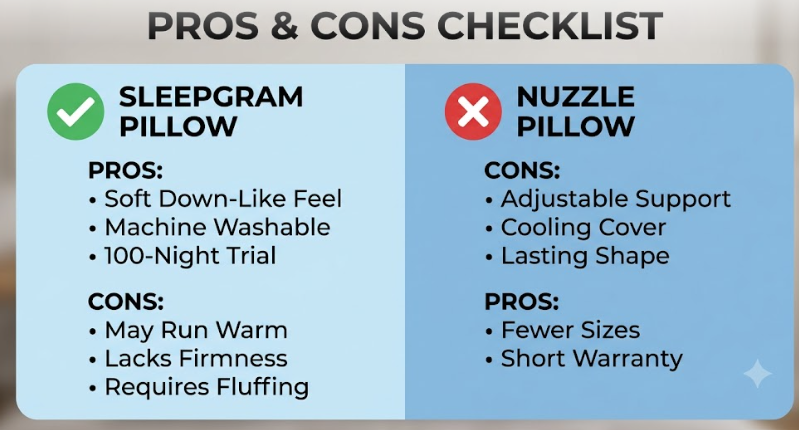
Sleepgram pros and cons

ProsCons
Fuller maximum configurationOnly three adjustment levels
Gusseted edgeMay feel bulky to petite sleepers
Cotton coverNo specialized phase-change fabric
Washable constructionFiber can flatten over time
No loose fill messLess precise than fill-removal pillows
100-night guaranteePromotional trial terms can differ
Published warranty coverageReturn shipping rules should be checked

Sleepgram’s separate “Try Before Buying” promotion uses a 23-night period rather than the ordinary 100-night guarantee, and the company says the standard guarantee is voided when that promotional offer is used. Buyers should read the exact checkout terms instead of assuming every offer has the same trial.

Nuzzle Pillow Review: Adjustable Layers, Cooling, and Comfort

https://images.openai.com/static-rsc-4/x556fTWmwE0EVsKbyi2Y0gFJ_12O5zLhdVv7Oo52Ry_sHbKpIrbu1n_PhuKd-pL5j-LCkU2LVRwUWo-t86btnGEQTJsT2KQveZPtieNEwEK6NKwPQFx5NSfg01RRmm40L-vYfE6r2KUchmUdIu9s0dGxaPNUqIB2JENWGKYGnr9yMykyfOZu8sRBhvRwhxpe?purpose=fullsize

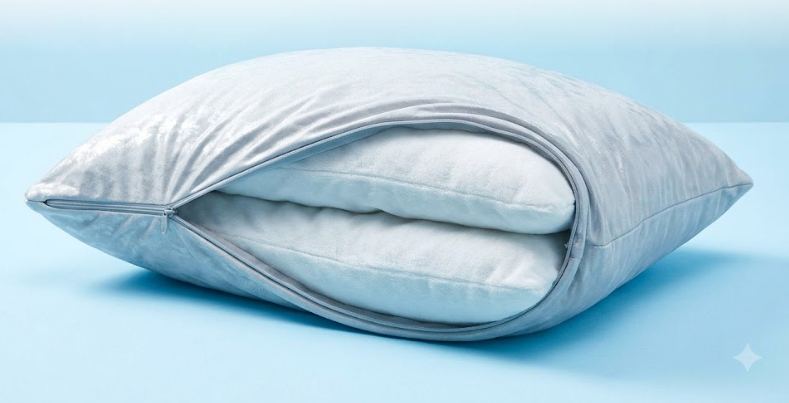
Nuzzle also uses two removable internal layers, but its construction and marketing focus are different.

The pillow contains proprietary Nanocoil fiber fill and a phase-change cooling outer fabric. Depending on which internal layer is used, the manufacturer lists three approximate height options: 3 inches, 5 inches, and 7 inches.

Nuzzle describes its configurations as follows:

  • Soft layer: intended primarily for stomach sleepers and children
  • Medium layer: intended for back and combination sleepers
  • Both layers: intended for side sleepers and larger sleepers

The company’s FAQ uses slightly different wording, referring to soft, medium, and firm arrangements. It also specifically recommends placing both tagged inner pillows in the outer case for side sleeping.

What Nuzzle feels like

Nuzzle has a soft, responsive down-alternative feel.

The Nanocoil fibers are designed to compress around the head and spring back as the sleeper changes position. Nuzzle’s cover is quilted, creating a more structured surface appearance than a plain cotton shell.

A softer, more compressible pillow can provide excellent pressure relief around the ear. It may also adapt more easily when a combination sleeper rolls from the side onto the back.

The concern for strict side sleepers is whether the chosen height remains sufficient after prolonged compression.

The usefulness of Nuzzle’s published height options

Nuzzle’s 3-, 5-, and 7-inch figures make the adjustment system easier to understand before purchase.

However, these should still be treated as nominal heights. Your head weight, body size, pillowcase, mattress firmness, and sleeping posture affect the amount of effective loft you experience.

A 7-inch setup may sound excessively tall, but a soft fiber pillow can compress substantially. Conversely, a petite sleeper on a plush mattress may find the maximum arrangement unnecessary.

Cooling advantage

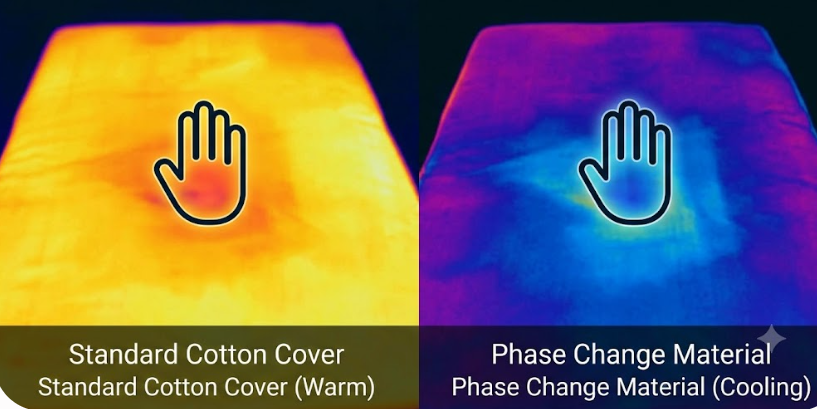
Nuzzle’s strongest differentiating feature is its phase-change fabric.

Phase-change materials are designed to absorb and release thermal energy as temperature changes. In practical terms, the cover aims to limit the warm, stuffy sensation that causes sleepers to turn a pillow repeatedly.

The manufacturer states that its phase-change shell regulates temperature through the night. That is a manufacturer claim rather than a guarantee that every sleeper will experience a continuously cold surface. Room temperature, humidity, pillow protectors, and pillowcases can influence the result.

Nuzzle strengths

  • Three clearly stated height options
  • A configuration specifically intended for side sleepers
  • Phase-change cooling fabric
  • Soft pressure relief around the ear and jaw
  • Easy adjustment without loose fill
  • Hypoallergenic down-alternative construction
  • Removable internal layers
  • A washable outer cover
  • A 90-day return period

Nuzzle weaknesses

Nuzzle’s plushness can be both its advantage and its limitation.

Potential concerns include:

  • The fibers may compress more than a firm latex or foam core.
  • Side sleepers may still need daily fluffing.
  • The maximum arrangement may not feel stable enough for every broad-shouldered sleeper.
  • Three configurations provide less precision than loose-fill adjustment.
  • The company’s neck-pain statements are marketing claims and should not be treated as guaranteed medical outcomes.
  • Return eligibility requires the pillow to remain unused or in like-new, donatable condition without stains, damage, or missing components.

The Nuzzle FAQ recommends fluffing the pillow before use and, when possible, every day to maintain maximum puffiness.

Nuzzle pros and cons

ProsCons
Phase-change cooling coverMay compress deeply
Published 3-, 5-, and 7-inch profilesDaily fluffing may be necessary
Soft pressure reliefNot continuously adjustable
Easy layer changesMaximum loft may not suit every large sleeper
Good combination-sleeper potentialNo solid support core
Machine-washable coverReturn-condition requirements apply
90-day guaranteeMedical-sounding claims require caution

Sleepgram vs. Nuzzle: Complete Head-to-Head Comparison

https://images.openai.com/static-rsc-4/vxhQ38zI67__IPOCfi_M4HyAGOuyboV-I4y6A4jz6Gy03RTrQRVLxmQzIq7RQMhFhTDgBBbylYlNMupi_k55O5Q8WUgKH7XdgOEcx-bsmLHNr4VThGNLZVyrEXnAIv30m0UUDUugeALwOc0nue_SneIFExur7_5QccvP-vDwxyghipbDrvkxh_LQK7TB90DQ?purpose=fullsize

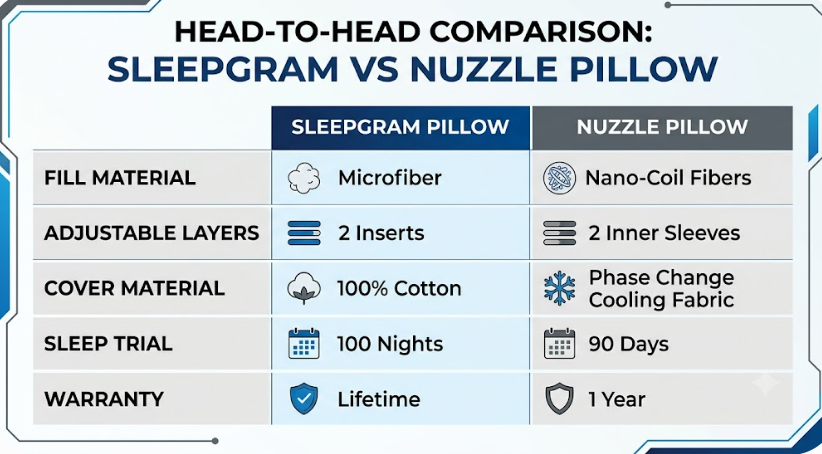
The biggest mistake in this comparison would be treating both products as interchangeable because each contains two inserts.

Sleepgram is better understood as a fuller, gusseted hotel-style pillow. Nuzzle is a soft, temperature-focused layered pillow with more clearly published loft options.

Feature comparison

FeatureSleepgramNuzzle
Adjustment styleTwo differently sized internal pillowsTwo removable internal layers
Basic configurationsThreeThree
Published height optionsNot clearly listed for each setup3, 5, and 7 inches
FillMicrofiberPatented Nanocoil fiber
Cover100% cottonPhase-change cooling fabric
Edge design2-inch gussetConventional layered shell
Standard-side recommendationBoth inserts are the logical starting pointBrand recommends both layers
FeelFluffy, fuller, hotel-likeSoft, springy, highly compressible
Cooling emphasisBreathable materialsDedicated phase-change technology
WashabilityEntire construction marketed as washableRemove inserts and wash cover
Standard trial100 nights90 days
Special-offer cautionTry Before Buying may be only 23 nightsReturn must meet condition requirements
Published warrantyLifetime warranty currently advertisedNo comparable long-term warranty highlighted
Best suited toStrict side sleepers needing heightHot and combination sleepers

Current product and policy information is based on the brands’ official pages. Promotions, prices, inventory, trial language, and warranty presentation can change, so checkout terms should always be reviewed before payment.

Editorial side-sleeper scorecard

These scores are an editorial assessment of the published designs and policies. They are not laboratory measurements.

Performance areaSleepgramNuzzle
Maximum side-sleeper loft8.8/108.5/10
Loft customization8.0/108.5/10
Support retention8.2/107.5/10
Pressure relief8.1/108.8/10
Cooling potential7.7/109.1/10
Edge support8.7/107.5/10
Combination sleeping8.0/108.7/10
Ease of cleaning8.5/108.4/10
Trial and warranty value9.0/107.8/10
Overall for side sleepers8.5/108.3/10

Nuzzle comes close because its 7-inch option and cooling cover solve two genuine side-sleeper concerns. Sleepgram earns the higher overall score because the gusset, fuller construction, longer standard trial, and published warranty create a slightly safer package for people who sleep on their side throughout the night.

Real-World Side-Sleeper Performance

https://m.media-amazon.com/images/I/61-xfsMEXfL._AC_SL1500_.jpg

A useful pillow comparison should move beyond product descriptions. The following analysis considers how each design is likely to behave in common side-sleeping situations.

Broad-shouldered sleeper on a firm mattress

This sleeper has a large space between the mattress and head. Because the mattress does not allow much shoulder sink, a tall and reasonably stable pillow is needed.

Better choice: Sleepgram

The two-insert arrangement and gusseted perimeter are more likely to maintain the required depth. Nuzzle’s 7-inch configuration may also work, but its softer compression introduces a greater risk of losing too much usable height.

Sleep Foundation notes that broad-shouldered side sleepers may need pillows exceeding 6 inches in loft.

Petite side sleeper on a soft mattress

This sleeper’s shoulder sinks into the mattress, reducing the required pillow height. An overly full pillow can push the head upward.

Better choice: Nuzzle

The 5-inch layer may provide a useful middle ground, while the softer fill should contour comfortably around the head. Sleepgram can still work with one insert, but the available change between configurations may be less precise.

Hot side sleeper

Side sleepers place a large portion of the face against the pillow, which can trap warmth around the cheek, ear, and neck.

Better choice: Nuzzle

The phase-change cover gives Nuzzle a direct advantage. Sleepgram uses a cotton cover and microfiber fill, but the classic model does not emphasize comparable phase-change technology.

Side sleeper with sensitive ears

A very firm pillow can create pressure around the ear, particularly when the sleeper remains in one position for a long time.

Better choice: Nuzzle

Its softer, more adaptive fill is likely to create a gentler cradle. Sleepgram remains plush, but the full arrangement may feel more packed beneath a smaller person.

Sleeper who moves between the side and back

Side sleeping usually requires more loft than back sleeping. The challenge is finding a pillow that does not become excessively tall when the sleeper changes positions.

Better choice: Nuzzle

Its medium layer is specifically presented for back and combination sleepers, while the maximum configuration is recommended for side sleeping. A person who spends substantial time in both positions may begin with the 5-inch setup and assess whether it remains tall enough on the side.

Sleeper who constantly folds the pillow

Folding is often an unconscious attempt to increase loft or firmness.

Better choice: Sleepgram

Using both inserts should provide more organized height than repeatedly folding a conventional pillow. The gusset also helps maintain thickness toward the edges.

Sleeper who dislikes maintenance

Neither product is maintenance-free.

Nuzzle’s FAQ recommends daily fluffing when possible, while Sleepgram’s microfiber may also need periodic reshaping. A sleeper who strongly dislikes fluffing may be happier with resilient latex or a well-constructed molded-foam pillow.

Sleeper with recurring neck pain

No pillow should be presented as a universal treatment for neck pain.

The practical goal is to keep the head and neck aligned without creating excessive pressure. Sleep Foundation states that an incorrect loft or firmness may contribute to neck discomfort and that side sleepers should first verify that their pillow is sufficiently firm and appropriately tall.

Sleepgram may be preferable when the existing pillow is too low. Nuzzle may be preferable when the existing surface is too warm or firm. Pain that persists, worsens, or includes neurological symptoms requires professional medical evaluation.

Cooling, Cleaning, Durability, Trial Period, and Value

https://images.openai.com/static-rsc-4/ppEcLyQlp7HfQy6h56LAwoXy32hbq6D_5Vv1BfiQIs7Y0XSfevyyHyMVJjHMs6nn4tyU4L16c4YU3Vm0IGuYBY_xu6kBTvggSbfYktncqv3pQNQeCyNHYFswi5iyZnd1zJ7Mupzp6zyKDaSU0KOzVME87vJNdIN1jJWQSIMtXsxHLuYC2pRPWGqY4PESLnlH?purpose=fullsize

Cooling

Nuzzle wins the cooling category because its shell uses dedicated phase-change fabric.

Phase-change technology does not actively refrigerate the pillow. Instead, it is intended to moderate changes in surface temperature by absorbing and releasing heat. The manufacturer presents this as a way to reduce overheating and the need to flip the pillow.

Sleepgram should still feel more breathable than many dense memory-foam pillows. Its outer material is cotton, while the inside uses microfiber rather than a solid block of heat-retaining foam.

A thick waterproof pillow protector can reduce the effect of any cooling cover. Hot sleepers should use a breathable protector and lightweight pillowcase.

Cleaning Sleepgram

Sleepgram describes the classic pillow as completely machine washable. The shell unzips, allowing access to its internal pillows.

Owners should still follow the care label supplied with the actual product. Care instructions can change, and a fiber pillow must be dried thoroughly to prevent clumping or trapped moisture.

A practical routine is:

  1. Remove and separate the internal components.
  2. Wash only as directed on the sewn-in label.
  3. Use a mild detergent.
  4. Avoid excessive heat unless permitted.
  5. Dry every layer completely.
  6. Fluff the inserts before reassembling the pillow.

Cleaning Nuzzle

Nuzzle provides more detailed online care instructions.

The brand says to remove the internal layers, wash the cover in cold water on a gentle cycle, and tumble dry on low heat or air dry. Bleach and ironing should be avoided.

Nuzzle’s general FAQ also says the pillow is machine washable. Following the more specific insert-removal instructions is the safer approach.

Durability

Soft fiber pillows naturally change shape with use.

Nuzzle states that its pillow has been tested to retain its shape for more than three years. The same brand also recommends regular or daily fluffing, suggesting that shape retention does not necessarily mean the pillow will remain fully expanded without maintenance.

Sleepgram does not provide a nightly loft-retention measurement on the product information reviewed. Its gusset and chambered construction may help the pillow remain more organized than a basic single-bag fiber pillow, but the microfiber can still compress over time.

Sleep trials and returns

Sleepgram’s ordinary product page advertises a 100-night guarantee. However, its separate Try Before Buying promotion lasts 23 nights and replaces the standard 100-night guarantee for that transaction. Return shipping for standard returns may be the customer’s responsibility.

Nuzzle offers a 90-day return policy. Its FAQ says returned pillows should be unused or in like-new, donatable condition and cannot be stained, damaged, incomplete, or missing components. Return shipping is covered only in some cases.

Warranty

Sleepgram’s current product page advertises a lifetime warranty, although another comparison area on the same page displays 10 years. Because the page presents inconsistent durations, buyers should save a copy of the exact warranty terms shown at checkout.

Nuzzle prominently advertises its 90-day guarantee but does not highlight comparable long-term warranty coverage on the official product and FAQ pages reviewed.

Value

Sleepgram offers stronger value for a strict side sleeper who prioritizes loft, edge support, and long-term purchase protection.

Nuzzle offers stronger value for someone who would willingly pay for better temperature management and a softer, more adaptive surface.

Promotional prices and stock levels can vary widely. Some Nuzzle special-offer pages display discounted prices but also show the products as sold out, so an advertised sale price should not be assumed to represent an available purchasing option.

Who Should Buy Sleepgram and Who Should Buy Nuzzle?

https://i5.walmartimages.com/seo/Nuzzle-AS-SEEN-ON-TV-Bed-Pillow-Sleeping-Ultra-Cool-Comfortable-Two-Adjustable-Inner-Layers-Comforting-Support-Perfect-Side-Back-Stomach-Sleepers-100_138b6b9d-0bcd-4687-ba57-8e356f6d0385.4d4c930f311cf3b354550f3ed38c998e.jpeg

Choose Sleepgram when:

  • You sleep almost entirely on your side.
  • You have broad or medium-width shoulders.
  • Your mattress is medium-firm or firm.
  • You regularly fold or double your current pillow.
  • You want a traditional fluffy hotel-pillow sensation.
  • You sleep close to the pillow’s edge.
  • You value a gusseted design.
  • You prefer washing the pillow rather than only the cover.
  • You want a longer standard trial.
  • Published warranty coverage is important.

Choose Nuzzle when:

  • You regularly wake because the pillow feels warm.
  • You have narrow or average shoulders.
  • You sleep on a soft or deeply conforming mattress.
  • You alternate between side and back sleeping.
  • You experience pressure around the ear.
  • You prefer a soft and springy pillow.
  • You want clearly published 3-, 5-, and 7-inch options.
  • You are comfortable fluffing the pillow frequently.
  • Cooling matters more than edge support.
  • You prefer washing the outer shell separately from the inserts.

Consider a different pillow when:

  • You need an extra-firm sleep surface.
  • You prefer the bounce of solid latex.
  • You need precise handful-by-handful adjustment.
  • You want a sculpted cervical shape.
  • You dislike fluffy fiber fill.
  • You do not want to perform any regular fluffing.
  • You need a pillow with a shoulder cutout.
  • You have chronic pain requiring medical evaluation.

Text infographic: fast buying decision

START
|
|-- Do you regularly sleep hot?
| |
| YES --> Do you have narrow or average shoulders?
| |
| YES --> Choose NUZZLE
| |
| NO --> Test Nuzzle at maximum height,
| but Sleepgram may hold loft better
|
NO
|
|-- Do you fold your pillow to make it taller?
|
YES --> Choose SLEEPGRAM
|
NO
|
|-- Do you switch between side and back?
|
YES --> Choose NUZZLE
|
NO --> Choose SLEEPGRAM

How to set up either pillow correctly

Begin with the fullest arrangement if you are a dedicated side sleeper.

Use the pillow for at least three nights before removing a layer unless the height is obviously uncomfortable. Fiber can settle during early use, and your body may need time to adapt to a different posture.

Keep the shoulder on the mattress rather than placing it on the pillow. Pull the lower edge of the pillow close to the shoulder so the neck is supported without being pushed forward.

Change only one variable at a time. Do not simultaneously change the pillow configuration, mattress topper, sleeping position, and pillowcase. A controlled adjustment makes it easier to identify the real cause of discomfort.

Frequently Asked Questions

https://images.openai.com/static-rsc-4/FrhA2ZMg8jXAXMiwLPui8Etk5l1RWcXmzyqmiLvOqIN3EDMJqER1RE457TNV2N4AvjECKOLhrL2XUcq2Ru_ERPpr20xqpCyGM0eYvfdw_Q7L4msJJKzSXfIWuJ5rlDlJs-OxJsiFUTsrj-PW4Qt67Vid8ATX9SIfj2k3b-SPXKGKMf8NvgW7aOZTI3SlSToX?purpose=fullsize

Is Sleepgram or Nuzzle firmer?

Sleepgram is likely to feel fuller and more supportive in its maximum configuration, particularly around the edges.

Nuzzle describes its both-layer arrangement as the firm option, but the Nanocoil fiber still creates a soft, compressible sensation. The better choice depends on whether you define firmness as surface hardness or resistance to compression.

Which pillow is taller?

Nuzzle publishes three nominal options of 3, 5, and 7 inches. Sleepgram does not clearly publish separate loft figures for its three configurations, although the outer shell has a 2-inch gusset.

A published height does not automatically indicate greater usable loft. The amount of compression beneath your head is equally important.

Which is better for a broad-shouldered side sleeper?

Sleepgram is the safer general recommendation.

The full two-insert setup and gusseted design should provide a more substantial structure. Nuzzle’s 7-inch arrangement may still work, but it should be tested carefully for compression.

Which is better for hot sleepers?

Nuzzle.

Its phase-change outer fabric is specifically designed for temperature regulation. Sleepgram uses breathable cotton and microfiber but does not feature the same dedicated cooling material in its classic model.

Can both pillows be washed?

Yes, but the care methods differ.

Sleepgram markets its pillow as completely machine washable. Nuzzle instructs owners to remove the inner layers and wash the cover in cold water on a gentle cycle, followed by low-heat tumble drying or air drying.

Always follow the label attached to the product you receive.

Does Nuzzle require fluffing?

Nuzzle’s FAQ recommends fluffing before use and, when possible, daily. Its product page also includes instructions to fluff the inserts regularly to maintain their shape.

Sleepgram may also need periodic fluffing because it uses microfiber fill.

Does Sleepgram have a lifetime warranty?

Sleepgram’s current page advertises a lifetime warranty in one area, while another comparison section mentions 10 years. Buyers should confirm the warranty attached to their specific purchase and keep a screenshot or copy of the terms.

Can either pillow cure neck pain?

No pillow should be guaranteed to cure neck pain.

A properly selected pillow can help maintain neutral alignment and may reduce discomfort caused by an unsuitable loft. However, neck pain can have many causes. Severe, persistent, or worsening symptoms require assessment by a medical professional.

Final Verdict: Sleepgram Wins for Side-Sleeper Support

https://m.media-amazon.com/images/I/71DuxrCPL5L._AC_SL1500_.jpg

Sleepgram and Nuzzle both offer a cleaner form of pillow customization than loose-fill models. Each uses two removable components to create three comfort arrangements, and both provide the soft, familiar feeling of down-alternative fiber.

Sleepgram wins this comparison for most dedicated side sleepers.

Its combination of two internal pillows, a 2-inch gusset, a cotton shell, and a fuller overall structure makes it the more convincing option for maintaining side-sleeper height. It is particularly well suited to broad-shouldered sleepers, people using firm mattresses, and anyone who repeatedly folds an ordinary pillow for additional support.

Nuzzle remains the better specialized choice for hot and combination sleepers.

Its phase-change cover, published 3-, 5-, and 7-inch heights, and soft Nanocoil fill give it meaningful advantages. It is likely to feel gentler around the ear and easier to use when rotating between side and back positions.

The final recommendation is:

  • Best for strict side sleepers: Sleepgram
  • Best for broad shoulders: Sleepgram
  • Best for hot sleepers: Nuzzle
  • Best for side-and-back sleepers: Nuzzle
  • Best for edge support: Sleepgram
  • Best for soft pressure relief: Nuzzle
  • Best overall customizable pillow for side sleepers: Sleepgram

Every H2 section above contains its own unique, visible, relevant image placed immediately below the heading.

Leave a Comment