If you’ve ever searched “Are electric knife sharpeners bad for knives?”, you’ve probably encountered two completely different opinions.
One side says electric sharpeners are fast, convenient and almost foolproof. The other warns that they remove too much metal, damage expensive blades and can permanently change a knife’s edge.
The reality is more nuanced.
A good electric knife sharpener used correctly can be an excellent tool. A poorly matched sharpener, aggressive technique or repeated unnecessary sharpening can shorten a knife’s useful life.
The important question isn’t simply whether an electric sharpener is good or bad. The better question is:
Is this particular electric sharpener appropriate for this particular knife?
That distinction matters because kitchen knives are not all made the same. A sturdy Western chef’s knife, a thin Japanese-style gyuto, a serrated bread knife and a single-bevel Japanese blade can have very different edge geometries.
For example, WÜSTHOF recommends a 14-degree-per-side edge for its standard knives and 10 degrees per side for its Asian-style knives, illustrating why angle compatibility matters. (WÜSTHOF in AMAZON)
This guide explains how electric sharpeners work, what they actually do to your blade, when they are useful, when they can cause problems, and how they compare with whetstones, manual sharpeners and professional sharpening.
Are Electric Knife Sharpeners Good or Bad?
The Short Answer
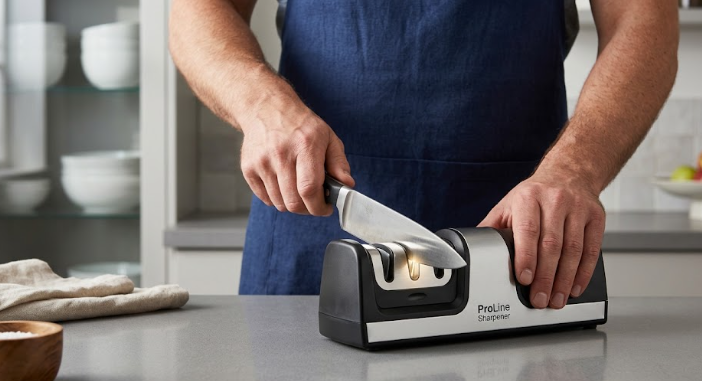
Electric knife sharpeners are good when the machine matches the knife and is used appropriately.
They are particularly useful for:
- Home cooks who want convenience
- People who struggle to maintain a consistent sharpening angle
- Dull everyday kitchen knives
- Routine maintenance on compatible blades
- Users who don’t want to learn whetstone technique
They can be a poor choice when used on:
- Knives with incompatible edge angles
- Certain single-bevel Japanese knives
- Serrated knives when the sharpener isn’t designed for them
- Very thin or delicate blades with an overly aggressive abrasive
- Expensive knives without checking the manufacturer’s recommendations
The most important issue is metal removal.
Sharpening works by removing some material from the blade to create a new edge. Honing, by contrast, can realign an existing edge without the same kind of material removal.
How Does an Electric Knife Sharpener Work?
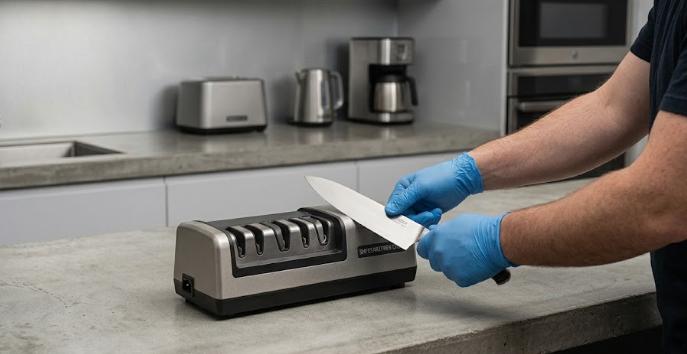
An electric sharpener typically uses a motor to rotate an abrasive wheel or disk.
Depending on the design, the machine may contain:
- A coarse sharpening stage
- A medium or refining stage
- A fine polishing or stropping stage
The blade is inserted into a guided slot, and the guide helps maintain a predetermined angle.
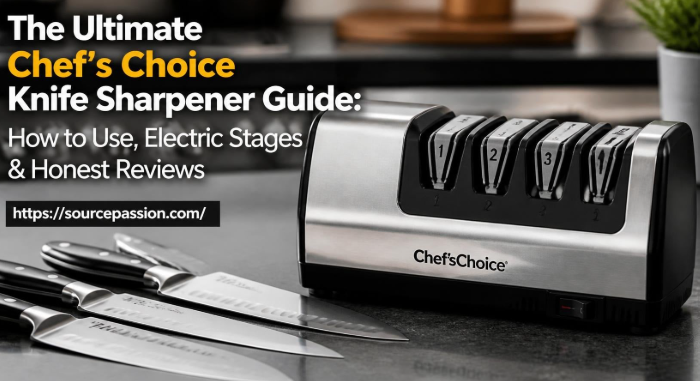
A good example is the Chef’s Choice Model 120(AMAZON). which uses diamond abrasives in its first two stages and a flexible stropping disk in the third. The manufacturer describes the first stage as appropriate for very dull or damaged blades, while the third stage is intended for refining and maintaining the edge.
What happens to the blade?
Think of a knife edge under magnification.
A dull edge may be:
- Rolled
- Bent
- Worn
- Chipped
- Rounded
A sharpening abrasive removes material behind the damaged portion until a new cutting edge is formed.
That means every genuine sharpening operation involves some degree of metal removal.
This isn’t automatically harmful.
The problem occurs when substantially more metal is removed than necessary.
Electric Sharpener vs. Honing: What’s the Difference?
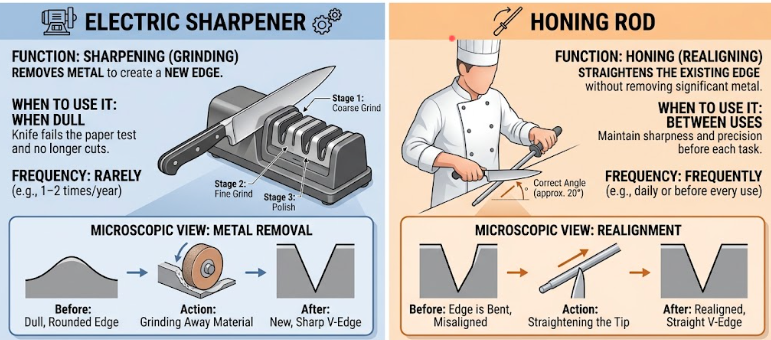
This is one of the most misunderstood areas of knife maintenance.
Sharpening
Sharpening creates a new edge by removing metal.
It is appropriate when the knife has become genuinely dull.
Honing
Honing is primarily a maintenance process that helps realign an existing edge.
Simple comparison
| Knife maintenance method | Main purpose | Removes material? | Best use |
|---|---|---|---|
| Honing steel | Realign/maintain edge | Very little/depending on steel | Regular maintenance |
| Electric sharpener | Sharpen/refine | Yes | Dull compatible knives |
| Manual sharpener | Sharpen/refine | Yes | Simple maintenance |
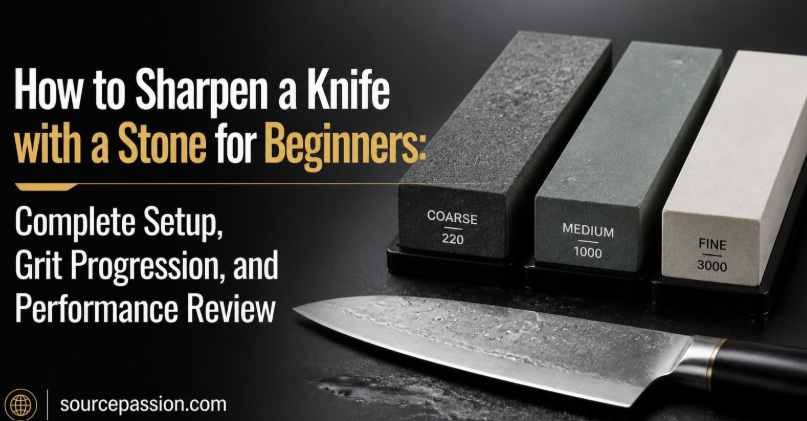
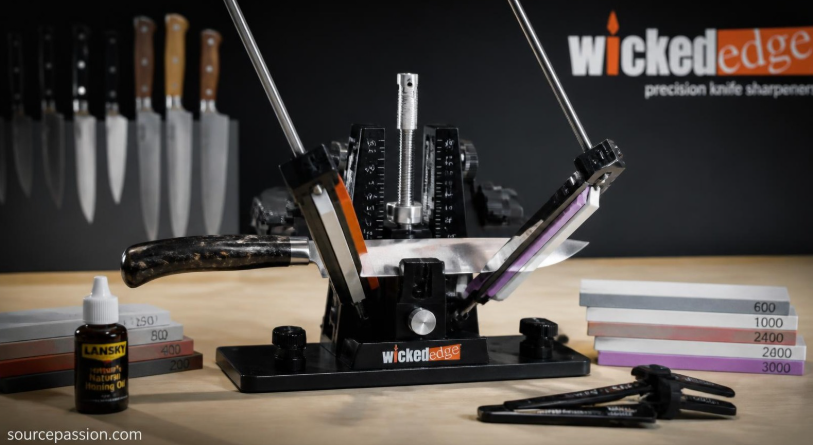
| Whetstone | Sharpen and refine | Yes | Maximum control |
| Professional service | Repair/sharpen | Yes | Damaged or valuable knives |
This distinction is important because you should not automatically sharpen a knife every time it feels slightly less sharp.
The Biggest Advantage of Electric Knife Sharpeners: Consistency
One of the hardest parts of traditional sharpening is maintaining the correct angle.
With a whetstone, the user must control the blade angle manually.
If the angle changes constantly during the stroke, the resulting edge can become inconsistent.
Electric sharpeners solve much of that problem with built-in guides. Buy Now(AMAZON)
Why consistent angles matter
Imagine sharpening one side at approximately 15 degrees and the other at 25 degrees.
The resulting edge geometry will be different from the original design.
A guided sharpener reduces the amount of manual angle control required.
For beginners, that can be a major advantage.
Do Electric Knife Sharpeners Remove Too Much Metal?
Sometimes—but not necessarily.
This is probably the biggest criticism of electric sharpeners.
A motorized abrasive can remove metal quickly, particularly in a coarse stage.
That is exactly why coarse stages should generally be reserved for knives that actually need substantial sharpening.
Chef’s Choice’s instructions for its three-stage system distinguish between the coarse stages for dull knives and the fine stage for routine resharpening. Buy Now(AMAZON)
The important rule
Do not use the most aggressive stage simply because it exists.
If your knife is already reasonably sharp and only needs maintenance, repeatedly using a coarse abrasive is unnecessary.
Instead, use the least aggressive appropriate stage according to the sharpener’s instructions.
Can an Electric Sharpener Ruin a Knife?
Yes, but usually through misuse or incompatibility.
An electric sharpener can damage a knife if:
- The angle is inappropriate.
- Too much metal is removed.
- The user applies excessive pressure.
- The wrong stage is used repeatedly.
- The knife is inserted incorrectly.
- The sharpener isn’t designed for that blade.
- The blade is too thin for the machine’s sharpening geometry.
- A serrated or single-bevel knife is put into a system designed for conventional double-bevel blades.
That last point is particularly important.
WÜSTHOF states that its handheld sharpening devices are intended for straight-edge, double-bevel knives and recommends professional sharpening for serrated and certain single-bevel blades. (WÜSTHOF in AMAZON)
That doesn’t mean every electric sharpener has the same limitation. It means you must read the specific sharpener’s specifications rather than assuming all knife sharpeners work on all knives.
Sharpening Angle: Why It Matters So Much
The sharpening angle determines the geometry of the cutting edge.
A smaller angle generally creates a thinner, more acute edge.
A larger angle generally creates a more robust edge.
But there is no universally perfect angle for every knife.
Typical knife categories
| Knife type | Common consideration |
|---|---|
| Western chef’s knife | Often a relatively robust edge |
| Asian-style kitchen knife | Often uses a more acute edge |
| Santoku | Often designed around a thinner edge |
| Serrated knife | Requires specialized treatment |
| Single-bevel Japanese knife | Requires specialized sharpening |
| Outdoor/heavy-use knife | Often benefits from a more durable edge |
The exact manufacturer’s recommendation should take priority over generic internet charts.
For example, WÜSTHOF states that its standard blades use 14 degrees per side, while its Asian-style blades use 10 degrees per side. ((WÜSTHOF in AMAZON)
Meanwhile, the Chef’s Choice Model 120 is designed around a 20-degree angle, while the Trizor XV is designed around a 15-degree edge. Buy Now(AMAZON)
That comparison alone demonstrates why “electric sharpener” isn’t a sufficient description. The actual angle and sharpening system matter.
Pros of Electric Knife Sharpeners
1. Extremely Convenient
The biggest benefit is convenience.
You don’t need to:
- Soak a whetstone
- Learn complex sharpening strokes
- Estimate an angle manually
- Build a sharpening station
- Spend significant time practicing
Insert the blade according to the instructions, make the recommended passes and inspect the edge.
2. Consistent Sharpening Angle
Guided slots help maintain the machine’s designed angle.
This is particularly helpful for beginners.
Instead of trying to hold a blade at exactly the same angle for multiple passes, the machine does much of that work.
3. Fast Results
Electric systems can restore a dull kitchen knife relatively quickly.
A three-stage machine, for example, can combine coarse sharpening, refinement and stropping in one appliance. Buy Now(AMAZON)
This is useful for busy households where sharpening isn’t something anyone wants to turn into a hobby.
4. Easy to Repeat
Once you understand the machine, routine sharpening can become predictable.
That makes electric sharpeners attractive for:
- Restaurants with compatible knives
- Busy home kitchens
- Families
- People who don’t enjoy sharpening
- Users with multiple everyday knives
5. Good for Beginners
Learning to use a whetstone properly takes practice.
An electric sharpener reduces the technical barrier.
That doesn’t make it impossible to damage a knife, but it removes one major variable: manual angle control.
Cons of Electric Knife Sharpeners
1. They Remove Steel
This is the unavoidable downside of sharpening.
If an abrasive creates the new edge, some steel must be removed.
Repeated unnecessary sharpening can therefore reduce the blade over time.
2. Less Control Than a Whetstone
A whetstone gives you much greater control over:
- Angle
- Pressure
- Abrasive progression
- Edge geometry
- Material removal
- Repair
An electric sharpener essentially says:
“This is the angle and process you are going to use.”
That is convenient, but less flexible.
3. Not Every Knife Is Compatible
This is perhaps the most important limitation.
Some sharpeners are designed for:
- Straight edges
- Double-bevel blades
- Specific angles
- Certain blade thicknesses
Others are specifically engineered to handle serrated blades or multiple edge geometries.
For example, the Chef’s Choice Model 1520 is designed to handle multiple knife types and angles, including serrated blades and certain Japanese-style knives. Buy Now(AMAZON)
Therefore, never assume that one sharpener is universal simply because it has multiple slots.
4. Potential for Over-Sharpening
A common beginner mistake is thinking:
“If one pass makes it sharp, five passes must make it sharper.”
That isn’t how sharpening works.
Once the edge has been properly established, additional aggressive passes can remove unnecessary material.
More sharpening does not automatically equal a better knife.
5. Expensive Machines Can Be Expensive
Quality electric sharpeners can cost substantially more than basic pull-through sharpeners.
Some premium systems use diamond abrasives, multiple stages and specialized angle guides.
Whether that expense makes sense depends on how many knives you own and how often you sharpen them.
Electric Sharpener vs. Whetstone
This is the most important comparison for serious knife owners.
| Feature | Electric Sharpener | Whetstone |
|---|---|---|
| Learning curve | Low to moderate | High |
| Speed | Fast | Slower |
| Angle control | Built in | Manual |
| Precision | Good on compatible knives | Excellent |
| Metal removal control | Limited | High |
| Portability | Moderate | High |
| Blade compatibility | Model dependent | Very broad |
| Skill required | Lower | Higher |
| Custom edge geometry | Limited | Excellent |
| Beginner friendly | Yes | Requires practice |
Which is better?
Neither is universally better.
Electric sharpener: Better for convenience and repeatability.
Whetstone: Better for control, precision and specialized knives.
If you own inexpensive or mid-range everyday kitchen knives and simply want them sharp, an appropriate electric sharpener can be perfectly reasonable.
If you own expensive Japanese knives and care deeply about preserving their original geometry, a whetstone or professional sharpening service may be preferable.
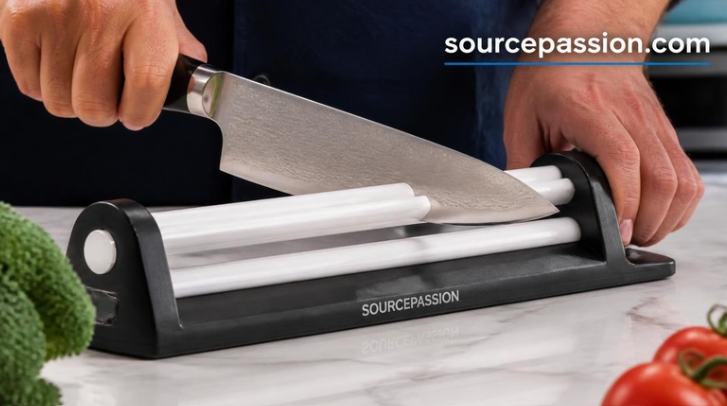
Electric Sharpener vs. Manual Pull-Through Sharpener
Manual pull-through sharpeners are simpler and cheaper.
However, they can vary considerably in abrasive design and angle.
An electric version provides powered abrasive movement and may offer more controlled multi-stage sharpening.
The trade-off
Manual: inexpensive, simple, slower.
Electric: faster, easier, more expensive.
The fundamental issue remains the same:
Does the sharpener match the knife?
Electric Sharpener vs. Professional Knife Sharpening
Professional sharpening makes sense when the knife is:
- Expensive
- Damaged
- Chipped
- Single-bevel
- Unusually thin
- Highly specialized
- Important to you
A professional can assess the blade and restore its geometry rather than simply forcing it through a predetermined sharpening system.
This can be especially useful when a knife has significant chips or has been badly sharpened previously.
Can Electric Sharpeners Sharpen Serrated Knives?
Only if the specific model is designed for serrations.
Do not put a serrated bread knife into a generic sharpening slot simply because the blade physically fits.
Serrated edges consist of teeth and recessed areas.
They require a sharpening system designed to reach the appropriate portions of the edge.
Some specialized electric systems are explicitly designed for serrated knives. For example, the Chef’s Choice Model 1520 is marketed as supporting fine-edge and serrated blades. (Sharpening Supplies)
Other sharpening systems are not.
Rule of thumb
Check the manufacturer’s manual before sharpening a serrated blade.
Can Electric Sharpeners Sharpen Japanese Knives?
Sometimes.
“Japanese knife” is too broad a category to answer with a simple yes or no.
Japanese knives may have:
- Double-bevel edges
- Single-bevel edges
- Very thin geometry
- Acute sharpening angles
- Specialized steels
A suitable sharpener can work well on compatible double-bevel Japanese knives.
But a generic Western-style electric sharpener may be inappropriate for a specialized Japanese blade.
Are Electric Knife Sharpeners Safe?
They can be, provided the user follows the instructions.
In fact, maintaining a sharp knife can improve cutting control.
WÜSTHOF notes that dull knives can require more pressure during cutting, reducing control and potentially increasing injury risk.((WÜSTHOF in AMAZON)
Basic safety rules
- Keep fingers away from the sharpening slot.
- Never touch the cutting edge to check sharpness.
- Keep the machine stable.
- Follow the manufacturer’s pass count.
- Do not force the blade.
- Unplug the machine before cleaning.
- Keep children away from the device.
- Do not use a sharpener on a blade unless it is explicitly compatible.
A sharp knife should always be handled as a sharp tool—not tested casually with a finger.
How to Use an Electric Knife Sharpener Correctly
The exact procedure varies by model, so the manual always takes priority.
However, the general process looks like this.
Step 1: Identify the Knife
Determine:
- Straight or serrated
- Double-bevel or single-bevel
- Western or Asian-style
- Thick or thin
- Manufacturer’s recommended angle
Step 2: Inspect the Edge
Ask:
Is the knife slightly dull or seriously dull?
If it only needs maintenance, don’t automatically start with the coarse stage.
Step 3: Secure the Machine
Place the sharpener on a stable, non-slip surface.
Step 4: Use the Correct Slot
Start with the stage specified by the manufacturer.
Step 5: Use Gentle, Controlled Movement
Do not force the blade downward.
Let the abrasive do the work.
Step 6: Alternate Sides When Required
Many systems require alternating left and right passes to maintain a symmetrical edge.
Step 7: Finish With the Fine Stage
If the system has a polishing or stropping stage, use it according to the manufacturer’s instructions.
Step 8: Clean the Blade
Wipe away sharpening residue before returning the knife to service.
Signs You Are Using an Electric Sharpener Incorrectly
Watch for these warning signs:
Excessive sparks
A small amount of visible material removal can occur with abrasive sharpening, but unusual sparking or abnormal operation is a reason to stop and check the manual.
Heavy pressure
You shouldn’t need to force the blade.
Uneven edge
If one side appears dramatically different from the other, review your technique and the machine’s instructions.
Excessive material removal
If the edge is visibly changing shape much more than expected, you may be using an overly aggressive stage.
Sharpener designed for another angle
This is a major problem.
Blade becomes worse after sharpening
Stop rather than continuing to sharpen.
More passes won’t necessarily fix an incorrectly established edge.
How Often Should You Use an Electric Knife Sharpener?
There is no universal schedule.
Frequency depends on:
- How often you cook
- How hard you use the knife
- What foods you cut
- Cutting board material
- Knife steel
- Edge geometry
- Your sharpness expectations
The important principle is:
Sharpen when the knife needs sharpening—not simply because a calendar says it is time.
Routine maintenance can reduce the need for aggressive sharpening.
How to Tell When Your Knife Needs Sharpening
A knife may need sharpening when:
- It struggles to cut through tomatoes.
- It crushes rather than slices onions.
- You need noticeably more force.
- The blade slips during cutting.
- The edge no longer bites into food cleanly.
A simple kitchen test is to observe how easily the knife cuts a tomato or similarly soft-skinned food.
Do not test sharpness by running your finger along the blade.
Does a Sharp Knife Last Longer?
A properly maintained knife can remain useful for many years.
But sharpening is not magic.
Every time an abrasive removes steel, some of the blade’s material is gone.
The goal is therefore not:
“Make the knife as sharp as possible.”
The better goal is:
“Maintain an appropriate, durable edge while removing as little material as reasonably necessary.”
That is the philosophy that makes knife maintenance more sustainable.
Who Should Buy an Electric Knife Sharpener?
An electric sharpener may be a good fit if you:
- Cook frequently.
- Have several everyday kitchen knives.
- Want fast sharpening.
- Don’t want to learn whetstone technique.
- Struggle to maintain a consistent angle.
- Own knives compatible with the machine.
- Prefer convenience over maximum control.
Who Should Avoid One?
Think twice if you:
- Own expensive specialty knives.
- Have single-bevel Japanese knives.
- Own unusual blade geometries.
- Sharpen serrated knives.
- Want complete control over edge angles.
- Enjoy traditional sharpening.
- Are unwilling to read the machine’s specifications.
In those situations, a whetstone or professional service may be more appropriate.
Honest Pros and Cons Summary
Advantages
- Fast
- Convenient
- Beginner friendly
- Consistent angle
- Easy to repeat
- Good for everyday knives
- Multi-stage systems can sharpen and polish
- Less technique required than freehand whetstone sharpening
Disadvantages
- Removes steel
- Can over-sharpen
- Less control than a whetstone
- Not universally compatible
- Can change the knife’s edge geometry
- Premium models can be expensive
- Incorrect use can damage a blade
Text Infographic: Should You Use an Electric Knife Sharpener?
START
↓
Is your knife dull?
NO → Maintain the edge rather than aggressively sharpening.
YES ↓
Is it a standard, double-bevel kitchen knife?
YES → Continue.
NO / UNSURE → Check manufacturer guidance or use a professional.
↓
Does the sharpener support your knife’s angle?
YES → Continue.
NO → Don’t use it.
↓
Does it support your blade type?
Straight edge → Usually suitable if specifications match.
Serrated → Only if explicitly supported.
Single bevel → Use a compatible specialized system or professional service.
↓
How dull is the knife?
Slightly dull → Use the least aggressive maintenance stage.
Very dull/damaged → Follow the machine’s coarse-stage instructions.
↓
Final result
Sharp + controlled + appropriate edge = successful sharpening
The Biggest Mistakes People Make With Electric Sharpeners
Mistake 1: Using the coarse stage every time
The coarse stage is designed for substantial sharpening, not necessarily daily maintenance.
Mistake 2: Ignoring the sharpening angle
A sharp edge at the wrong geometry isn’t necessarily the edge you want.
Mistake 3: Assuming every knife is compatible
Knife design varies dramatically.
Mistake 4: Pressing too hard
Let the abrasive work.
Mistake 5: Repeating passes unnecessarily
Once the edge is established, more grinding can simply remove more steel.
Mistake 6: Sharpening serrated knives in standard slots
Only use a serration-compatible system.
Mistake 7: Treating a damaged knife like a merely dull knife
Large chips, bent tips and serious geometry problems may require professional repair.
Frequently Asked Questions
1. Are electric knife sharpeners bad for knives?
Not inherently. A properly matched electric sharpener can safely sharpen compatible knives. The main risk comes from using the wrong angle, inappropriate abrasive, excessive passes or a machine that isn’t designed for the blade.
2. Do electric knife sharpeners remove too much metal?
They can remove more metal than necessary if used aggressively or too frequently. Coarse stages are designed for significant sharpening, while fine stages are generally intended for refinement or maintenance on compatible systems.
3. Is a whetstone better than an electric sharpener?
A whetstone provides greater control over angle, pressure, edge geometry and material removal. An electric sharpener is generally easier and faster. The better option depends on the knife and the user’s priorities.
4. Can an electric sharpener sharpen expensive knives?
Potentially, but compatibility should be verified first. For expensive or specialized knives, follow the knife manufacturer’s sharpening recommendations. If you’re uncertain, professional sharpening is the safer choice.
5. Can you sharpen a serrated knife with an electric sharpener?
Only when the specific sharpener is designed for serrated blades. Some models explicitly support serrations, while others are intended for straight edges only. ((WÜSTHOF in AMAZON)
6. How often should you use an electric knife sharpener?
Use it when the knife actually needs sharpening rather than according to a rigid calendar. Regular maintenance can reduce the need for aggressive sharpening.
7. Can an electric sharpener make a knife too sharp?
“Too sharp” is usually not the real issue. The bigger concern is creating an edge that is too thin, too fragile or poorly matched to the knife’s intended use. Edge geometry and durability matter as much as initial sharpness.
Final Verdict: Are Electric Knife Sharpeners Good or Bad?
Electric knife sharpeners are neither inherently good nor inherently bad.
They are tools.
Used correctly, they can make knife maintenance dramatically easier. Their biggest strengths are speed, convenience and consistent angle control.
Their biggest weaknesses are material removal, limited customization and compatibility problems.
For ordinary household kitchen knives, a well-designed electric sharpener that matches the blade’s geometry can be a practical solution. For specialized, expensive or unusual knives, a whetstone or professional sharpening service may offer better control.
The most important lesson is simple:
Don’t choose a sharpener first and force your knives to fit it. Choose a sharpening method based on the knives you actually own.
Before purchasing or using an electric sharpener, check four things:
- Sharpening angle
- Blade type compatibility
- Abrasive and stage design
- Manufacturer’s instructions
If those four factors match, an electric sharpener can be an effective part of a kitchen knife-maintenance routine.
Key Takeaways
- Electric sharpeners can be safe and effective when correctly matched to the knife.
- Sharpening removes steel; unnecessary sharpening should therefore be avoided.
- Preset angles are a major advantage for beginners.
- A whetstone provides more control but requires more skill.
- Never assume a sharpener works with every knife.
- Serrated and single-bevel knives require particular attention.
- Use coarse stages only when the manufacturer’s instructions call for them.
- Gentle, controlled passes are preferable to forcing the blade.
- Regular maintenance can reduce the need for aggressive sharpening.
- For expensive or specialized knives, manufacturer guidance should take priority.
- A sharp knife is not merely about performance; maintaining an appropriate edge can also improve cutting control.
Bottom line: If you own ordinary double-bevel kitchen knives and value speed and simplicity, a quality electric knife sharpener can be a very sensible choice. If you own specialized knives or care deeply about preserving exact blade geometry, choose a sharpening method that gives you the necessary control—or have the knife professionally sharpened.