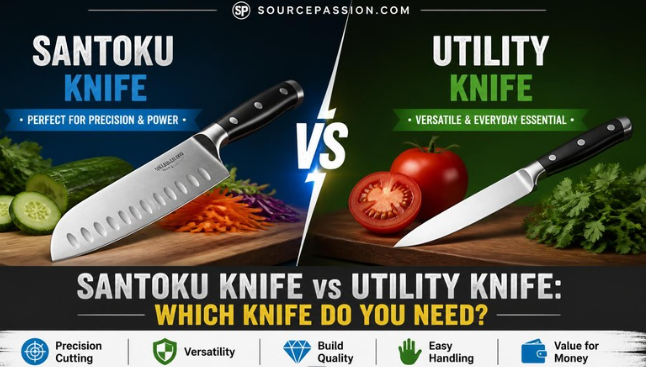
I cook every singI cook every single day. I know how much a good knife matters. Two common knives often confuse home cooks. These are the Santoku and the utility knife. Both can help you cook fast.
But they do very different jobs. One is great for chopping big herbs. The other is best for small, quick tasks. Choosing the wrong one makes prep work hard. Let us look at both tools.
My goal is to help you choose the right tool. You do not need to spend a lot of money. You just need to know how each blade works. This will make your cooking fun.
A great knife feels like a part of your hand. It makes chopping safe and easy. Let us look at the details of each knife. We will start with the famous Japanese blade.
What is a Santoku Knife?
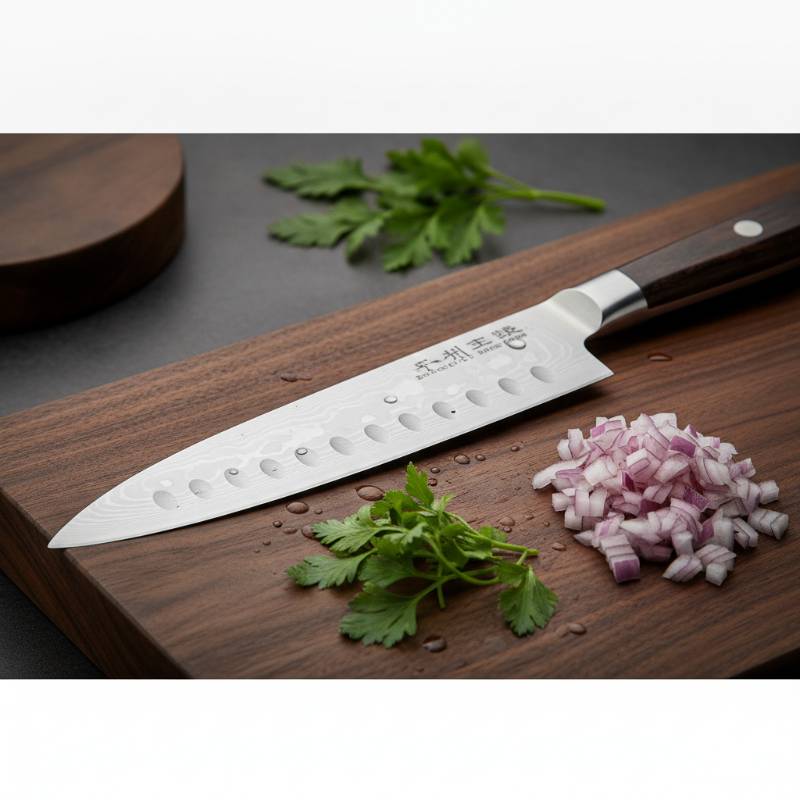
The Santoku comes from Japan. The name means three virtues. These virtues are slicing, dicing, and mincing [1]. It is a great all-purpose tool. Most home cooks love its shape. It feels good in the hand.
A Santoku blade is five to seven inches long. The blade is flat. It does not rock like a Western chef knife. You use an up and down motion to cut. This makes chopping fast.
Many of these blades have hollow edges. People call these Granton edges. These small dimples keep food from sticking . This helps when you slice wet potatoes. It keeps the blade clean.
The blade has a sheep foot curve at the tip . This design makes the tip strong. It does not break easily. It also keeps you safe. You are less likely to poke yourself while cutting.
This tool is perfect for vegetable prep. It cuts clean, thin slices. You can use it for fresh herbs, garlic, and onions. It is the best all-purpose kitchen knife for clean chops.
What is a Utility Knife?
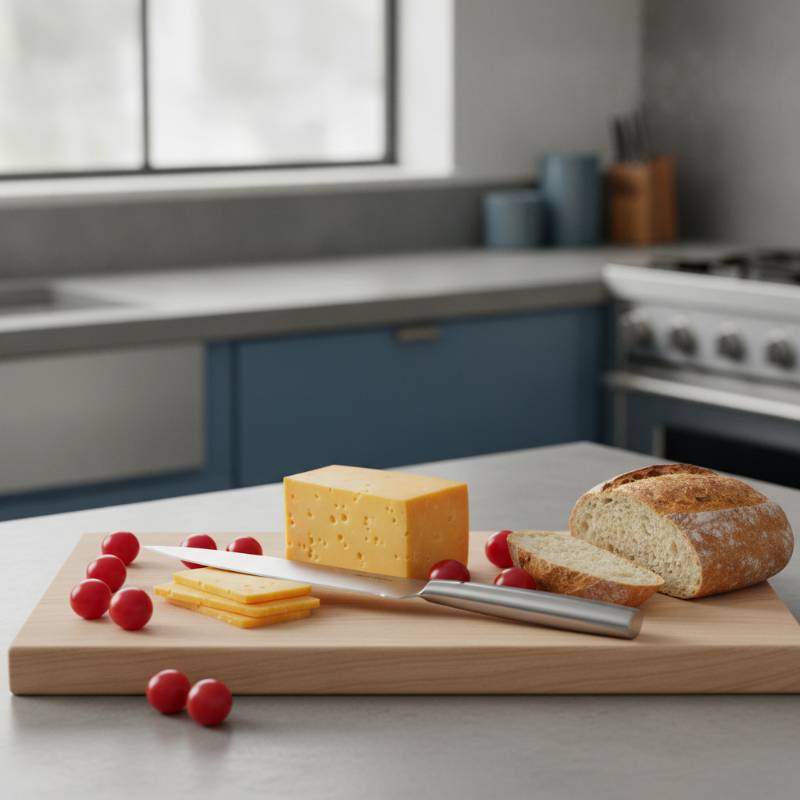
A utility knife is smaller. It is like a bridge. It sits between a chef knife and a paring knife [8]. Most are four to six inches long [8]. It is very light.
This tool has a narrow blade. It is easy to control [8]. It handles tasks too big for a paring knife [8]. You will find it very handy for daily cooking. It fits well in small hands.
There are many utility knife uses in kitchen prep. You can slice hard cheese. You can cut small fruits [8]. It also cuts cold meats for lunch. It is a great tool .
You might see a serrated utility knife vs santoku comparison. A serrated utility blade has teeth . These teeth cut through tough tomato skins easily. A Santoku has a smooth, straight edge.
The serrated version is also good for small bread rolls. It cuts without squishing the bread. The straight-edge version is better for clean, thin cuts. Both types are very useful.
I use my utility knife for quick breakfast prep. I can cut a lemon easily. I can slice some cheese. I do not need a big cutting board for these small tasks.
Difference Between Santoku and Utility Knife
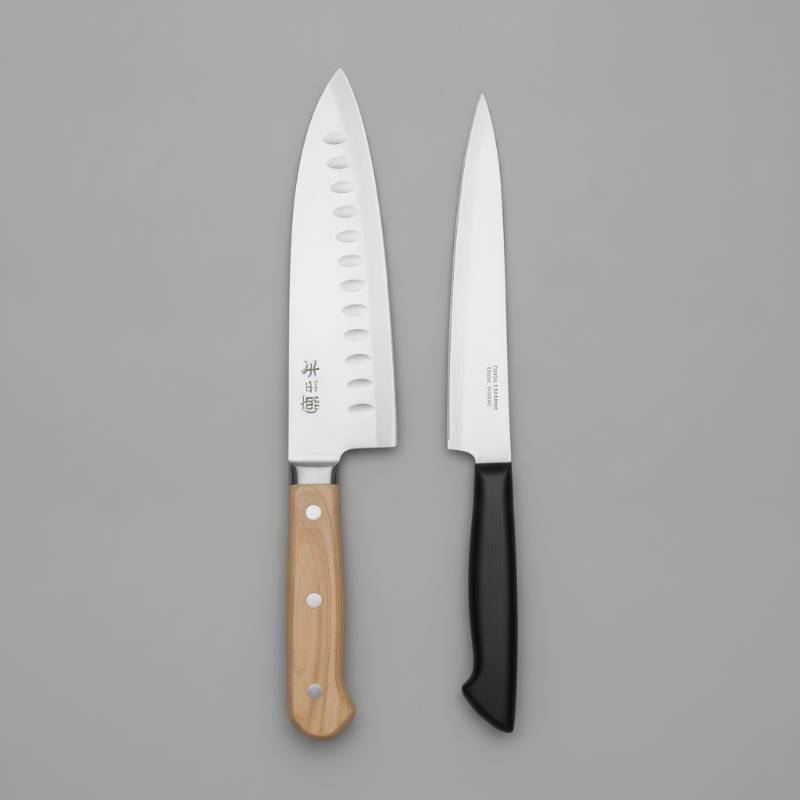
The main difference lies in the blade shape. The Santoku is wide and tall. The utility knife is narrow and short. The shape changes how you cut. It affects your hand.
Your knuckles will not hit the board with a Santoku. You can chop fast. With a utility knife, the blade is low. You often cut food while holding it in the air.
Let us look at a quick comparison table. This table shows how they match up. It shows the size and best uses. You can find both types of blades on AMAZON. It makes the choice simple for you.
| Feature | Santoku Knife | Utility Knife |
|---|---|---|
| Blade Length | 5 to 7 inches [1] | 4 to 6 inches [8] |
| Blade Width | Wide and tall [1] | Narrow and slim [8] |
| Cutting Style | Up and down chop [1] | Draw cut or slicing [8] |
| Board Clearance | Excellent knuckle room | Very low knuckle room |
The table shows that Santoku knives have more blade surface. This helps you guide the blade with your fingers. It is a very safe way to cut fast. The utility knife lacks this height.
The weight is also very different. A Santoku is heavier. This weight helps you cut through thick foods. A utility knife is light. You must use your own hand strength to cut.
The Ultimate Kitchen Showdown
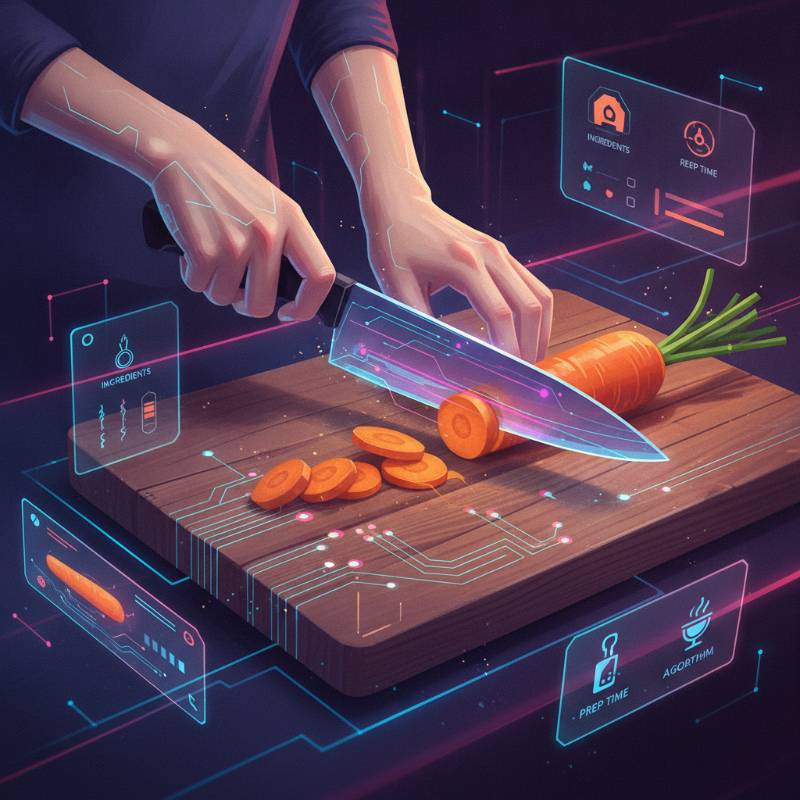
Let us test these tools on real food. For slicing, dicing, and mincing vegetables, the Santoku wins. Its wide blade lets you scoop up the food. You can move fast.
Can you use a utility knife as a chef knife? Not really. It is too light. It lacks the weight to cut hard squash. It will tire your hand quickly. Avoid doing this.
Compare a chef knife, Santoku, and utility knife. The chef knife is heavy and rocks. The Santoku chops straight down. The utility knife handles the small, odd jobs. Each has a role.
If you prep large meals, you need weight. The Santoku gives you that power. For a quick sandwich, grab the utility knife. It is fast and light. You will love it.
I tested both knives on ripe tomatoes. The serrated utility knife cut through the skin with ease. The Santoku also did well, but only if it was very sharp. Both tools have strengths.
For raw meat, the Santoku is better. Its long blade makes clean, single strokes. The utility knife is too short. You might have to saw the meat, which ruins the cut.
Other Japanese Knives to Consider
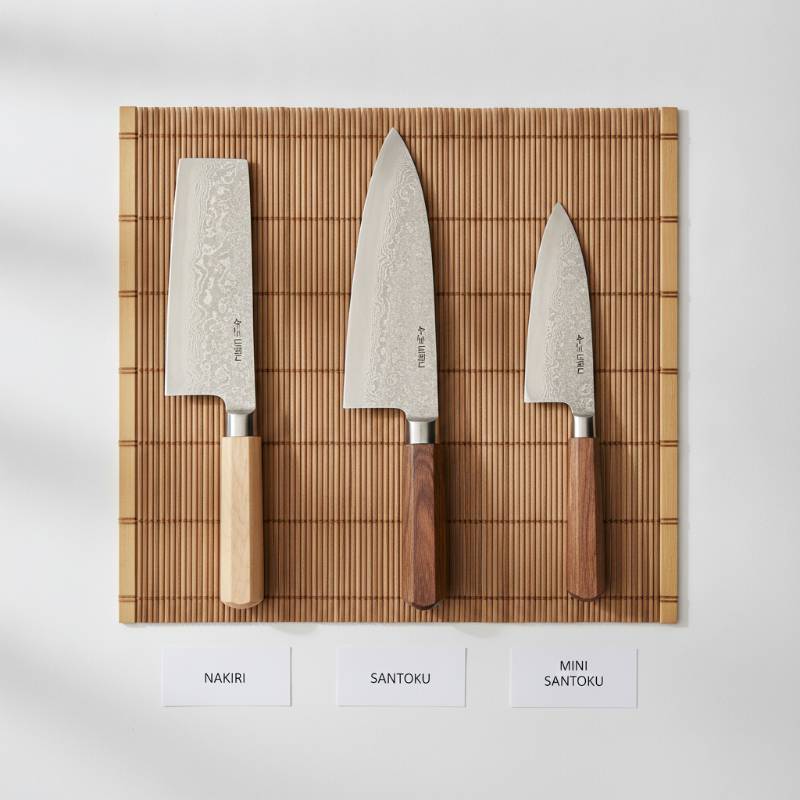
You might also look at other Japanese kitchen knives. For example, consider santoku vs utility vs nakiri. A Nakiri has a square nose. It is made only for cutting fresh greens.
A mini santoku vs utility knife is another common choice. The mini Santoku is short but wide. It offers more safety for your fingers. It is great for small kitchens. Try one.
There is also the paring knife vs utility knife debate. A paring knife is very small. It is best for peeling apples [8]. The utility knife cuts bread and cheese. It does more.
Japanese knives are known for hard steel. They hold an edge for a long time. This makes them a favorite among chefs. Knowing these differences helps you build a great set.
I always suggest starting with one good Japanese blade. A Santoku is the perfect first choice. It teaches you how to care for fine steel. You will see the difference fast.
Blade Materials and Handles Explained
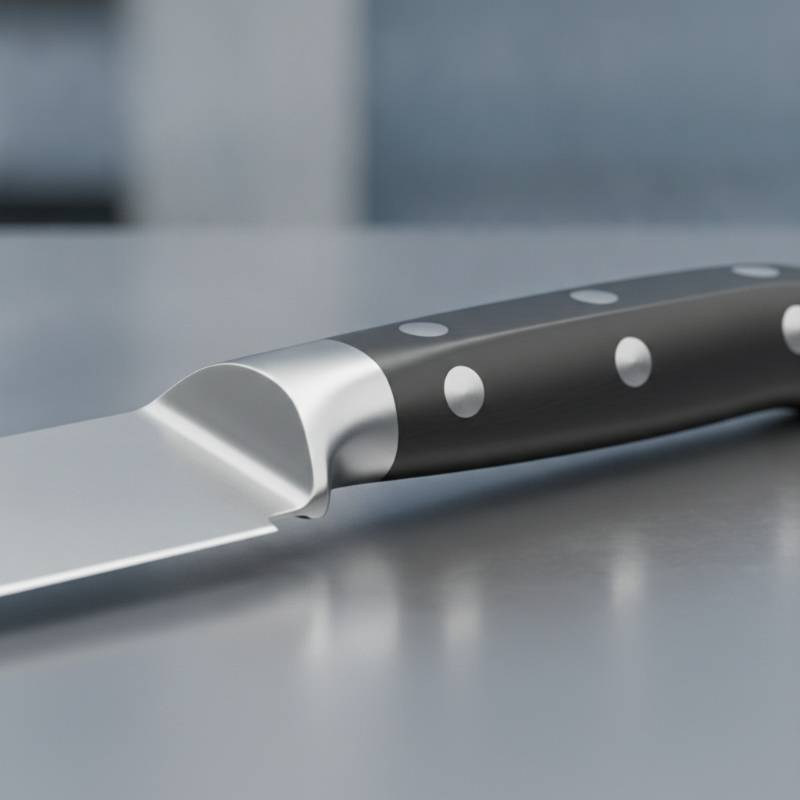
You should also look at the materials. High-carbon stainless steel is the best. It stays sharp for a long time. It does not rust easily. It is strong and durable. It holds up well.
Some Japanese knives use Damascus steel. This steel has beautiful wavy patterns. It is very hard and sharp. It costs more but looks amazing in your kitchen. You will love using it.
The handle is also very important. It should feel comfortable. Wood handles look classic and feel warm. Plastic handles are easy to clean. Pick what feels best in your hand.
A full tang knife is always best. This means the steel runs all the way through the handle. It offers great balance. It is much stronger than a partial tang. It lasts much longer.
Balance is key for fast chopping. Hold the knife at the bolster. It should feel balanced in your hand. This prevents hand fatigue during long prep sessions. It makes cutting easy.
How to Care for Your Kitchen Knives
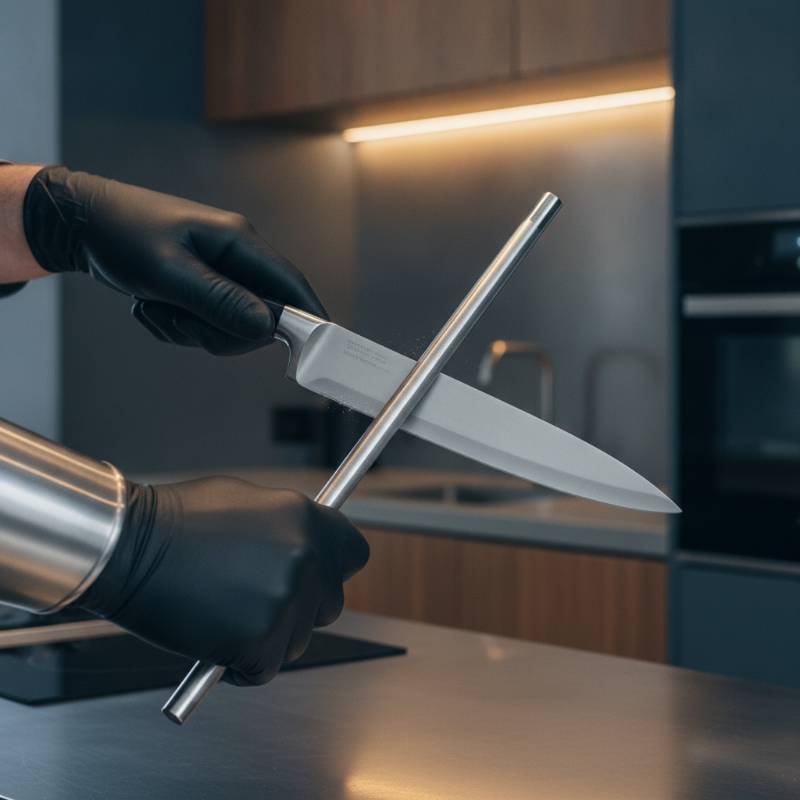
Taking care of your knives is very important. A dull knife is dangerous. It can slip and cut you. A sharp knife cuts food easily and safely. Keep your blades sharp. Do this every week.
You should hone your blades often. Use a honing rod before you cook. This keeps the edge straight. It does not remove metal. It just realigns the microscopic edge of the blade.
When the knife gets truly dull, use a whetstone. This tool sharpens the blade. It grinds away a tiny bit of metal. This creates a brand new, razor-sharp edge for cutting. It makes cuts effortless.
Always store your knives safely. Do not throw them in a drawer. They will bump into each other and get dull. Use a wooden block or a magnetic strip instead. This keeps them safe.
This care routine works for both Santoku and utility knives. It ensures they perform well every single time. Your prep work will remain fast and safe. You will enjoy cooking more.
Which Knife is Best for You?

Is a santoku knife better than a utility knife? The answer depends on your cooking style. If you cook from scratch, buy the Santoku. It is a true workhorse. You will use it daily.
For light meals, get the utility knife. It is great for quick snacks. You can find both blades online. They are cheap. They make cooking much easier. They are very sharp.
I love using high-quality steel in my kitchen. It makes prep work fun. Find great deals on top-rated knives on AMAZON. It is a great place to shop. They have many good brands.
A good blade will last for many years. Make sure to wash it by hand. Never put your good knives in the dishwasher. This keeps the edges sharp and safe for you.
Investing in a solid tool is always smart. It saves you time and effort. See the best-selling models on AMAZON to start. You will find the perfect fit. It is a smart buy.
Think about what you cook most. If you love big salads, go with the Santoku. If you love quick snacks, go with the utility blade. You might even want to buy both.
Frequently Asked Questions
What is a santoku knife best used for?
A Santoku knife is best for slicing, dicing, and mincing [1]. It works great on vegetables, fish, and boneless meats [1]. The wide blade makes it easy to scoop up chopped food.
Can you use a utility knife as a chef knife?
No, you should not. A utility knife is too light and small [8]. It lacks the weight needed for tough tasks. Using it on hard foods can damage the blade or hurt your hand.
Is a santoku knife better than a utility knife?
It is not better, just different. A Santoku is best for heavy meal prep and chopping [1]. A utility knife is best for small, quick tasks like slicing cheese or cutting fruit [8].
What is the main difference between a santoku and a utility knife?
The main difference is the blade shape and size. A Santoku has a wide, flat blade that is five to seven inches long [1]. A utility knife has a narrow blade that is four to six inches long [8].