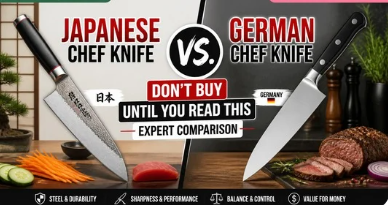
You want a new kitchen knife. You see two main options. One is German. The other is Japanese. Both look great. But they are very different. Let us help you choose.
A good knife makes cooking fun. It helps you cut food fast. It keeps your hands safe. But a bad knife makes work hard. You must pick the right tool for your kitchen.
We will look at both styles. We will compare their steel. We will test their sharpness. This guide will show you which one is best for your daily cooking needs.
What is the Difference Between German and Japanese Chef Knives?
The Steel and Hardness
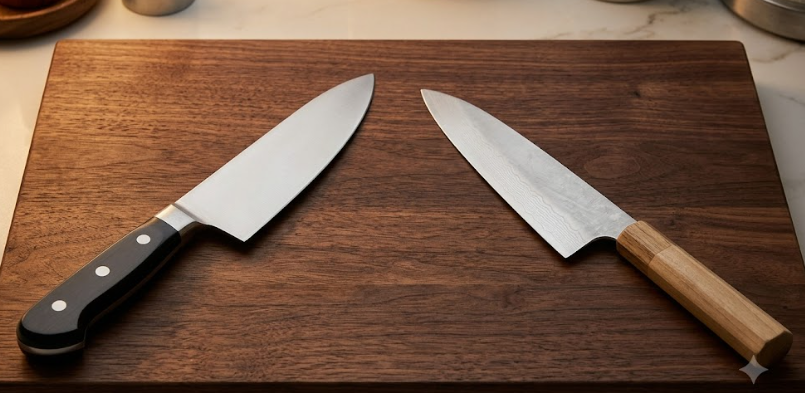
Let us talk about steel first. German and Japanese knives use different metal. German steel is soft. Japanese steel is hard. This difference changes how they work in your kitchen.
We measure hardness with a scale. It is the Rockwell hardness scale. German knives score lower on this scale. Japanese knives score much higher. This affects how long they stay sharp.
German knives use soft steel. This steel bends but does not chip. It is very tough. You can find great options on AMAZON to see these tough blades.
Japanese steel is hard and brittle. It can hold a sharp edge for a long time. But it can chip if you hit a bone. You must treat it with care.
Blade Angle and Sharpness
Blade angle and sharpness are key. German knives have a wide angle. They are cut at twenty degrees on each side. This makes the edge thick and strong.
Japanese knives have a narrow angle [4]. They are cut at fifteen degrees or less. Some have a single bevel. This means only one side is sharp. Others use a double bevel.
A narrow angle makes a knife very sharp. It cuts through food like butter. You do not need to push hard. It makes clean cuts every single time.
A wide angle is less sharp. But it is much stronger. It can cut hard food easily. It will not break when you cut squash or thick meat.
Blade Design
Let us look at Gyuto vs Western chef knife shapes. The German blade has a deep curve. It is made for rocking cuts. You rock the blade back and forth.
The Japanese Gyuto is flatter. It is made for clean slices. You push and pull the blade. You do not rock it. It is great for fast up and down cuts.
You may also know the Santoku vs chef knife styles. The Santoku is a Japanese shape. It is shorter and flat. It works well for chopping small vegetables.
The German chef knife is longer. It is heavier too. The weight helps you cut. It does the hard work for you. It feels solid in your hand.
The Bolster and Balance
Let us look at the bolster. German knives have a thick bolster. This is the metal part where the blade meets the handle. It protects your fingers from slips.
The bolster adds weight. It makes the knife balanced in the middle. Many Japanese knives do not have a bolster. They are much lighter near the handle.
This lets you choke up on the blade. You can hold it with a pinch grip. This grip gives you great control. It is very popular with professional chefs.
German vs Japanese Steel and Build
German Knives and Full Tang
German knives use high carbon stainless steel. This metal resists rust. It is easy to wash. You do not have to worry about water spots or stains.
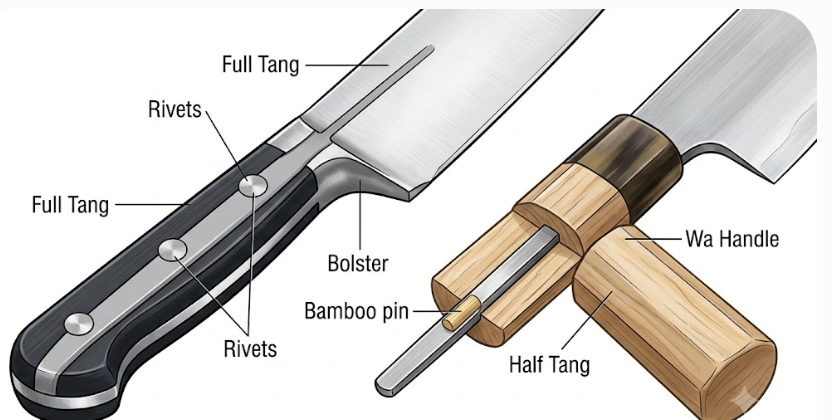
These knives often have a full tang. This means the steel runs through the handle. It makes the knife strong. A full tang vs half tang blade is much safer.
The handle is usually made of heavy plastic or wood. It has metal rivets to hold it tight. The knife feels balanced near the middle. It is easy to grip.
You can use a German knife for rough jobs. It can split bones. It can chop hard roots. It will not bend or break under pressure. It is a workhorse.
Japanese Knives and Edge Retention
Japanese knives focus on knife edge retention. They stay sharp for months. This is because the steel is very hard. You do not have to sharpen them often.
Hard steel is harder to sharpen when it gets dull. You need special water stones. You cannot use a simple steel rod. It takes practice to do it right.
Many Japanese blades have a half tang. The steel goes halfway into the wood handle. This makes the knife very light. The weight is mostly in the blade.
This design gives you great control. You can make very thin cuts. It is perfect for sushi. It is also perfect for fine herbs and small tasks.
Blade Thickness and Weight
German blades are thick and heavy. The spine of the blade is wide. This thickness makes the blade very stiff. It will not bend when you cut hard foods.
Japanese blades are thin and light. The spine is narrow. This makes the knife slide through food easily. There is much less drag when you slice thin pieces.
This thin design is great for delicate work. But it is not good for bones. The thin edge can chip or crack if you hit something hard.
Comparing Wusthof vs Shun
The German Icon: Wusthof
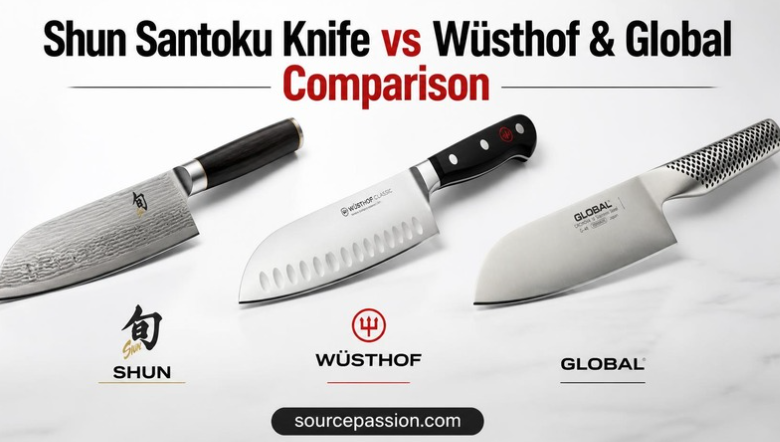
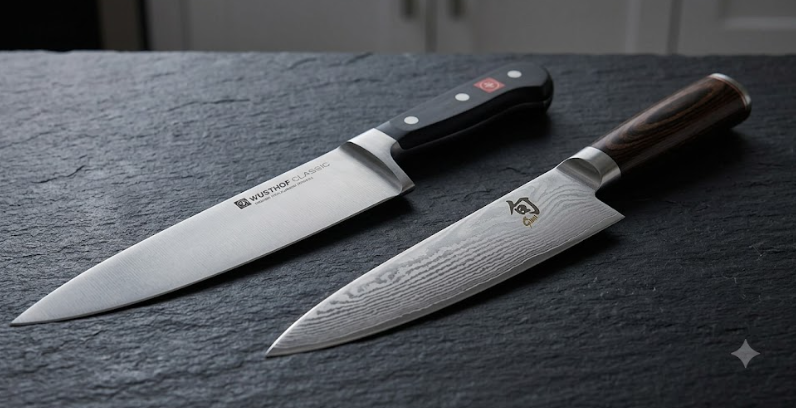
Let us compare Wusthof vs Shun. Wusthof is a famous German brand. They make knives in Solingen. This city is famous for steel. Their knives last for lifetimes.
A Wusthof knife has a thick bolster. The bolster is the metal guard between blade and handle. It protects your fingers. It adds weight to the center.
These knives are great for daily home cooking. They can handle any task easily. You can find them on AMAZON to start your search today.
The Japanese Icon: Shun
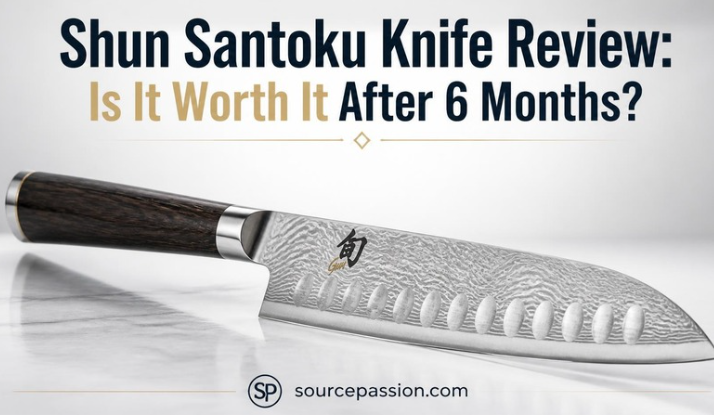
Shun is a top Japanese brand. They make beautiful knives. Many have a Damascus pattern on the blade. This pattern looks like wavy water. It is very pretty.
A Shun knife is light and fast. The handle is often made of Pakkawood. This is a wood and resin mix. It resists water and feels warm.
These knives cut with great precision. They are like surgical tools. They are best for cooks who want clean, beautiful cuts. They make prep work feel like art.
Quick Comparison Table
Here is a quick look at the two styles. This table shows the main facts clearly. It will help you see the differences at a glance right now.
| Feature | German Knife | Japanese Knife |
|---|---|---|
| Steel Hardness | Soft (56-58 HRC) | Hard (60-63 HRC) |
| Blade Angle | 20 degrees | 15 degrees or less |
| Weight | Heavy | Light |
| Best For | Heavy chopping | Fine slicing |
Which is Better German or Japanese Chef Knife?
When to Choose a German Knife
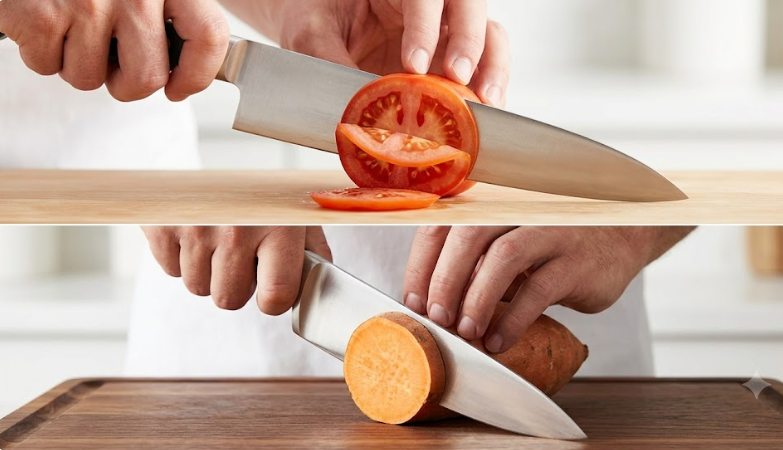
Choose a German knife if you want a tough tool. It is great for everyday tasks [6]. It can cut through hard bones. It can chop big squash easily.
You should pick it if you like a heavy feel. The weight helps you slice. It is also very easy to clean. You do not have to worry about chips.
It is the best choice for beginners. It is safe and strong. You can find many great models on AMAZON to start your kitchen journey.
When to Choose a Japanese Knife
Choose a Japanese knife if you want extreme sharpness. It is perfect for fine cuts. It is great for fish and vegetables. It makes cooking feel fast.
You should pick it if you like a light tool. It will not tire your wrist. It is perfect for long prep sessions. It feels like a part of your hand.
It is best for home cooks with good skills. You must know how to cut. You must avoid hard bones. This will keep your blade safe from damage.
Maintenance and Cost Questions
Why Are Japanese Knives So Expensive?
Why are Japanese knives so expensive? The answer is craft. Many are made by hand. Skilled makers spend hours on one blade. They use high-grade steel.
They use special methods. Some blades have many layers of metal. This adds strength and beauty. You pay for the time and skill of the maker.
They are not just tools. They are works of art. They can last for many years if you treat them well. They hold their value very well over time.
Are Japanese Knives Harder to Maintain?
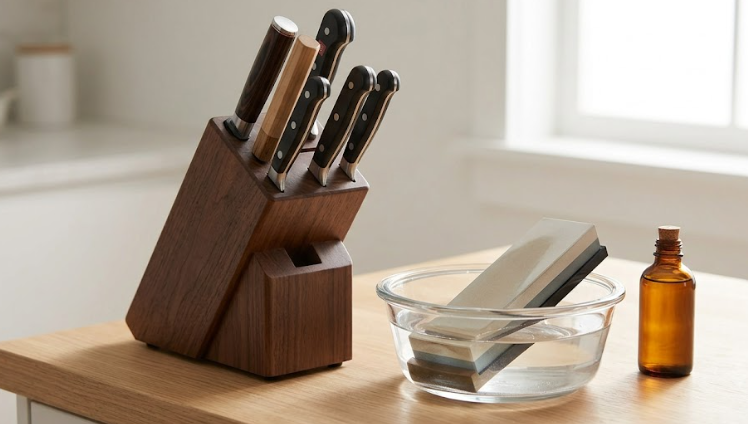
Are Japanese knives harder to maintain? Yes, they need more care. You cannot put them in the dishwasher ever. You must wash and dry them by hand right away.
You must dry them fast. Hard steel can rust easily if left wet. You should also use a wooden cutting board. Hard boards like glass will dull the edge fast.
You must sharpen them on water stones. This takes time to learn. But the reward is a blade that cuts like nothing else. It is worth the effort.
The Final Verdict

Our Top Recommendation
Both knives are great. But one may fit you better. If you want a tough tool, buy German. It is strong, safe, and very easy to use every day.
If you want a super sharp tool, buy Japanese. It is light, fast, and precise [4]. It makes slicing a joy. Just remember to give it extra care.
Think about your cooking style. Think about how you care for tools. This will lead you to the perfect knife for your kitchen. Happy cooking to you and your family!
Frequently Asked Questions
What is the difference between German and Japanese chef knives?
German knives are heavy, thick, and use softer steel. Japanese knives are light, thin, and use harder steel that stays sharp longer.
Which is better German or Japanese chef knife?
It depends on your needs. German knives are better for heavy chopping and tough tasks. Japanese knives are better for precise, thin slices.
Why are Japanese knives so expensive?
Many Japanese knives are made by hand by skilled craftsmen. They use high-grade steel and complex forging methods that take a lot of time.
Are Japanese knives harder to maintain?
Yes, they require more care. You must wash and dry them by hand immediately to prevent rust, and you must sharpen them using water stones.