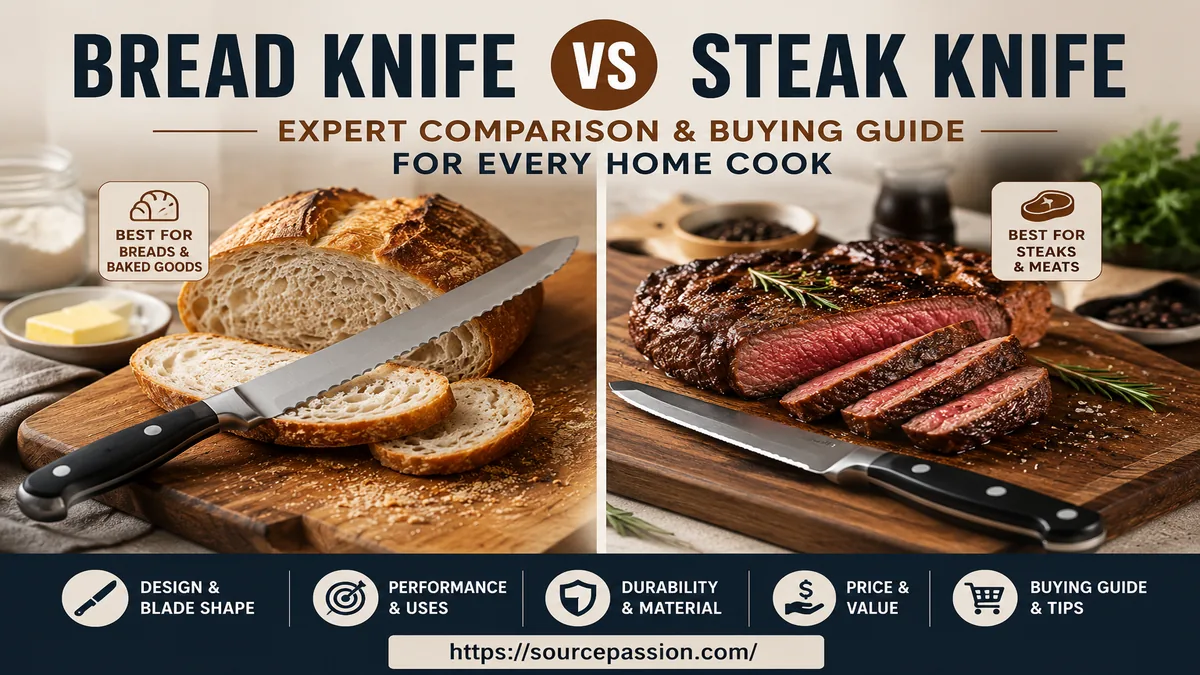
Many home cooks feel confused by kitchen tools. You might look at your knife block and wonder about the options. Two common blades look very similar. They both have sharp, jagged teeth.
These are the bread knife and the steak knife. Yet they serve very different jobs in your kitchen. One stays at the dining table. The other lives on your cutting board.
I will help you see the differences today. We will look at how each blade cuts food. This guide will help you choose the best tools for your daily cooking.
Understanding the Bread Knife
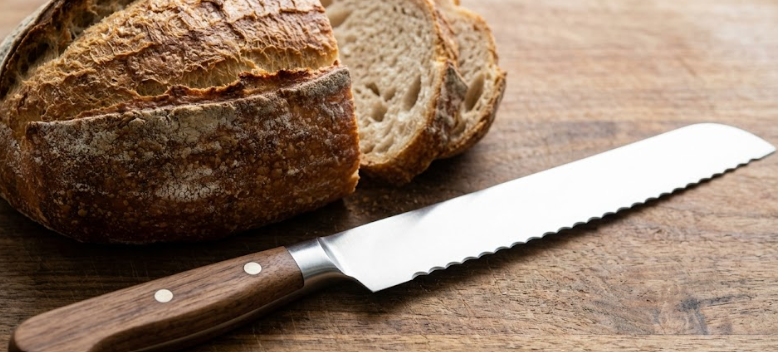
A bread knife is a long kitchen tool. It has a straight blade with a serrated edge. This design helps you saw through soft food without squishing it.
Most bread knives have a blade length of eight to ten inches. This extra length is helpful. It allows you to slice wide loaves with just a few smooth strokes.
You do not need to press down hard with this tool. The sharp teeth do the work for you. They grip the tough crust and glide right through it.
Key Features of a Bread Knife
The most common bread knife has scalloped serrations. These look like soft, rounded waves. They make very clean cuts through soft bread and delicate cakes in your home kitchen.
Some models have pointed teeth instead of waves. Pointed teeth bite hard into thick, crusty sourdough loaves. However, they can tear soft bread and leave a lot of crumbs.
You can use a bread knife for many different tasks. It works well on large melons and soft tomatoes. It is also great for slicing delicate layers of cake.
This tool is a key part of your kitchen knife set needs. It protects your soft baked goods from getting flat. Every home baker needs one on their counter.
Serrated Utility Knife vs Bread Knife
A serrated utility knife vs bread knife comparison comes down to size. The utility knife is shorter, usually six inches. It works best for small bagels and tomatoes.
The bread knife is much longer. It easily handles large sourdough loaves and big watermelons. You really need both if you cook many different meals at home.
Understanding the Steak Knife
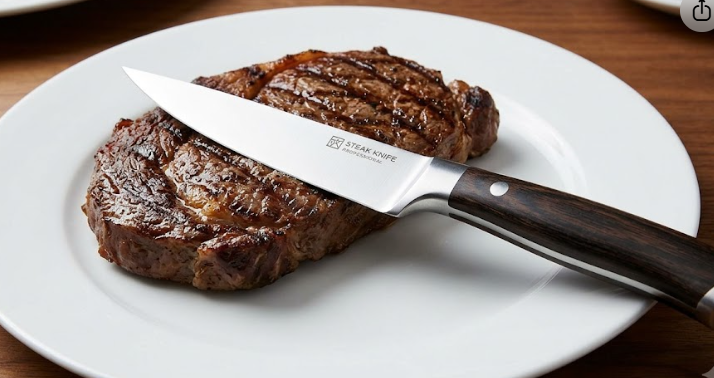
A steak knife is a small table knife. It is made for guests to use while eating dinner. It helps you cut cooked meat right on your plate.
These blades are usually four to five inches long. They fit easily in your hand at the table. They are much smaller than a standard kitchen bread knife.
Most steak knives have a sharp point at the tip. This point helps you cut around bones on your plate. It also lets you spear small pieces of meat.
Key Features of a Steak Knife
You can buy a serrated vs straight edge steak knife. Serrated steak knives have tiny teeth. They stay sharp for a very long time without any extra care.
Straight edge steak knives slice meat like a razor. They do not tear the meat fibers. However, you must sharpen them more often to keep them working well.
Why are steak knives serrated in most homes? The teeth protect the blade from dulling on hard plates. Ceramic and glass plates can ruin a straight edge fast.
These knives are not meant for food prep in the kitchen. They are dining tools. You set them out when you serve steak, pork, or chicken to guests.
The Core Differences Explained
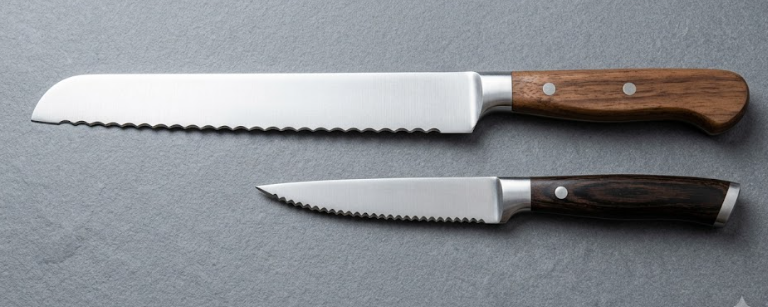
There is a big difference between bread knife and steak knife designs. They have different sizes, shapes, and uses. You should not swap them during your daily cooking.
The main difference is the scale of the blade. A bread knife is long and heavy. A steak knife is short, light, and easy to hold with one hand.
Their teeth also have different shapes. Bread knives have wide, deep waves. Steak knives have tiny, sharp points. These shapes change how they cut through different foods.
A bread knife is a kitchen prep tool. A steak knife is a table dining tool. Knowing this simple fact helps you use them the right way.
Blade Length and Shape
Bread knife blade length is key for safety. A long blade lets you cut in one line. You do not have to saw back and forth too much.
This keeps your bread slices neat and even. A steak knife has a short blade. If you use it on bread, you will get uneven slices and crumbs.
The shape of the tip also matters. Bread knives have a blunt, rounded tip. Steak knives have a sharp, pointed tip to pierce tough meat with ease.
Serration Types
Let us look at scalloped vs pointed serrations. Scalloped teeth are gentle on soft food. They slice without tearing. They are perfect for fresh bread and cakes.
Pointed serrations are like tiny saws. They rip through tough materials. They work well on thick meat but will shred soft bread into tiny pieces.
Most steak knives use pointed teeth. This helps them cut through cooked meat fibers. It also helps them survive frequent contact with hard ceramic plates.
Slicing Bread with a Steak Knife
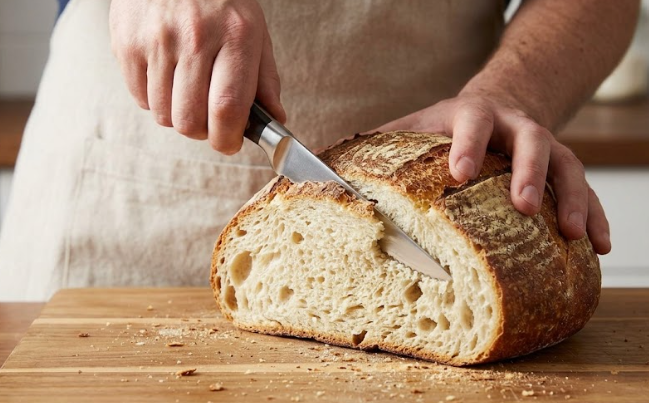
Can you use a steak knife as a bread knife? The answer is yes, but only for small items. It works well for rolls or small bagels.
Slicing bread with a steak knife is hard on large loaves. The blade is too short to reach across. You have to saw back and forth many times.
This sawing motion will squish the soft inside of the bread. You will end up with flat slices. It also creates a huge mess of crumbs on your counter.
If you want perfect slices, buy a dedicated bread knife. It makes the task fast and easy. You can find great options when you BUY AMAZON tools for your kitchen.
Cutting Meat with a Bread Knife
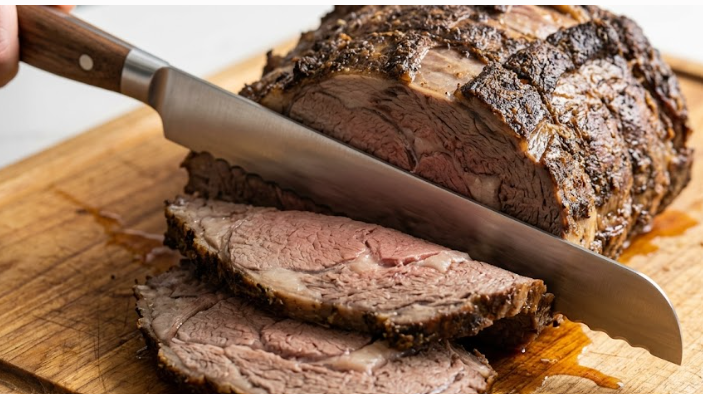
Can you use a bread knife to cut meat? Yes, you can use it as a backup tool. It works well for large roasts and cooked ham.
The long blade lets you make clean slices across big cuts. It acts like a bread knife vs carving knife in a pinch when you cook.
Do not use this knife on raw meat. The wide teeth will tear the flesh. This makes your cuts look messy and uneven on your dinner plate.
It is also hard to cut around bones with a long blade. Use a proper carving knife or a steak knife for those difficult tasks instead.
Comparison Table: Bread Knife vs Steak Knife
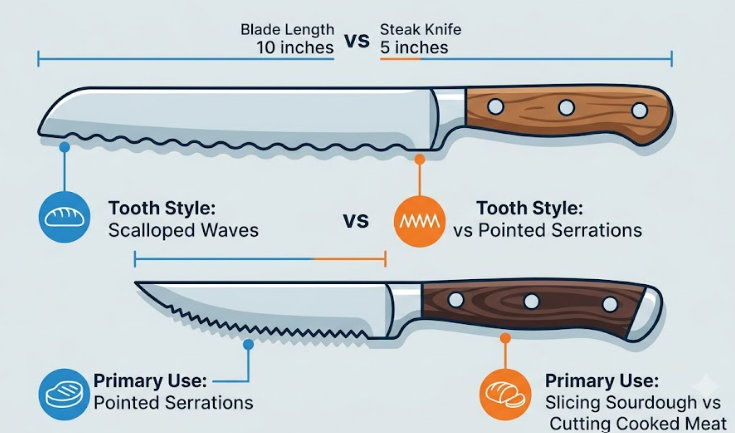
This table shows the main differences between these two blades. It compares their size, teeth, and best uses. Use it to choose the right knife for your home.
| Feature | Bread Knife | Steak Knife |
|---|---|---|
| Blade Length | 8 to 10 inches | 4 to 5 inches |
| Primary Use | Slicing bread, cakes, melons | Cutting cooked meat at table |
| Serration Type | Scalloped (rounded waves) | Pointed (tiny teeth) or straight |
| Blade Tip | Blunt or rounded | Sharp and pointed |
| Location of Use | Kitchen cutting board | Dining table plate |
Pros and Cons
Bread Knife Pros and Cons
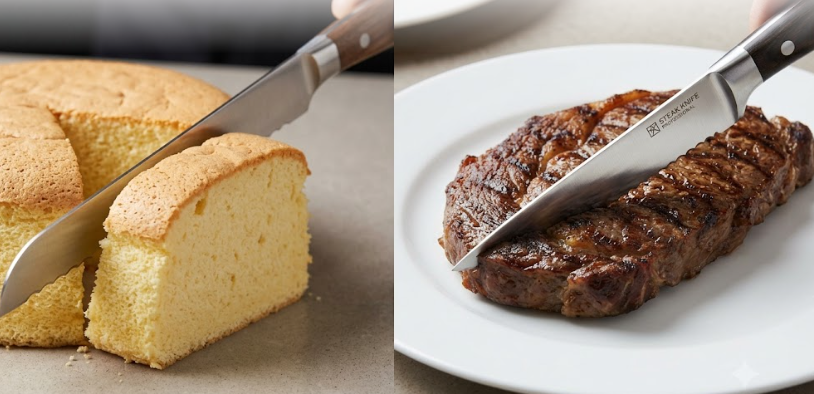
The bread knife is highly versatile. It slices soft foods without crushing them. It is also great for large fruits like watermelons in the summer.
The long blade is hard to control for small kitchen tasks. It is too big to peel an apple. It also takes up a lot of drawer space.
You cannot use it to cut meat on a dining plate. It is too long and awkward for table use. It can also damage your ceramic plates.
Steak Knife Pros and Cons
A steak knife is perfect for single portions of meat. It is small and easy to handle. It cuts cooked meat cleanly at the dinner table.
Serrated models stay sharp for many years. They need very little daily care. They are great for casual meals with your family at home.
These small blades are too short for large prep tasks in your kitchen. You cannot slice a big loaf of sourdough bread with them easily at home.
Do You Really Need Both?
Do you really need a bread knife? Yes, if you love fresh bread. A standard chef’s knife will crush your soft loaves. A bread knife is a must here.
You also need steak knives if you eat meat. They save your good kitchen knives from getting dull on plates. They make dining much more enjoyable.
Both knives have unique roles. Trying to use one for everything will damage your food. It can also ruin your expensive kitchen blades over time.
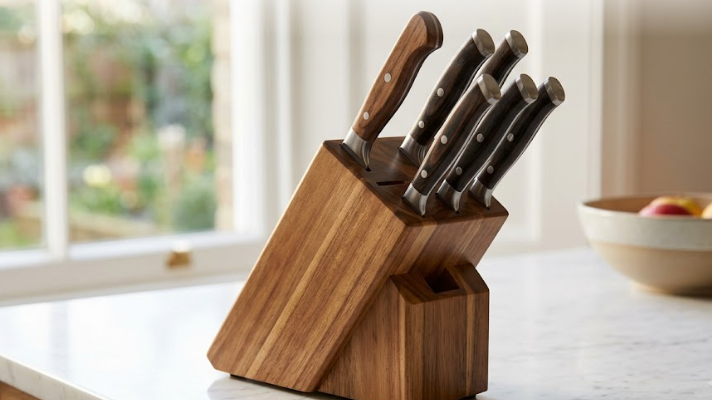
If you want to upgrade your kitchen, consider buying a set. You can find high-quality options when you BUY AMAZON products today.
How to Care and Sharpen
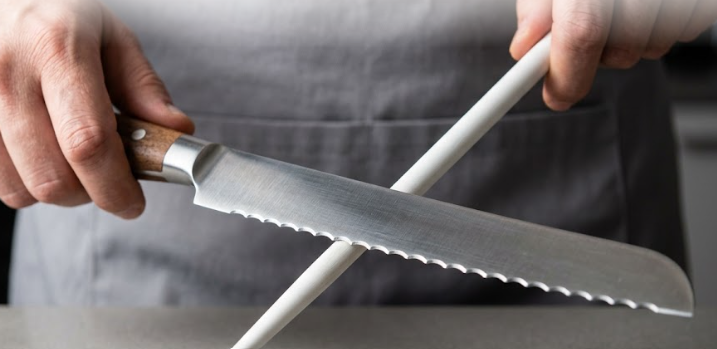
Many people wonder how to sharpen a serrated bread knife. It is different from sharpening a straight blade. You cannot use a flat whetstone.
You must use a tapered ceramic rod. You run the rod through each wave on the blade. This takes time but keeps the teeth sharp.
Serrated steak knives are very hard to sharpen at home. Most people replace them when they get dull. High-quality sets last for many years.
Always wash these knives by hand. Do not put them in the dishwasher. The harsh heat and water will damage the handles and blades.
Final Verdict
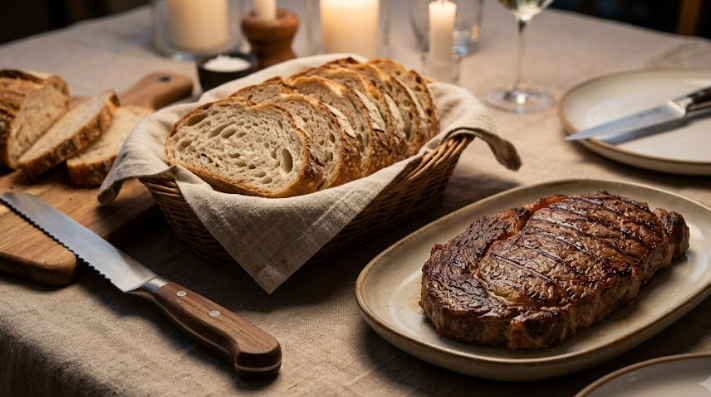
A bread knife and a steak knife are both important. They do not replace each other. Each has a special place in your home kitchen.
Use the bread knife for baking and large fruits. Use steak knives for family dinners. This keeps your food looking great and your blades sharp for years.
Ready to get the best tools? Check out the top-rated sets online. You can find great deals when you BUY AMAZON cutlery today.
Frequently Asked Questions
Can you use a steak knife as a bread knife?
Yes, you can use a steak knife for very small bread items like rolls or bagels. However, the short blade will squish large loaves of bread and create many crumbs.
Can you use a bread knife to cut meat?
Yes, a bread knife works as a backup tool for slicing large, cooked roasts or ham. However, do not use it on raw meat because the teeth will tear the flesh.
What is a bread knife used for besides bread?
A bread knife works well for slicing soft tomatoes, large melons, and delicate cakes. Its gentle scalloped teeth slice through tough skins and soft interiors without crushing them easily.
Why are steak knives serrated?
Most steak knives have serrated edges to protect the sharp teeth from dulling on hard ceramic plates. The teeth allow the blade to cut meat without losing its edge quickly.