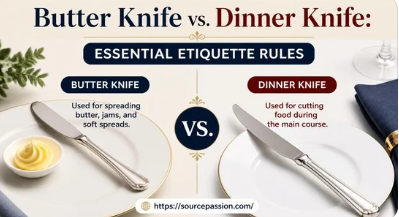
I see many people get confused by table settings. They do not know which knife to use. You might pick up the wrong one at a dinner. I want to help you learn the rules.
Proper table manners can make you feel good. You will feel sure of yourself at any meal. It is easy to tell these two blades apart. I will show you how to do it now.
You do not need to feel stressed at a formal meal. I will explain the shapes of these knives. You will also learn where to put them. Your next dinner party will be perfect.
Let us look at the main differences now. We will start with the basic shapes. Each tool has a special job. You will never mix them up again. This guide makes it so simple.
What is a Dinner Knife?
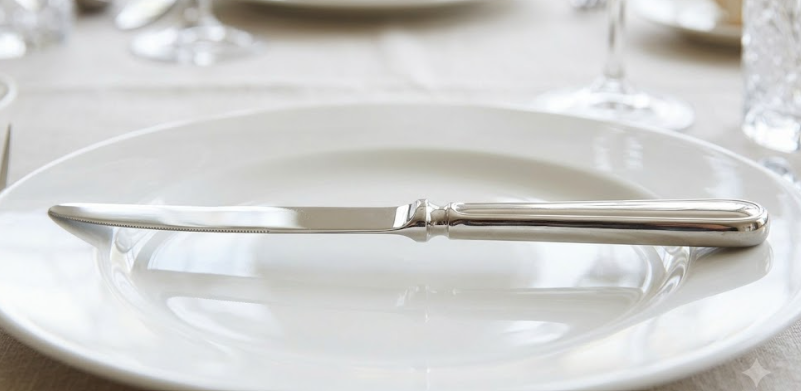
A dinner knife is the main knife on the table. It is the longest knife in your flatware set. I use it to cut most of my food. It can cut cooked meats and soft vegetables.
This knife is also called a table knife. It is not as sharp as a steak knife. The blade is long and strong. It has a small point at the top. This helps you cut food.
You will always find this knife on the right side. It sits next to the dinner plate. The sharp edge of the blade faces the plate. This is a key rule of classic table layout.
The Common Uses of a Dinner Knife
I use this tool for my main meal. It works well for soft foods. You can cut chicken or fish with it. It also cuts cooked greens on your plate. It is very handy indeed.
Do not use this knife to spread butter. It is too long for that task. It can make a mess on your bread. Use the right tool for spreading. This keeps things very clean.
What is a Butter Knife?
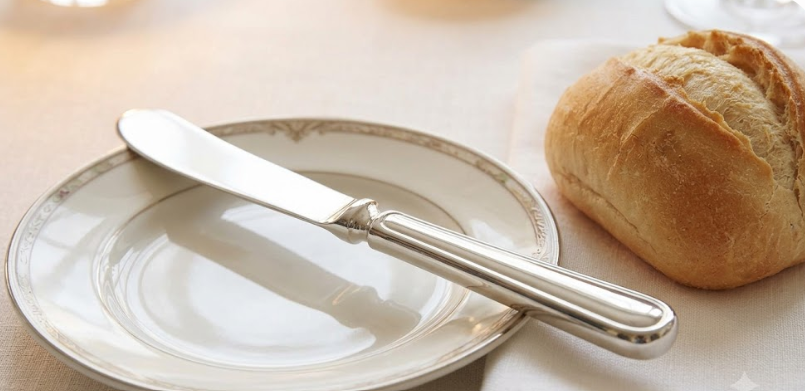
A butter knife is much smaller. It is the smallest knife in a flatware set. It has a very dull blade. The tip of this knife is round. It is made only for spreading.
The rounded tip has a clear goal. It stops you from tearing your bread. A sharp point would poke holes in a soft roll. The flat blade glides over bread easily. It works very well.
The Purpose of a Butter Knife
I use this knife for soft spreads. It is perfect for butter or jam. You can also use it for cream cheese. Do not cut hard foods with it. It is too dull for that.
You must know that there are two types. One is for serving. The other is for your own plate. I will explain both of these types next. It is useful to know them well.
Master Butter Knife vs. Butter Spreader
A master butter knife is a serving tool. It stays with the main butter dish. It often has a sharp point. Use it to take butter for your plate. Do not spread with it at all.
An individual butter spreader is different. It is for your own use. It has a round tip. It sits on your bread plate. Use it to spread butter on bread. It is yours alone to use.
Butter Knife vs. Dinner Knife: Key Differences
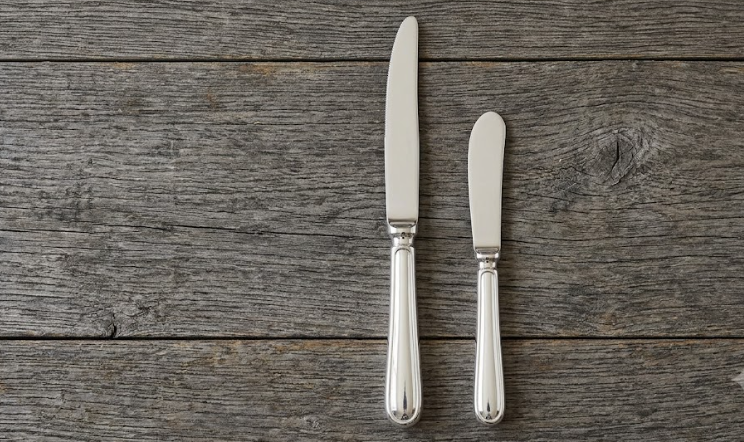
You can see how they differ easily. I made a simple table for you. It shows the size, shape, and use of each knife. It makes the facts clear. Let us look at them now.
| Feature | Dinner Knife | Butter Knife |
|---|---|---|
| Blade Tip | Slight point | Rounded and blunt |
| Blade Edge | Serrated or semi-sharp | Completely dull |
| Average Size | 8 to 9.5 inches | 5 to 6 inches |
| Table Position | Right of the dinner plate | On the bread plate (left) |
| Main Task | Cutting main course foods | Spreading soft condiments |
Serrated vs. Rounded Blade
A dinner knife often has a serrated edge. This means it has small teeth. These teeth help cut meat. A butter knife has a smooth, rounded blade. It has no teeth to cut food.
The smooth blade is safe to use. You cannot cut yourself with it. It is made only to push soft butter. A serrated blade would rip your bread to pieces. Keep them separate always.
Size and Weight Differences
Dinner knives are much larger. They feel heavy in your hand. This weight helps you cut food. A butter knife is very light. It is easy to hold with two fingers. It is very small.
The small size makes it fit on a bread plate. It does not take up much space. It is the shortest knife you will see. It looks cute there next to a dinner knife.
Table Setting Etiquette and Knife Placement

Setting a table is an art. I enjoy making my table look neat. You must know where each piece goes. It makes your guests feel welcome. Let us learn the layout rules right now.
The dinner knife goes on the right. Put it next to the plate. The blade edge must face the plate. This is an old rule. It is still used today in fine dining everywhere.
Bread Plate Placement
The bread plate goes on the left. It sits above the forks. Put the butter knife on this plate. This is the standard place for it. It keeps the table clean. It looks very nice.
You can place the knife in two ways. Lay it across the top of the plate. Or lay it diagonally. The blade should face down and to the left. This is the most correct way.
Fine Dining Knife Etiquette
At a formal dinner, use your knives in order. Work from the outside in. The butter knife is for the bread course. This course often comes first. Use it only for bread and butter.
Never use your butter knife for your main meal. Do not use your dinner knife for butter either. Keeping them separate is polite. It shows you know how to dine. It is very simple to do.
Common Mistakes and Fine Dining Rules
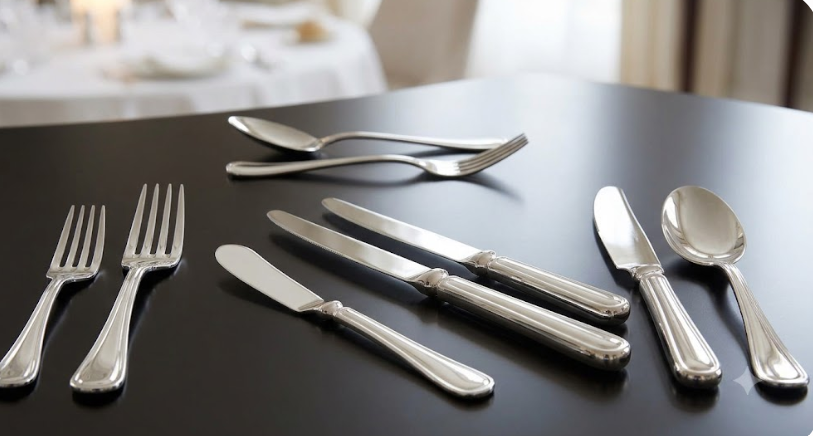
Many people make simple mistakes at the table. I have seen these errors often. It is easy to fix them. Let us look at the most common slip ups. You can avoid them easily now.
Can you use a dinner knife as a butter spreader? The short answer is no. It is too big. It can rip your bread. It can also get crumbs in the clean butter dish at dinner.
The Butter Rule
Do not put butter on bread right away. First, put a small pat on your plate. This is your own share. Then, spread it from your plate. This is proper etiquette to follow.
This rule keeps the main butter dish clean. It stops crumbs from getting into the shared dish. It is a very polite habit. I always teach this rule to my friends. It is easy to learn.
Choosing the Right Flatware for Your Home

You might want to buy a new flatware set. A good set will have all the knives you need. It makes hosting dinner parties much more fun. I love having the right tools at home.
I found a great set with high-quality knives. You can see this beautiful set on AMAZON now. It has the perfect style for your dining table. It looks amazing. I love using it very much.
When you shop, look for stainless steel. It lasts a long time. It does not rust easily. A good set will last for many years. It is a smart buy for your home indeed.
Make sure the set has both knife types. Some cheap sets omit the butter spreader. You do not want to miss this useful tool. It is great to have a complete set. I love mine.
Why Proper Etiquette Matters
Good manners are not about being stiff. They are about showing respect. You show respect to your host. You also show respect to your guests. It makes dining a true joy for everyone.
When you know the rules, you feel relaxed. You do not have to worry about mistakes. You can focus on the food. You can enjoy the great talk. It makes meals much better for all.
I hope this guide helps you feel confident. The next time you sit down to dine, look at the knives. You will know exactly what to do. You will dine with great grace always.
How to Clean and Care for Your Knives
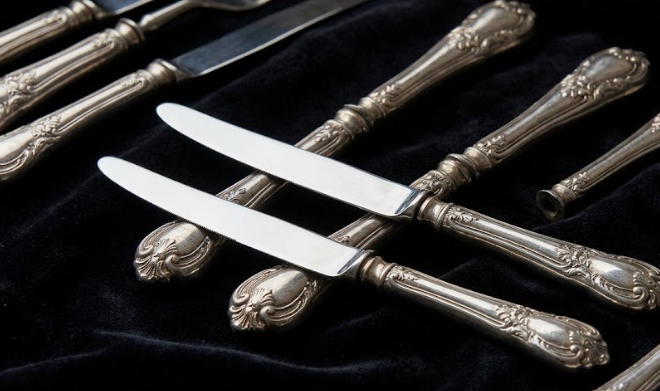
Taking care of your knives is very important. Good care keeps them shiny. It also keeps them sharp. I will share some easy tips to clean them. It takes very little time at home.
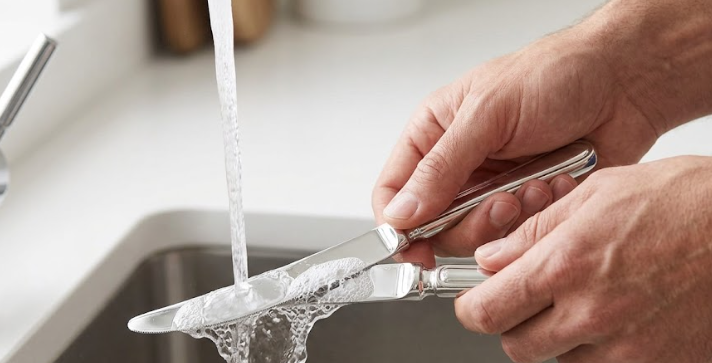
Always wash your knives by hand. Do not put them in the dishwasher. The hot water can damage the metal. Hand washing keeps them safe. This is the best way to do it now.
Use a soft sponge and mild soap. Avoid harsh scrubs. They can scratch the shiny metal. Dry your knives right after you wash them. This stops water spots from forming. It is very simple.
Store your knives in a dry place. A wooden block is a great choice. You can also use a soft drawer tray. This keeps the blades from hitting each other. It prevents damage well.
The History of Dining Knives
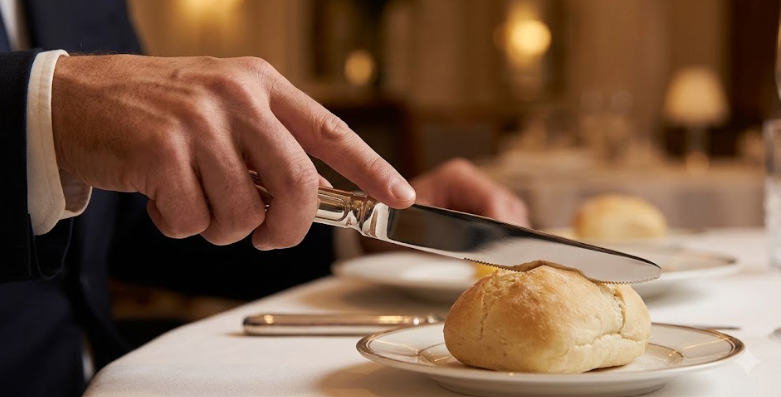
Dining knives have a long history. In the past, people used their own personal knives. They used them to hunt and eat. These old knives were very sharp and dangerous. Times have changed a lot.
A French king changed this in the seventeenth century. He banned sharp knives at the table. He wanted to stop fights. This is how the rounded dinner knife was born. It was safer for all.
The butter knife came later in the Victorian era. People wanted special tools for every food. Butter was a luxury item back then. They made a special knife to show it off. It was fancy.
Now we use these knives every day. They are part of our normal life. But the history shows how they became so special. It is fun to learn where they came from. I enjoy it.
Frequently Asked Questions
What is the difference between a butter knife and a dinner knife?
A dinner knife is long and has a slightly pointed tip to cut food. A butter knife is short and has a rounded tip to spread butter.
Where does the butter knife go on a table setting?
The butter knife goes on the small bread plate. This plate is placed on the upper left side of your main dinner plate.
Can you use a dinner knife as a butter spreader?
No, you should not. A dinner knife is too large and can tear your bread. It is best to use a real butter spreader.
Why does a butter knife have a rounded tip?
The rounded tip stops the knife from tearing soft bread. It allows you to spread butter smoothly across the surface.
What is the smallest knife in a flatware set?
The butter knife, or butter spreader, is the smallest knife in a standard flatware set. It is usually five to six inches long.