I love cooking at home. Finding the right tool makes a big difference. Japanese kitchen knives are very popular. They are sharp and light. You will love how they feel in your hand.
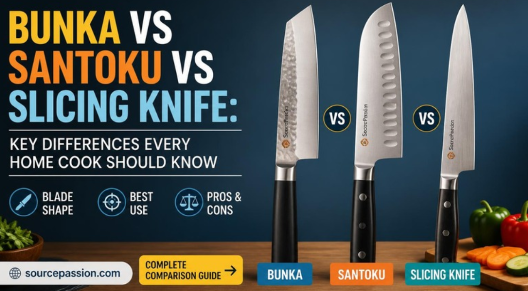
Three common blades are the Bunka, Santoku, and slicing knife. Each one has a special shape. They do different tasks in your kitchen. I will help you choose the best one.
Some cooks want one tool for all tasks. Other cooks want a tool for thin cuts of meat. We will look at how each blade performs. You will know exactly what to buy.
We will compare their shapes and tips. We will look at how they cut food. Let us look at these great tools. Your daily cooking is about to get much easier.
Understanding the Bunka Knife
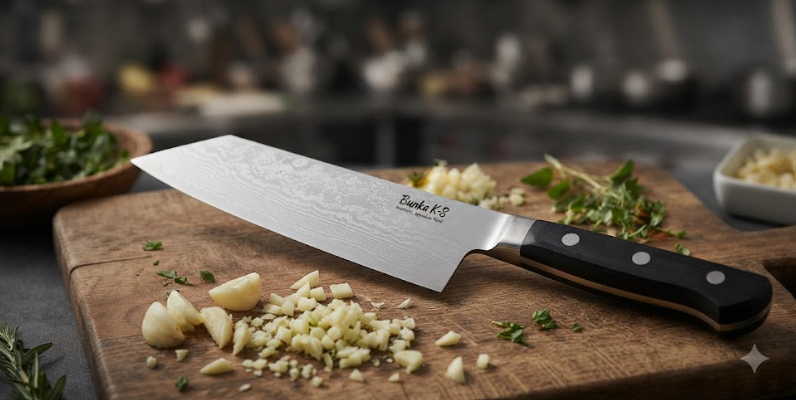
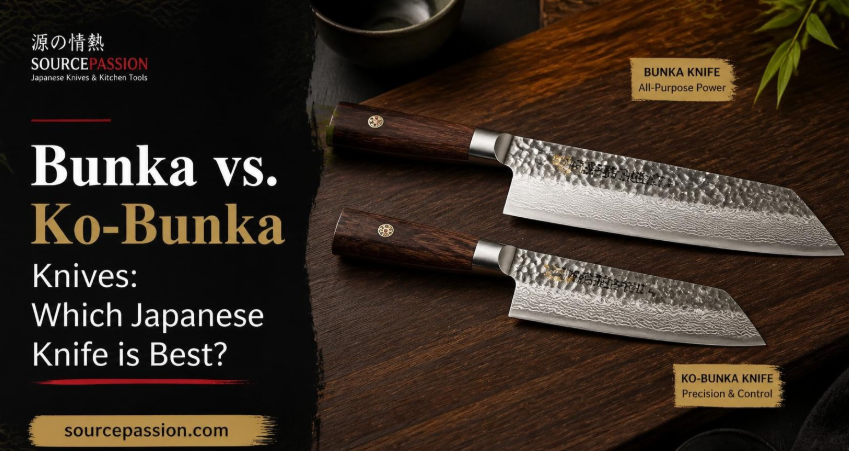
What is a Bunka knife used for in the kitchen? This blade is a great multi-use tool. It looks very cool. It has a straight edge and a very sharp tip.
The tip has a special shape. People call it a K-tip blade profile. It is also known as a reverse tanto tip. This sharp point helps you do detail work.
You can use it to cut small garlic cloves. It is great for scoring meat too. The flat edge is perfect for clean cuts. It makes food prep fast and fun.
This tool is a double bevel Japanese knife. That means both sides of the blade are sharp. It cuts straight down. Most home cooks find it very easy to use.
Understanding the Santoku Knife
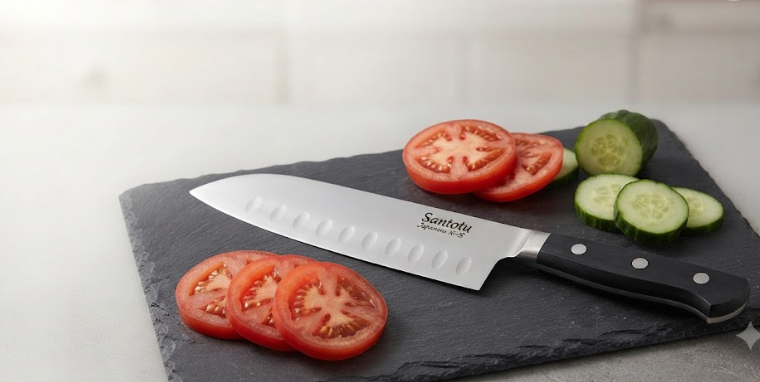
The Santoku is a very famous Japanese knife. The name means three virtues. These virtues are slicing dicing and chopping. It is a true multipurpose chef knife for your home.
It has a sheep’s foot tip. This tip curves down to meet the edge. It is safer than a sharp point. The blade is usually five to seven inches long.
I use my Santoku for almost everything. It cuts vegetables very well. It also cuts fish and boneless meat. It is a great core tool for any home kitchen.
Most Santoku blades are double bevel Japanese knives. They have a thin profile. They glide through food with ease. You do not need a lot of force to cut.
Understanding the Slicing Knife
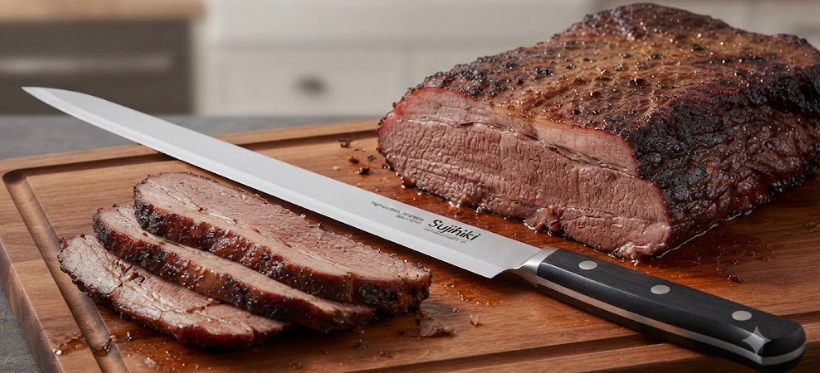
Slicing knives are different from chef knives. They are long and thin. They are made to cut cooked meat. They make clean slices in one single pull.
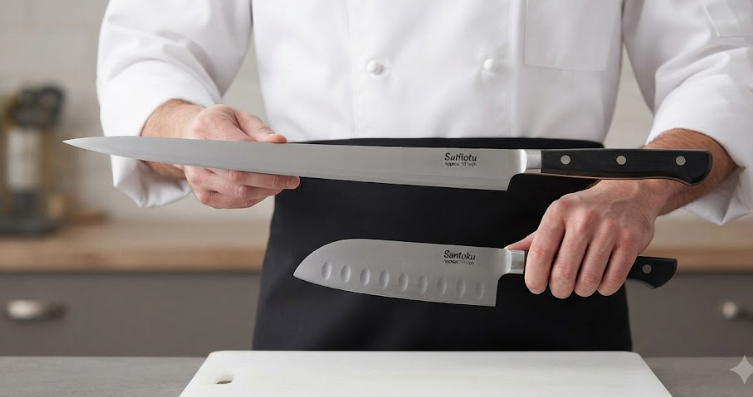
In Japan, the main slicing knife is the Sujihiki. We often compare Sujihiki vs Santoku. The Sujihiki is much longer. It has a very low profile to reduce drag.
Slicing knives have long blades. They are usually nine to twelve inches long. This length lets you make long cuts. You do not have to saw back and forth.
This tool is perfect for brisket or roast. It keeps the juices inside the meat. You can buy a great slicing knife on AMAZON. It is a great investment.
Bunka vs Santoku: The Main Differences
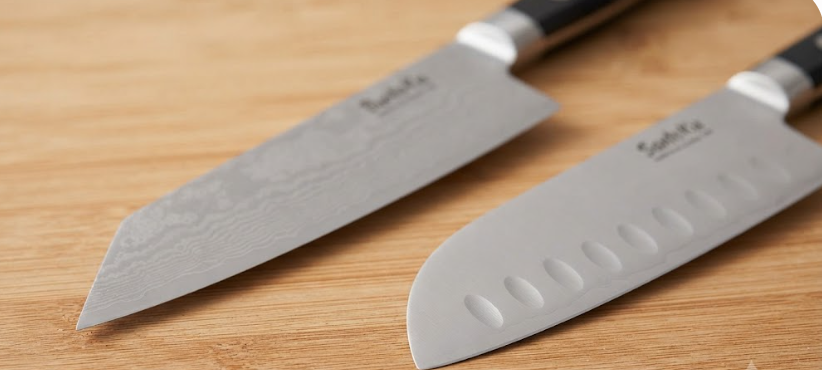
What is the difference between a Bunka and a Santoku? The main difference is the tip. The Bunka has a sharp K-tip blade profile. The Santoku has a curved tip.
Is a Bunka knife better than a Santoku? Not always. The Bunka is better for detail work. Its sharp point gets into tight spaces. The Santoku is better for scoop cuts.
The Santoku is slightly safer to use. Its dull tip does not poke things by accident. The Bunka looks more aggressive. Many cooks choose the Bunka for its cool style.
Both knives have a flat cutting edge. They both work well for push cutting. If you want to compare Nakiri vs Bunka vs Santoku, these two are more versatile.
Slicing Knife vs Santoku and Bunka
Let us look at the difference between a slicing knife and a Santoku. The Santoku is short and wide. The slicing knife is long and narrow. They do different tasks.
Can you use a Santoku knife for slicing meat? Yes, you can. It works well for small cuts of chicken. But it is too short for a large roast beef.
A long slicing blade is much better for large meats. It creates smooth slices. The Santoku might tear the meat. You have to use too many strokes with a short blade.
The Bunka also struggles with large roasts. Its sharp tip can get stuck. A dedicated slicing knife is always the best choice for big holiday meals. It makes perfect slices.
Comparing Other Japanese Kitchen Knives
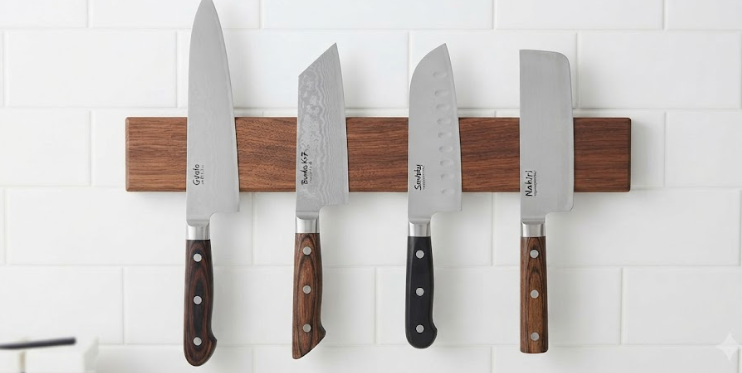
We should also compare Bunka vs Santoku vs Gyuto. The Gyuto is the Japanese version of a Western chef knife. It has a curved belly. It is great for rocking cuts.
The Bunka and Santoku are flatter. They do not rock well. They are better for up and down cuts. The Gyuto is usually longer than both of them.
We must also look at Nakiri vs Bunka vs Santoku. The Nakiri is a vegetable knife. It has a square front. It has no point at all. It is only for greens.
The Bunka and Santoku can cut meat and fish too. They are more useful for daily meals. If you can only buy one, do not buy the Nakiri first.
Most of these are double bevel Japanese knives. They are easy to sharpen. You can use standard whetstones. They work well for both left and right-handed home cooks.
Cutting Techniques: Push Cutting and More
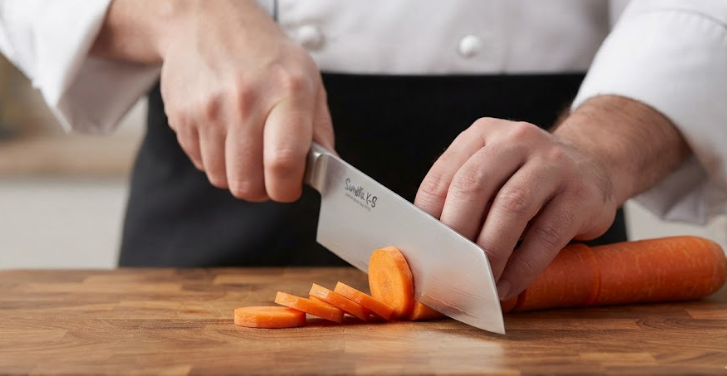
How you cut matters. The push cutting technique is very popular in Japan. You push the blade forward and down. This works best with flat blades like the Bunka.
The Santoku also works great for this move. Its flat edge makes full contact with the board. You get clean cuts every time. Food does not stick together.
Slicing knives use a different motion. You pull the blade toward you. This single stroke cuts the meat cleanly. It does not crush the delicate fibers of the food.
You should not rock a Bunka or Santoku. The flat edges can chip on the board. Always use gentle up and down motions. This keeps your blades sharp for years.
Quick Comparison Table
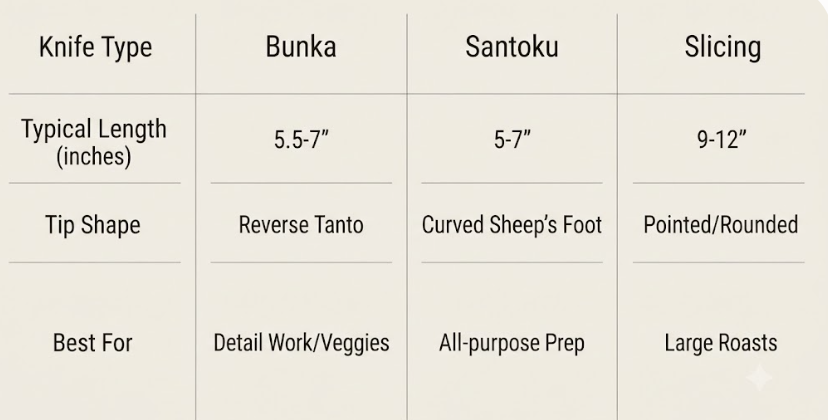
Let us compare these three blades. I made a simple table for you. It shows the length, shape, and main use. This will help you see the differences fast.
| Knife Type | Typical Length | Tip Shape | Best For |
|---|---|---|---|
| Bunka | 5.5 to 7 inches | Reverse Tanto | Detail work, veggies |
| Santoku | 5 to 7 inches | Curved sheep’s foot | All-purpose prep |
| Slicing | 9 to 12 inches | Pointed or rounded | Meats, large roasts |
As you can see, each blade has a clear role. You can find many of these blades on AMAZON [1]. They offer great options for every budget.
Pros and Cons of Each Knife
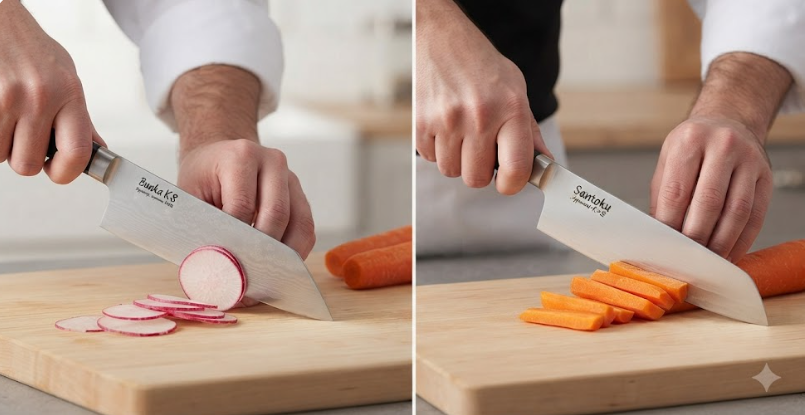
Let us look at the Bunka. The pros are its sharp tip and cool look. It is great for detail work. The con is that the tip is very delicate.
It can chip if you drop it. It is not good for bones. You must use it with care. But it is a joy to use for vegetables.
Now let us look at the Santoku. The pros are its safety and ease of use. It is very versatile. The con is that it lacks a sharp point.
You cannot do fine detail work easily. It is also too short for large meats. Still, it is the best starter Japanese knife for most home cooks today.
Finally, the slicing knife. The pros are its clean cuts and long reach. It is perfect for meat. The con is that it is not versatile.
You cannot use it to chop onions easily. It is too long for daily vegetable prep. It is a special tool for your growing kitchen collection.
How Blade Steel Affects Your Choice
Japanese knives use different types of steel. Some are made of carbon steel. This steel gets very sharp. But it can rust if you leave it wet.
Other knives use stainless steel. This steel is easy to care for. It does not rust easily. It is great for busy home cooks who want low care.
High carbon stainless steel is a great middle choice. It stays sharp for a long time. It resists rust very well. Most modern Japanese kitchen knives use this.
You should choose the steel that fits your lifestyle. If you like wiping your blade dry, carbon is great. If you want ease, choose stainless steel.
How to Care for Your Japanese Knives
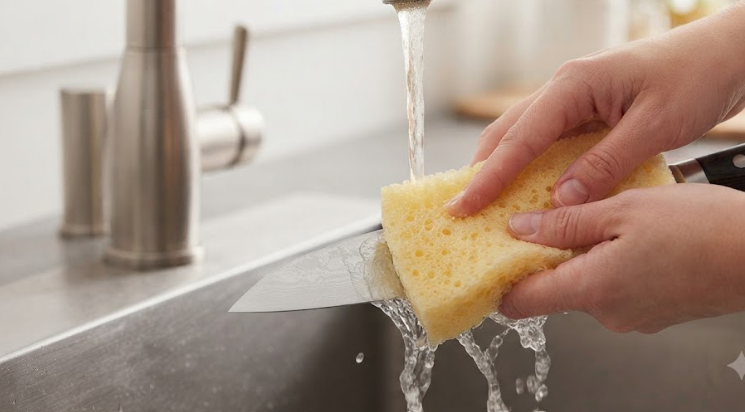
Proper care keeps your blades sharp and safe. Never put these knives in the dishwasher. The heat and water will ruin the wood handles and dull the edges.
Always wash them by hand with warm water. Use a mild soap and a soft sponge. Dry them with a towel right away. This prevents rust on the blade.
Store your knives on a magnetic strip or in a block. Do not throw them in a drawer. The blades can hit each other. This causes chips and dulls the edge.
Sharpen them on a whetstone when they get dull. Do not use pull-through sharpeners. They can damage the thin edge of your double bevel Japanese knives.
Which Knife Should You Choose?
Which one should you buy first? If you want a general tool, get the Santoku. It is safe and easy. It handles ninety percent of your daily kitchen tasks.
If you want style and detail work, get the Bunka. Its sharp tip is amazing. You can find great deals on AMAZON [1] for both styles.
If you cook large roasts often, get the slicing knife. It will save you time. Your meat slices will look beautiful. Your guests will be very impressed.
Many home cooks end up buying all three. They make a great team. You will always have the perfect blade for every single meal you prepare.
Frequently Asked Questions
What is the difference between a Bunka and a Santoku?
The main difference is the tip shape. The Bunka has a sharp, angled K-tip. The Santoku has a curved, rounded sheep’s foot tip.
Is a Bunka knife better than a Santoku?
It is not better, just different. The Bunka is better for fine detail work. The Santoku is safer and easier for general chopping.
Can you use a Santoku knife for slicing meat?
Yes, you can use it for small meats. But it is too short for large roasts. A slicing knife is better for big cuts.
What is a Bunka knife used for?
It is used for slicing, dicing, and chopping vegetables, fish, and boneless meats. Its sharp tip is great for detail work.
What is the difference between a slicing knife and a Santoku?
A slicing knife is very long and thin, made for cutting meat. A Santoku is shorter and wider, made for general prep. READ MORE