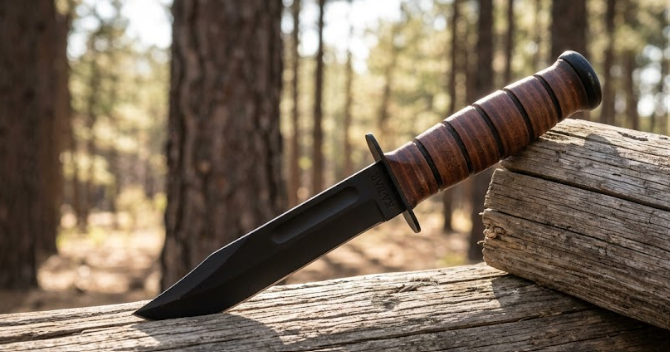
You found an old knife in a box. It has a vintage KA-BAR leather handle. It has a steel blade. You see the word KA-BAR on it. You ask, how old is my KA-BAR knife?
Collecting these old knives is a great hobby. Many people love the history. Each knife has a story. This guide will show you how to identify a vintage KA-BAR knife today.
Old knives hold a lot of value. Some are worth a few dollars. Others are worth hundreds of dollars. You want to know, are vintage KA-BAR knives valuable? Let us find out.
This guide will show you how to read the blade. We will look at the stamps. We will look at the shapes. Soon you will know how to spot a real gem in the wild.
The History of Union Cutlery and KA-BAR
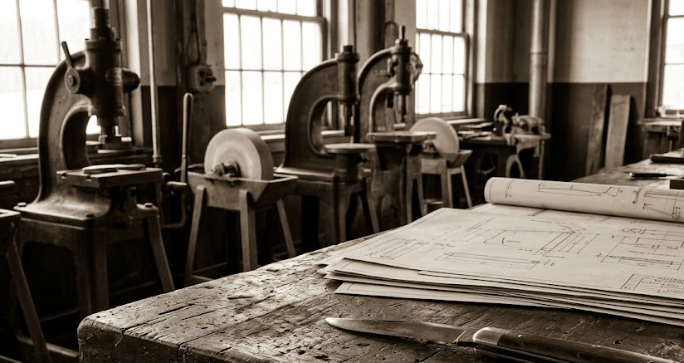
The story starts in the year 1898. A group of men formed a knife company. They called it the Union Razor Co Tidioute PA. They made knives in Pennsylvania. But the start was hard.
The first company failed fast. In 1902, Wallace Brown bought the assets. He started a new business. He named it the Union Razor Co. This new company made great razors and pocket knives.
In 1909, they changed the name. They became the Union Cutlery Co. In 1911, they moved to Olean, New York. The stamp Union Cutlery Co Olean NY became their main brand mark.
The factory in Olean grew very large. They made thousands of knives every week. Many workers lived in the town. The company became a major part of the local community for decades.
A famous story explains the name KA-BAR. A hunter wrote a letter to the company. He said his gun jammed during a bear hunt. He used his Union Cutlery knife to kill the big bear.
The hunter wrote “k a bar” in his letter. This was short for kill a bear. The company loved this story. They decided to use the name KA-BAR on their best knives in 1923.
In 1952, the company changed its name officially. They became KA-BAR Cutlery Inc. People knew the name so well by then. The old Union Cutlery name was put away for good.
How to Identify a Vintage KA-BAR Knife
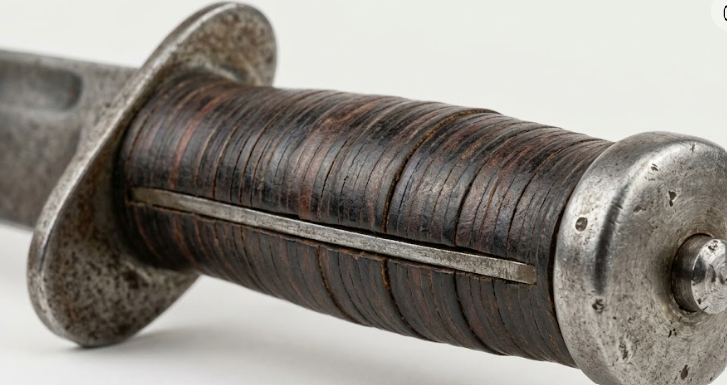
Identifying a vintage KA-BAR fixed blade takes some time. You must look at the whole knife closely. Do not just look at the blade. Look at the handle and the pommel too.
First, check the metal parts. Old blades have a special look. They may have dark spots. This is called patina. Do not clean this off. It proves the knife is old and real.
Next, look at the handle. Many old models have a leather handle. This leather is made of stacked rings. Over time, the leather gets dark. It may feel very smooth from years of use.
Look at the sheath if you have it. Old sheaths were made of thick leather. They had steel rivets or staples. The stitching should look old and worn, not brand new.
You should also check the end of the handle. This is the pommel. The shape of the pommel changed over the years. Some are thick. Some are thin. Some have a small pin inside.
Look for any logos or pictures. Some knives have a dog’s head on them. This is a very famous logo. It was used on old pocket knives. It is highly prized by collectors.
You can buy a quality knife today. If you want a new one, you can BUY AMAZON today. But if you want an old one, you must learn to identify the classic marks.
Vintage KA-BAR Tang Stamps and Dating Guide
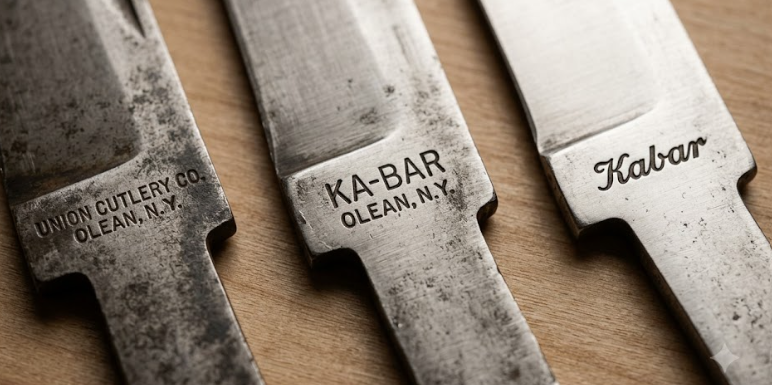
To check the age, look at the vintage KA-BAR tang stamps. The tang is the metal part under the handle. The stamp is pressed into this metal. It shows the maker’s name.
The oldest stamps do not say KA-BAR. They say Union Razor or Union Cutlery. This is because the KA-BAR name came later. Knowing these dates helps you find the true age of your knife.
Let us look at some common stamps. We will list the years they were used. This will help you date your knife at home. Use this table as a quick guide for identification.
| Tang Stamp Text | Years Used | Notes |
|---|---|---|
| Union Razor Co. Tidioute PA | 1898 – 1909 | Very rare, oldest knives. |
| Union Cutlery Co. Olean NY | 1911 – 1952 | Common on early fixed blades. |
| KA-BAR (Straight Line) | 1930 – 1940 | Used with USA stamp below. |
| KA-BAR / Olean, N.Y. | 1943 – 1951 | Classic World War II stamp. |
| Kabar (Italic Script) | 1951 – 1965 | Post-war folding and pocket knives. |
There are many other stamps. The company used about two hundred different marks over time. Some were only used for a single year. This makes identification a fun puzzle for collectors.
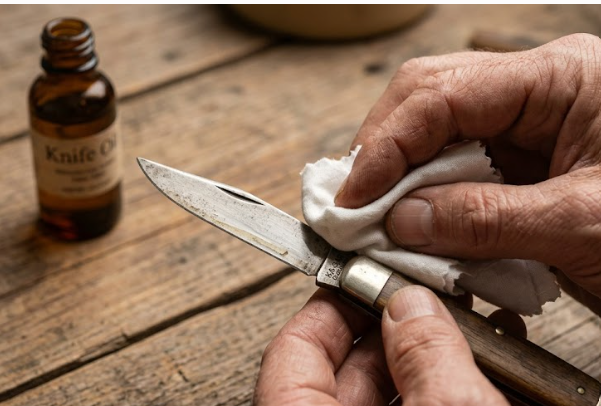
If your knife stamp is hard to read, do not worry. You can clean the blade very gently. Use a soft cloth. Do not use harsh steel wool. You want to keep the stamp safe.
A clear stamp is key. It tells you the exact era of the knife. It helps you avoid buying a fake. Fakes are common in the market today, so look closely at the letters.
The Iconic WWII Original KA-BAR Fighting Knife
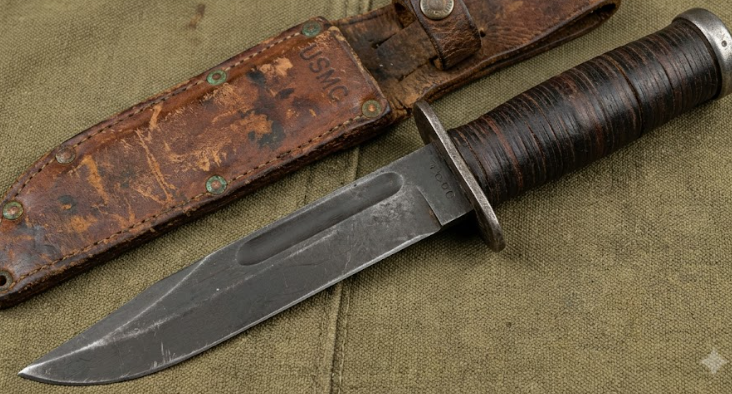
The most famous model is the WWII original KA-BAR fighting knife. This knife is a true icon. It was designed for the United States Marine Corps. The design was approved in 1942.
The official name was the KA-BAR 1217 USMC fighting knife. But everyone just called it the KA-BAR. Soldiers and Marines loved it because it was strong. They used it for work.
These knives had a seven-inch blade. The blade had a dark black finish. This finish stopped the steel from reflecting light in the dark. It also helped protect the metal from rust.
The handles were made of stacked leather discs. This handle gave a great grip even when wet. The pommel at the end was made of steel. It was pinned onto the tang of the blade.
Marines used these knives to open cans. They used them to clear brush. They also used them to build shelters. The knife was a tool first and a weapon second during the war.
During the war, other companies made this knife too. Camillus made the most of them. But the KA-BAR name stuck. Today, people still use the name for any knife of this style.
If you find an original war knife, check the guard. The early models had stamps on the blade. Later models had stamps on the metal guard. Guard-stamped knives are highly prized today.
Vintage KA-BAR Pocket Knives and Folding Hunters
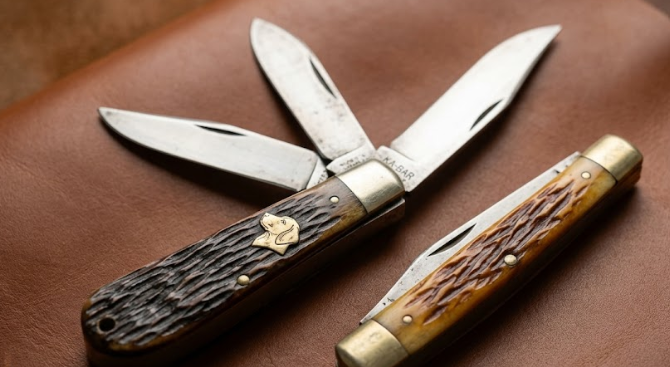
KA-BAR did not just make fixed blades. They made wonderful folding knives too. A vintage KA-BAR pocket knife is very popular with collectors. These knives come in many sizes and styles.
A vintage KA-BAR folding hunter is a classic model. It is a large pocket knife with one or two blades. Hunters used them in the woods. These knives often have bone handles.
Some pocket knives have three blades. These are called stockman knives. Others have two blades. These are called jack knives. Each style was made for a specific job on the farm.
The handles may have a jigged pattern. This means the bone has small cuts to help you grip it. Some handles are made of wood. Others are made of a plastic called celluloid.
Watch out for old celluloid handles. Over time, this plastic can break down. It releases a gas that rusts the steel blade. Collectors call this outgassing, and it can ruin a knife.
Look for the famous KA-BAR dogs head knife logo on the handle shield. This metal shield is shaped like a dog. It is a sign of quality. These models are hard to find.
Determining Vintage KA-BAR Knife Value
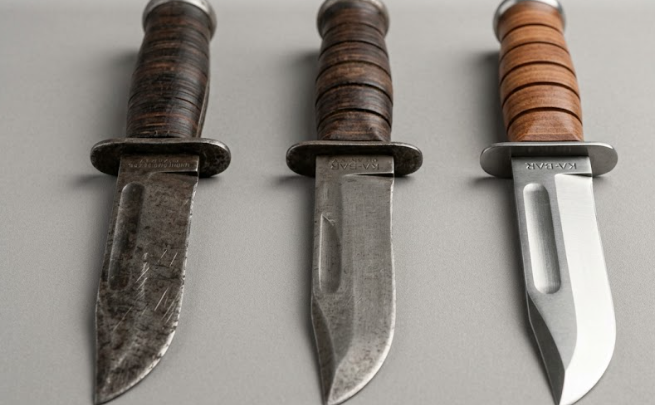
How much is your old knife worth? Finding the vintage KA-BAR knife value depends on several key things. Condition is the most important factor. A clean knife is worth much more.
Rarity also plays a big role. The oldest knives from Tidioute are very rare. They can sell for high prices. Common models from the post-war era are much easier to find.
Original parts add to the value. A knife with its original leather sheath is worth more. If the handle has been replaced, the value drops. Collectors want knives in original shape.
Do not try to sharpen the blade with a wheel. This can leave deep scratches. It can lower the value of your knife. Use a simple whetstone only if you must.
Let us look at a basic price guide. These are estimated values for knives in good condition. Prices can change based on the market. Always check recent online sales for current prices.
| Knife Type | Era | Estimated Value |
|---|---|---|
| Union Razor Pocket Knife | 1898 – 1909 | $150 – $400 |
| Dog’s Head Folding Hunter | 1920 – 1940 | $200 – $500 |
| WWII USMC Fighting Knife | 1942 – 1945 | $100 – $350 |
| Post-War Fixed Blade Hunter | 1950 – 1970 | $50 – $150 |
You can find many of these knives on eBay. If you want a modern version of the fighting knife, you can BUY AMAZON today. It is a great way to start your collection.
Pros and Cons of Collecting Vintage KA-BAR Knives
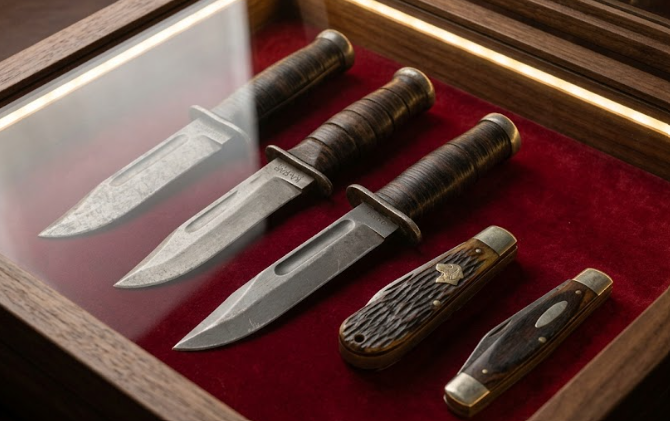
Every hobby has its good and bad sides. Collecting old knives is no different. You should know what to expect before you spend your hard-earned money. Here are the pros and cons.
Pros
- Rich History: Each knife has a deep connection to American history.
- Great Quality: These knives were built to last for many decades.
- High Demand: Many collectors are always looking for these knives.
Cons
- Fakes Exist: You must watch out for cheap copies.
- Hard to Find: The oldest models are very rare today.
- Rust Risk: Carbon steel blades will rust if not kept dry.
We hope this list helps you make a choice. Collecting can be very rewarding. You just need to be careful. Always buy from sellers you trust. This will keep your hobby fun.
Final Thoughts for Collectors
Vintage knives are more than just tools. They are pieces of history you can hold in your hand. They tell the story of American workers and soldiers. This makes them very special.
Take care of your collection. Keep your knives in a dry place. Do not store them in leather sheaths for too long. The leather can hold moisture and cause rust on the blade.
If you want to add a new knife to your collection, you can BUY AMAZON today. It is a great way to enjoy the classic look. Happy collecting to you all.
Frequently Asked Questions (FAQ)
How can I tell the age of my KA-BAR knife?
You can tell the age by looking at the tang stamp. Look at the name and town on the blade. Compare these marks to our dating guide. This will show you the exact era.
Are vintage KA-BAR knives valuable?
Yes, many of these knives are valuable. Rare models from the early years can sell for hundreds of dollars. The condition and original parts will play a huge role in the final price.
What is the dog’s head knife?
This is a vintage knife with a special logo. The metal shield on the handle is shaped like a dog’s head. These knives were made by Union Cutlery and are very rare today.
How do I clean a vintage KA-BAR knife?
Clean the blade with a soft cloth and a little oil. Do not use harsh steel wool or soap. You want to protect the old patina. Keep the leather handle away from water.